Skip to content
China for Travelers

Nine gardens, and four that matter

Suzhou

苏州

The mistake here is not money — it is seeing the same garden three times. Each one is a separate ticket and a separate booking, and the four worth your time are four different things: water, rock, architecture, and one small enough to teach you the form. Here is where each of our Suzhou guides fits.

China for TravelersThe Classical Gardens — UNESCO World Heritage since 1997

Main garden
¥80
¥70 low · book 7 days ahead
Suzhou Museum
Free
Slots 7 days ahead, 08:00
Tiger Hill
¥70
¥60 in the low season
Give it
1-2 days
A third buys a water town

Two things decide a Suzhou day and neither of them is the fare. The gardens are real-name and online-only — the ticket windows no longer sell, so turning up without a booking means a closed gate. And the free museum inside the garden cluster is the hardest thing in the city to get into: released 7 days ahead at 08:00, and closed Mondays.

First time here?

Your first day fits inside one triangle

Suzhou’s three headline sights sit in one small triangle north-east of the old town: 346 m on foot from the Humble Administrator’s Garden to the Suzhou Museum, 588 m to Lion Grove, and 586 m between those two. Walk it in whichever order you like. Everything else in the city is a second half-day — Tiger Hill and the Lingering Garden to the west, Panmen to the south, and the canal streets in between.

01

The Classical Gardens

1.5-4 h · ¥30-¥80

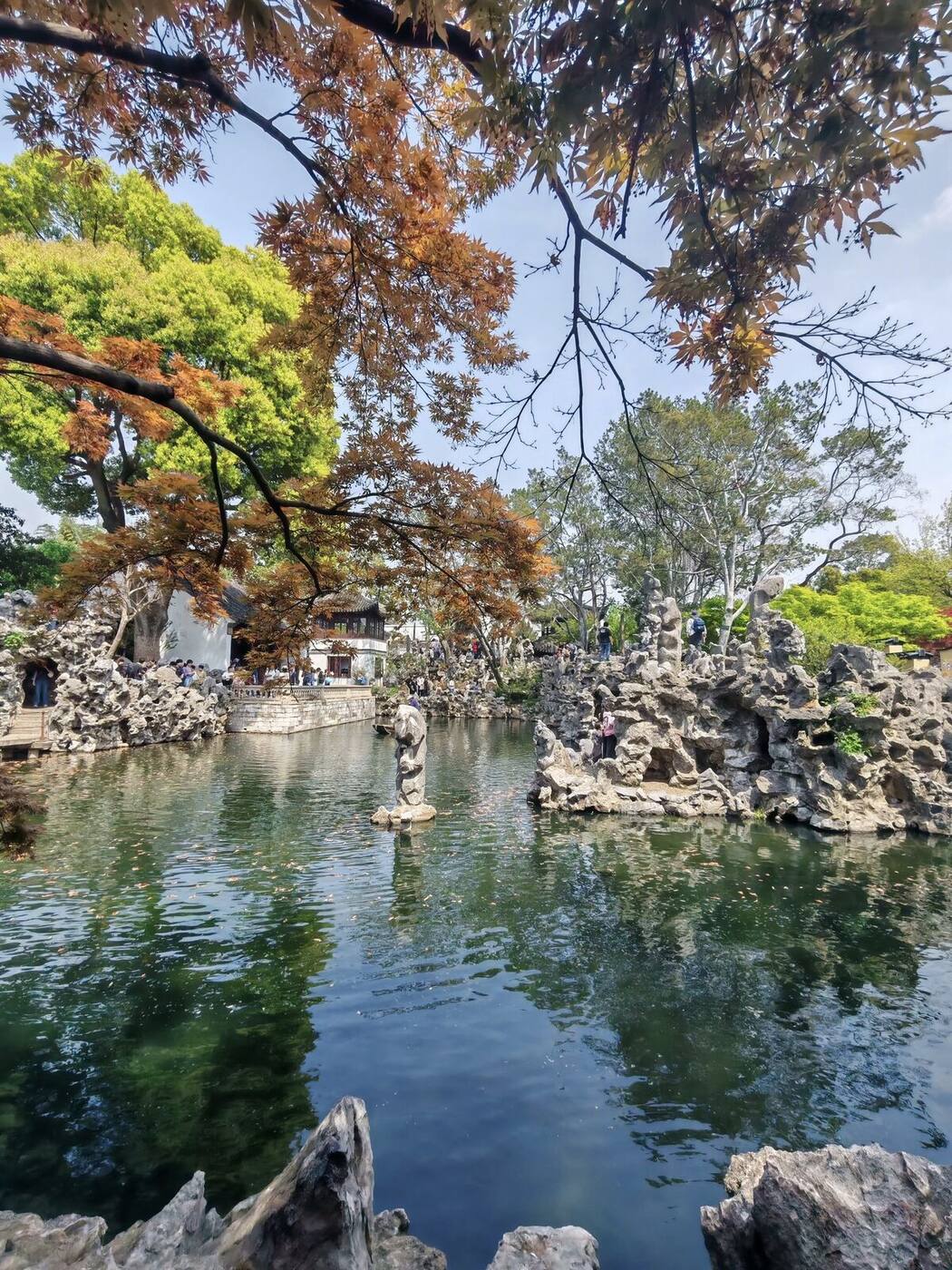
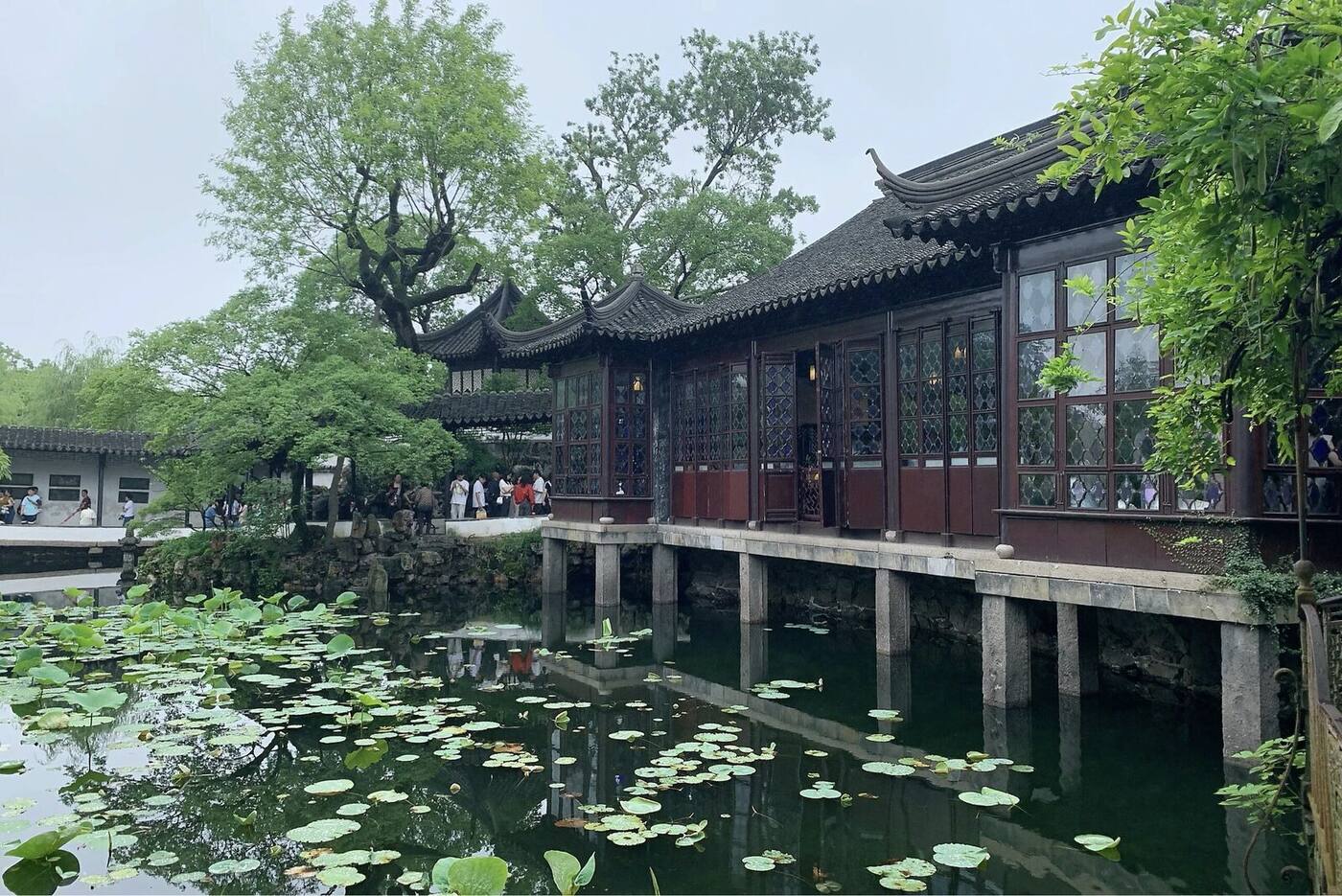
Nine are UNESCO-listed and they are not versions of one another. The Humble Administrator's Garden at 5.2 hectares is the broad water garden the style is named for; Lion Grove is a rockery you walk inside; the Lingering Garden is architecture; the Master of the Nets is small enough to show how little ground the form needs.

Pick by type, not by rank
02

Suzhou Museum

1-2 h · Free

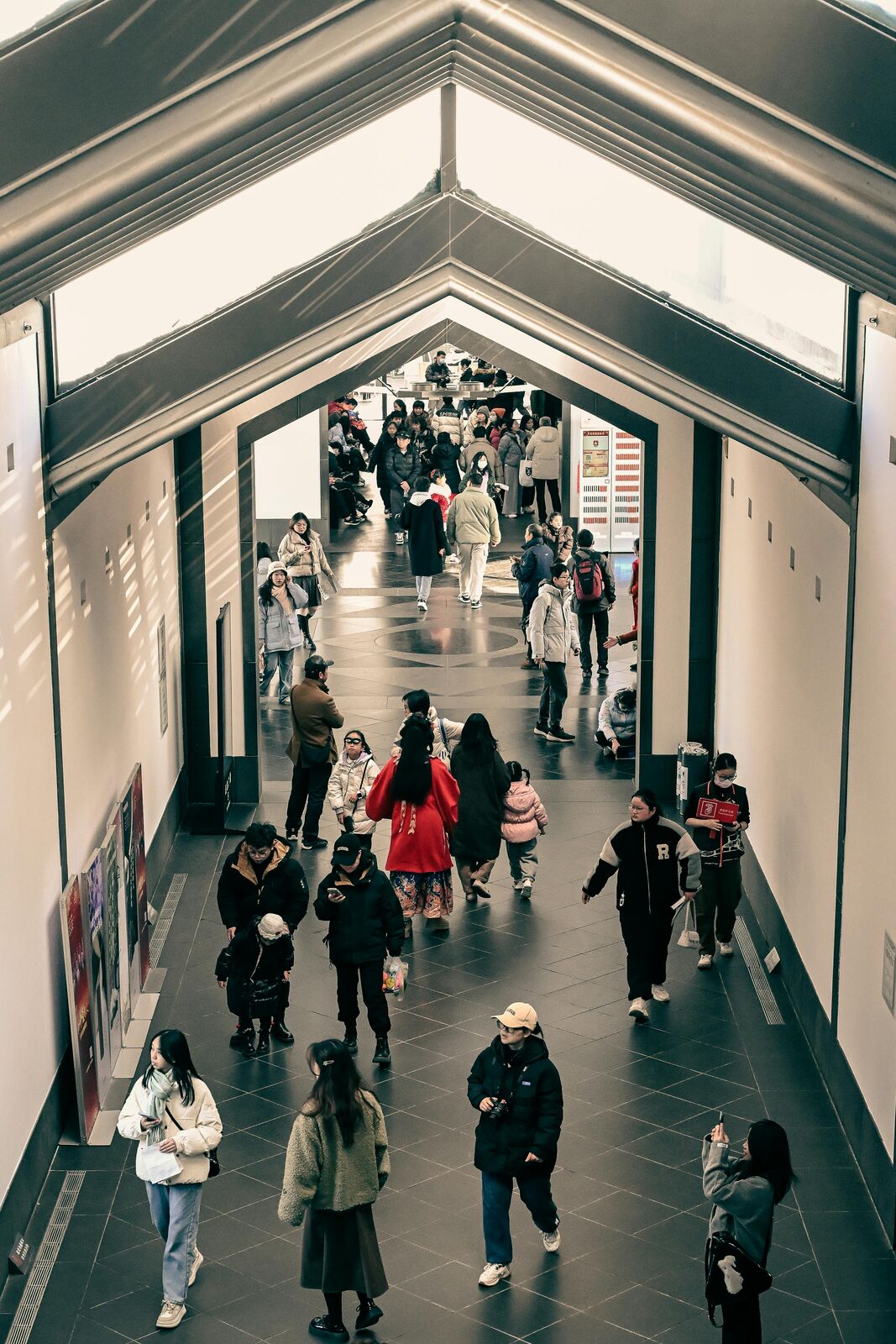
I. M. Pei's last major building, put up against the Humble Administrator's Garden wall — white render, grey trim and borrowed views rebuilt in steel, glass and stone. It costs nothing, and it is the hardest thing in the city to get into.

Book the slot first
03

Pingjiang Road

1-2 h · Free

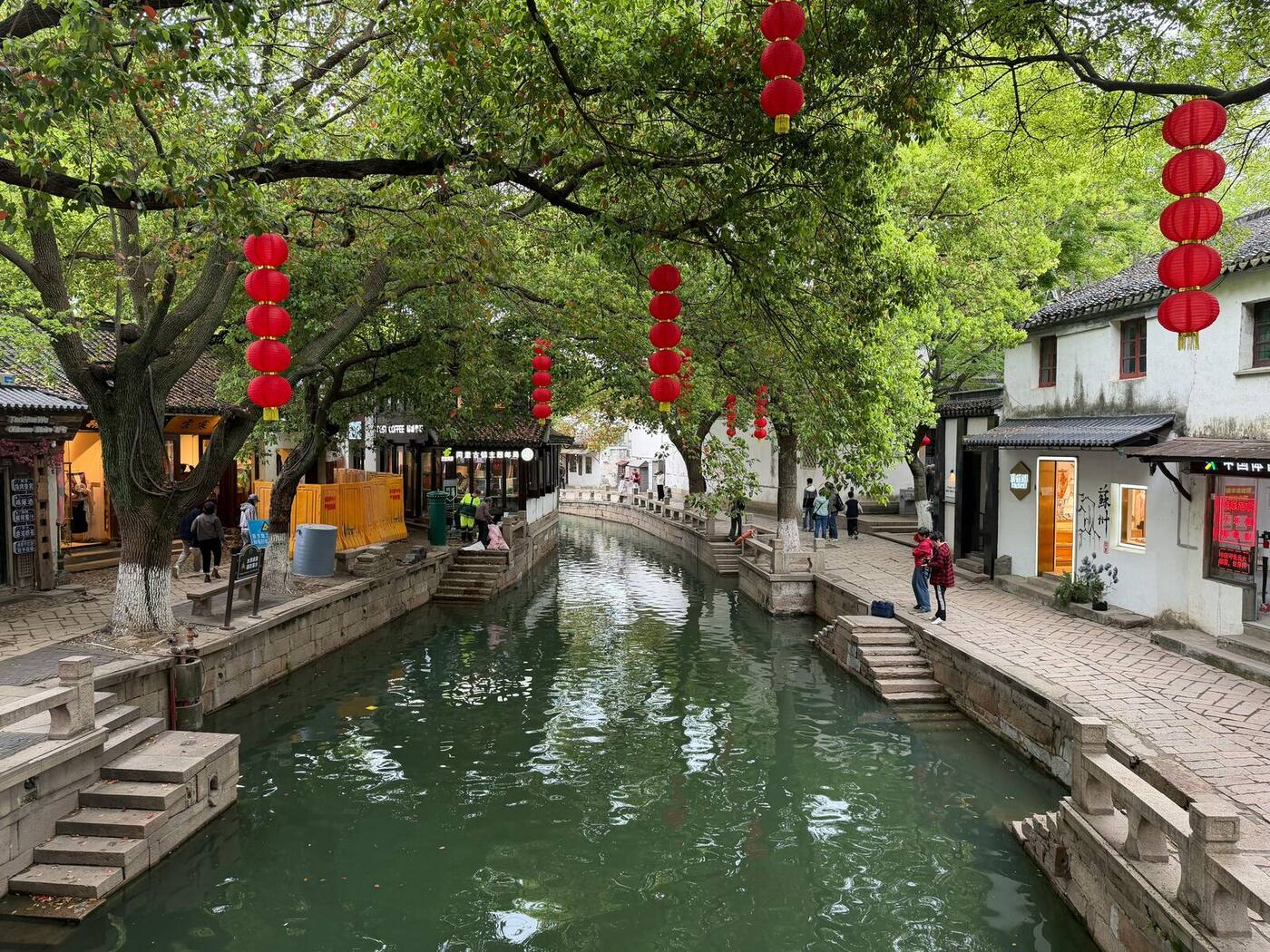
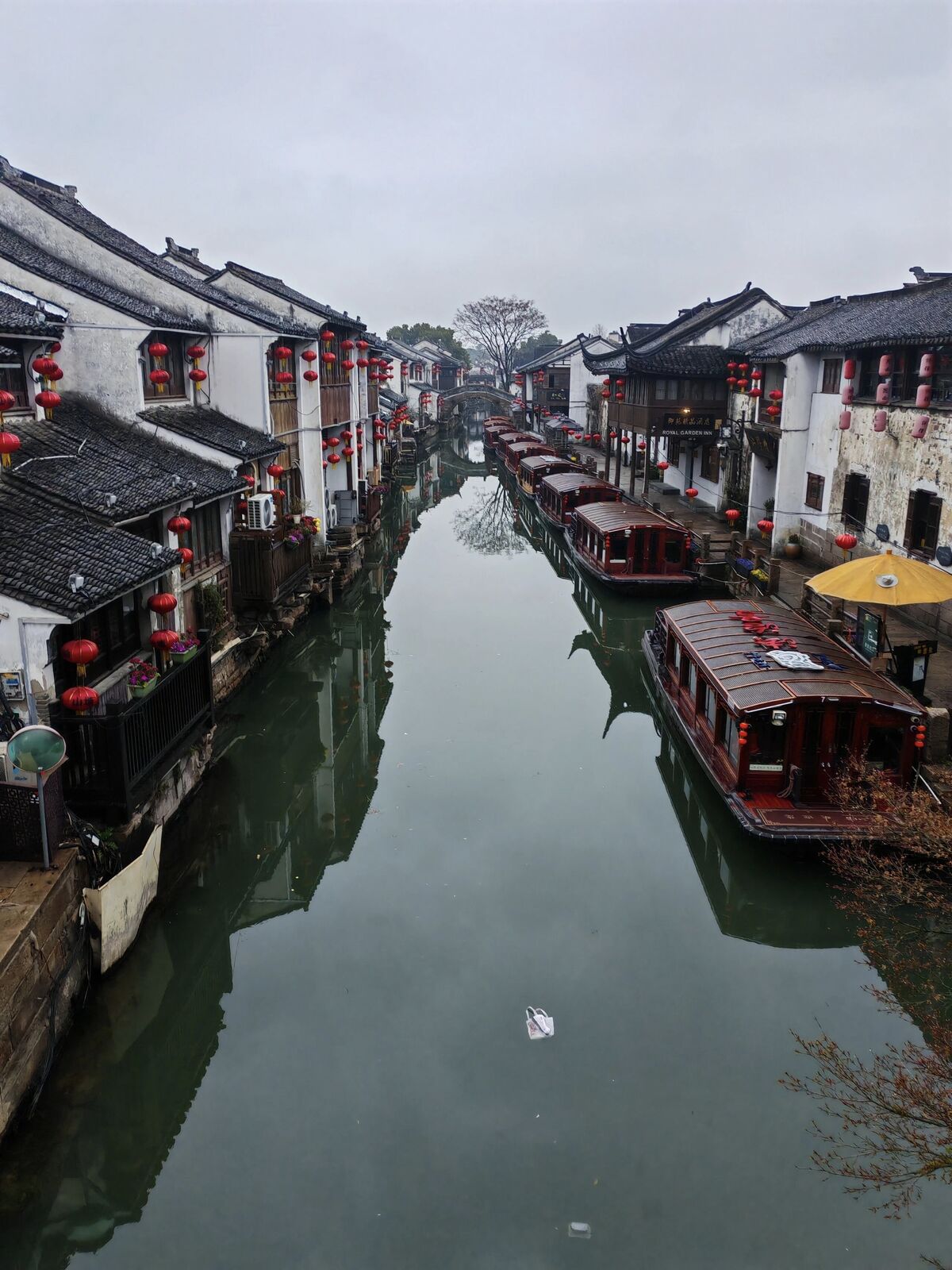
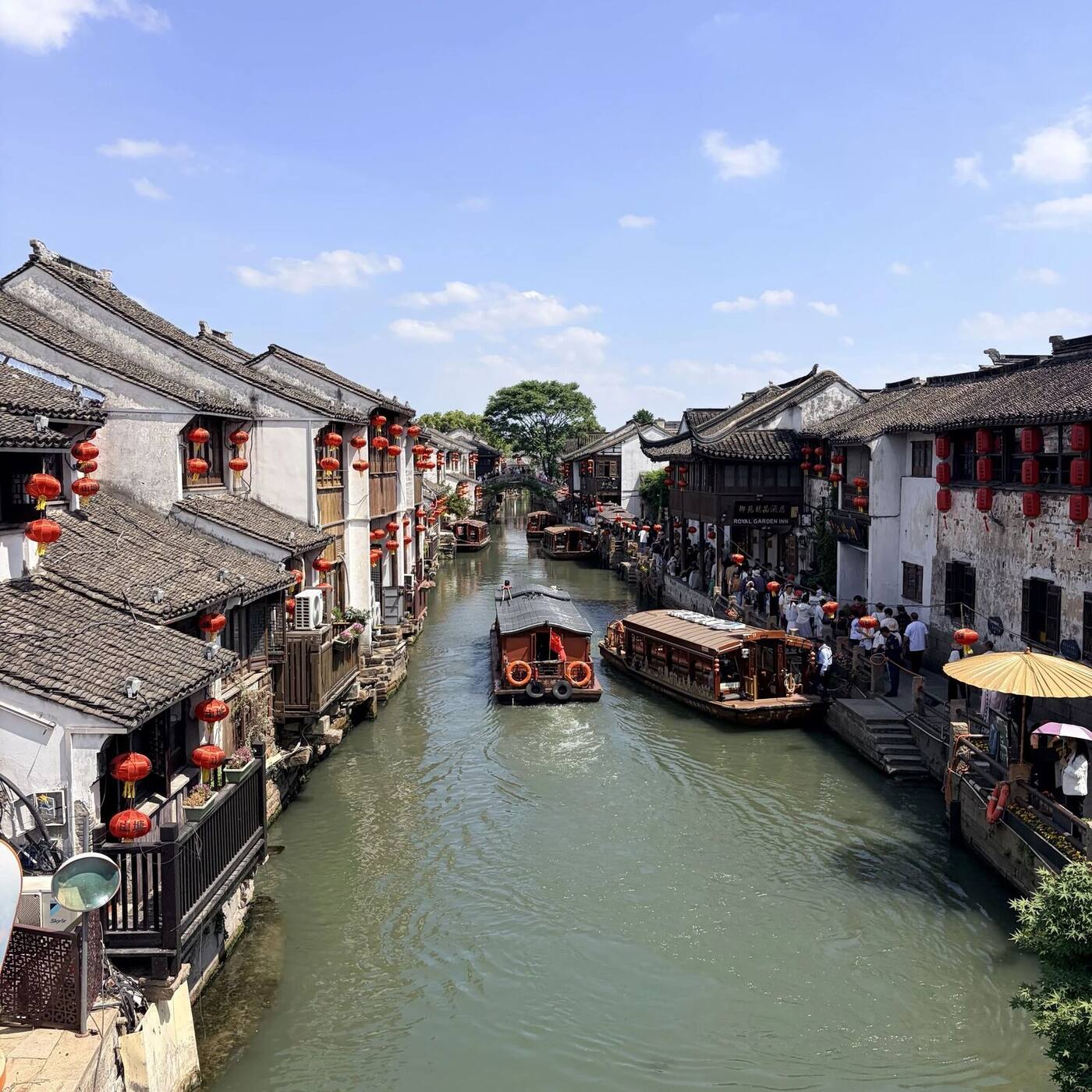
One street, one canal, one row of white walls — the clearest surviving stretch of the pattern the whole city was built on. It is the afternoon between the gardens and dinner rather than a destination, and the parallel lanes a minute east are the same architecture without the crowd.

Walk it early or late

How long

A day works. Two is the right answer.

Most people see Suzhou as a day out of Shanghai, and that works — but it buys one garden and one street, not the city. Everything below assumes you are sleeping in the old town.

  1. Day 1

    The north-east triangle: the Humble Administrator's Garden at 07:30, the Suzhou Museum 346 m away, Lion Grove 588 m on the other side. Pingjiang Road for the afternoon. ⛔ The gardens stop admitting 30 minutes before they close — 17:00 in summer, 16:30 in winter. The museum shuts its door a full hour early, at 16:00.

  2. Day 2

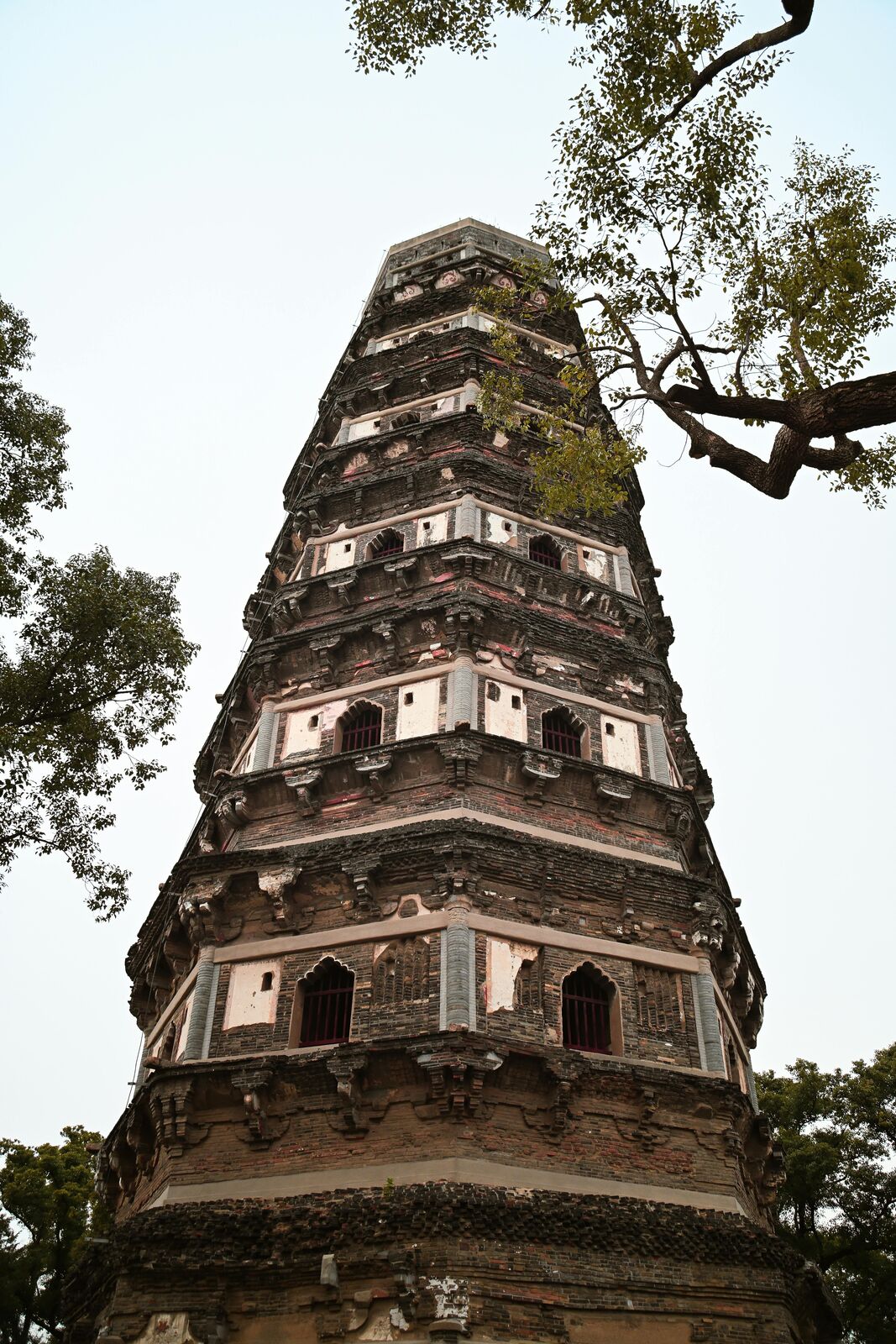
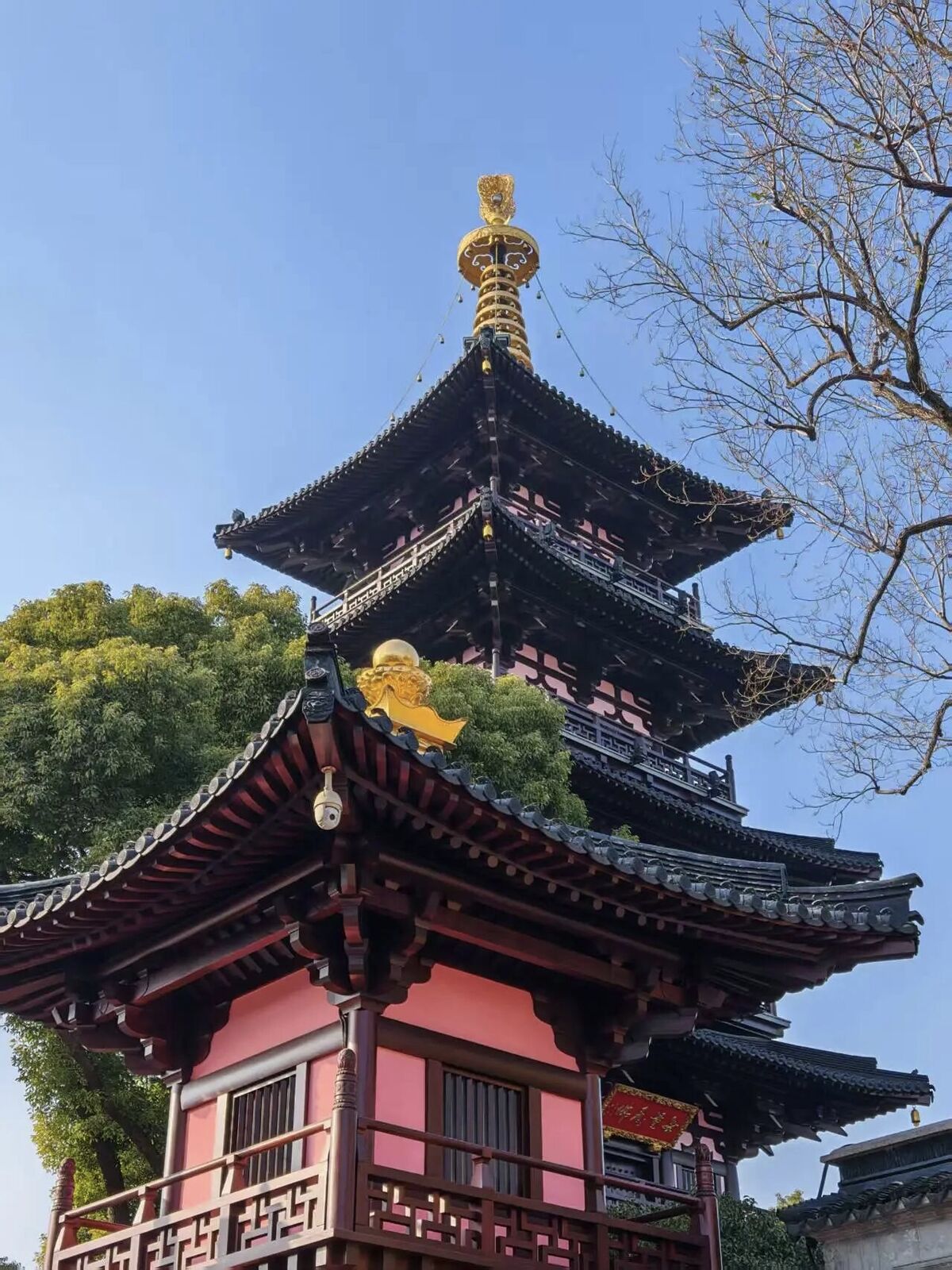
    The western half. Tiger Hill for the leaning pagoda (¥70 peak, ¥60 low), the Lingering Garden for its 6.5 m Crown of Clouds Peak, and Shantang Street after dark. The ¥50 covered boat up the creek is genuine transport between them, not a novelty ride.

Want it written up properly for your dates? We build free custom itineraries →

Where to sleep

Old town, or the new city across the water

Suzhou is really two cities: a low, moated old town of lanes and canals, and a glass one east of it around Jinji Lake. The second has the better hotels and the first has everything you came to see, so the column that matters is the third.

AreaRight forTo the gardensWhat it buys you
Pingjiang Road old townA first visit~5 min walkCanal lanes, white walls, and the garden cluster on your doorstep. If you are unsure and only have a night or two, this is the answer.
Guanqian StreetEating, and shops open late~15 min walkThe dining core of the old town and the densest metro interchange in it. Slightly further from the gardens, considerably closer to dinner.
Shantang Street & ChangmenTiger Hill and the Lingering Garden~20 min by metroThe western old town, on the creek that runs up to Tiger Hill. Right base if your second day is the western half rather than a second garden.
Jinji Lake / SIPModern hotels, lakeside rooms~40 min by metroThe new city east of the old one — international chains, malls and space. The trade is that every sight you came for is a train ride away.
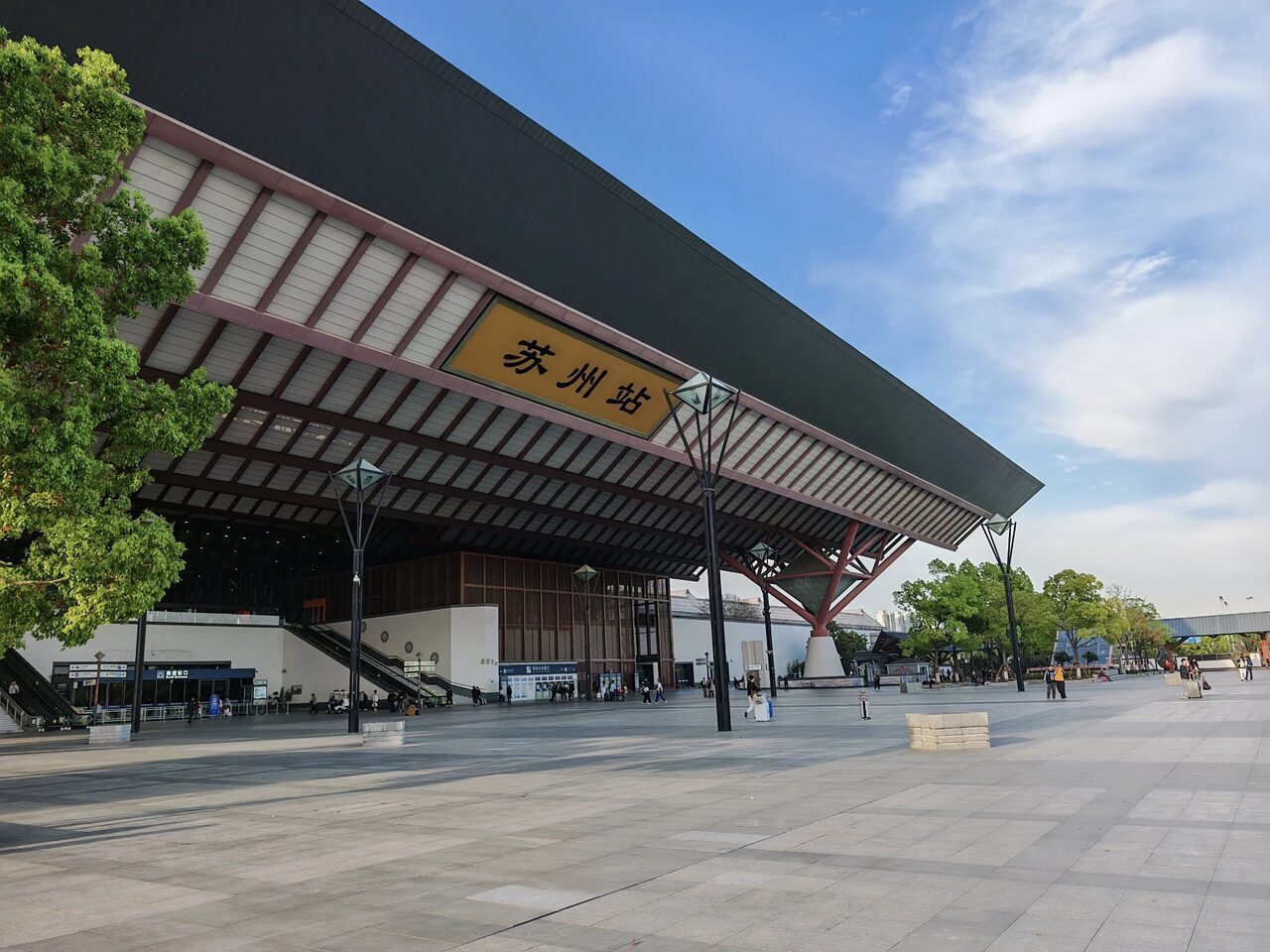
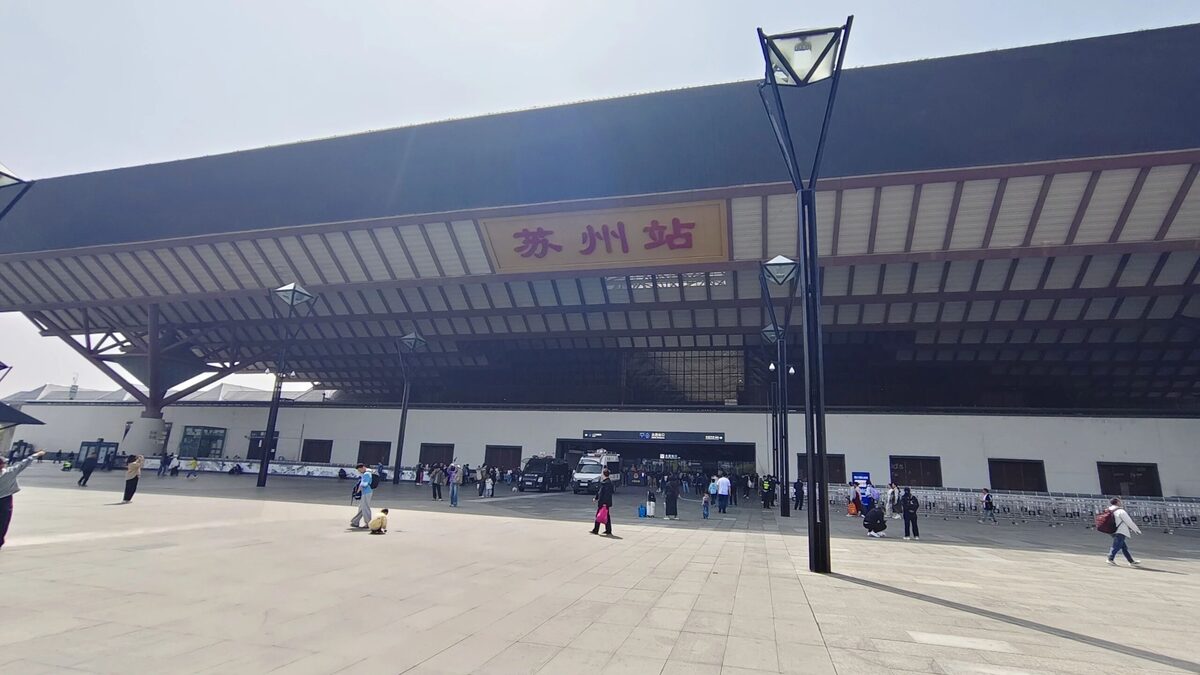
By Suzhou Railway StationOne night between trains~15 min by metroOnly worth it if you arrive late and leave early. A transit precinct with little around it, though the old town is close by metro.

The full comparison, with named chains and what each block actually costs, is in where to stay in Suzhou →

Everything we have

Which guide answers your question

Sights carry our verdict — must see, worth it, or skip if you are tight — and each group is ordered by it rather than alphabetically. Transport and practical pages do not: “must see” answers whether to go somewhere, and a railway station has no such question.

On the ground

Six things that catch people out

The free museum is the hardest ticket
The Suzhou Museum charges nothing and is the one thing here you can genuinely fail to see. Free timed slots open 7 days ahead at 08:00 and weekend stock goes the day it drops; there is no walk-up. It runs 09:00–17:00, closed Mondays — and it sits 346 m from the main garden, so a Monday visitor finds the middle of the cluster shut with both gardens open.
Your passport is the ticket, not a problem
Worth saying plainly because the opposite is usually true in China: the garden gates scan a passport directly, so it is both the booking document and the entry document and there is no window exchange. The friction is upstream instead — the official channel is a WeChat account, so book on a travel platform in English if you would rather not use it.
Panmen splits its day, not its year
Every other ticketed sight here changes price by season. Panmen changes at an hour: ¥40 for the daytime ticket, sold until 17:00, and ¥88 for the evening one that admits you to the light show. Two full fares at one gate, with no upgrade at the boundary — arriving at a quarter to five on a day ticket does not carry you into the evening.
Tiger Hill runs two calendars at once
Its FARE follows the city price list — ¥70 in April, May and July–October, ¥60 in January–March, June, November and December. Its HOURS run on a different split: 07:30–18:00 from May to October, 07:30–17:30 the rest of the year. Collapse the two and April puts you at a gate that shut half an hour ago.
The same number is four different tickets
¥40 is Lion Grove at peak, the Master of the Nets at peak, Panmen by day AND the hand-rowed boat on Pingjiang Road — four unrelated purchases that happen to cost the same. ¥30 is three more. Write your Suzhou budget as a list of gates rather than a column of figures, or you will pay one of them twice and none of the others.
Admission stops before closing, and the gap varies
The gardens stop admitting 30 minutes before they close — 17:00 against a 17:30 close in summer, 16:30 against 17:00 in winter. The museum is stricter: last entry 16:00 for a 17:00 close, a full hour. That hour is what catches people who plan the museum last.
Getting online

Your phone stops working the way you expect

China blocks Google, WhatsApp and Instagram at the network level, so a local SIM and hotel Wi-Fi do not get you round it — and since the April 2026 crackdown a VPN is no longer a dependable workaround. What works is a combination: your home SIM on international roaming, which keeps your real number for the SMS codes Chinese apps send, plus a travel eSIM — Holafly, Airalo or Nomad eSIM — routing through a foreign carrier so the firewall never applies to it.

Sort it before you fly. A foreign eSIM profile generally cannot be installed once the phone is already in mainland China, and that is a location restriction, so airport Wi-Fi does not solve it.

Which one, and why not a VPN → China eSIM vs VPN·How to buy and install one → Stay connected in China

If something goes wrong in SuzhouNational emergency numbers, hospitals used to foreign patients, and the PSB Exit-Entry offices.
  • 110PoliceGeneral emergency. English-speaking dispatchers in major cities.
  • 120Ambulance / MedicalMedical emergency. Ask for an English-speaking operator — the dispatcher can often find one.
  • 119FireFire emergency.
  • 122Traffic accidentFor traffic incidents, including on expressways and mountain roads.
  • 12308China consular protection (foreigners' affairs)The Chinese government's hotline for foreign-affairs incidents — used by foreign embassies when their citizens are in trouble in China. English-speaking operators available.

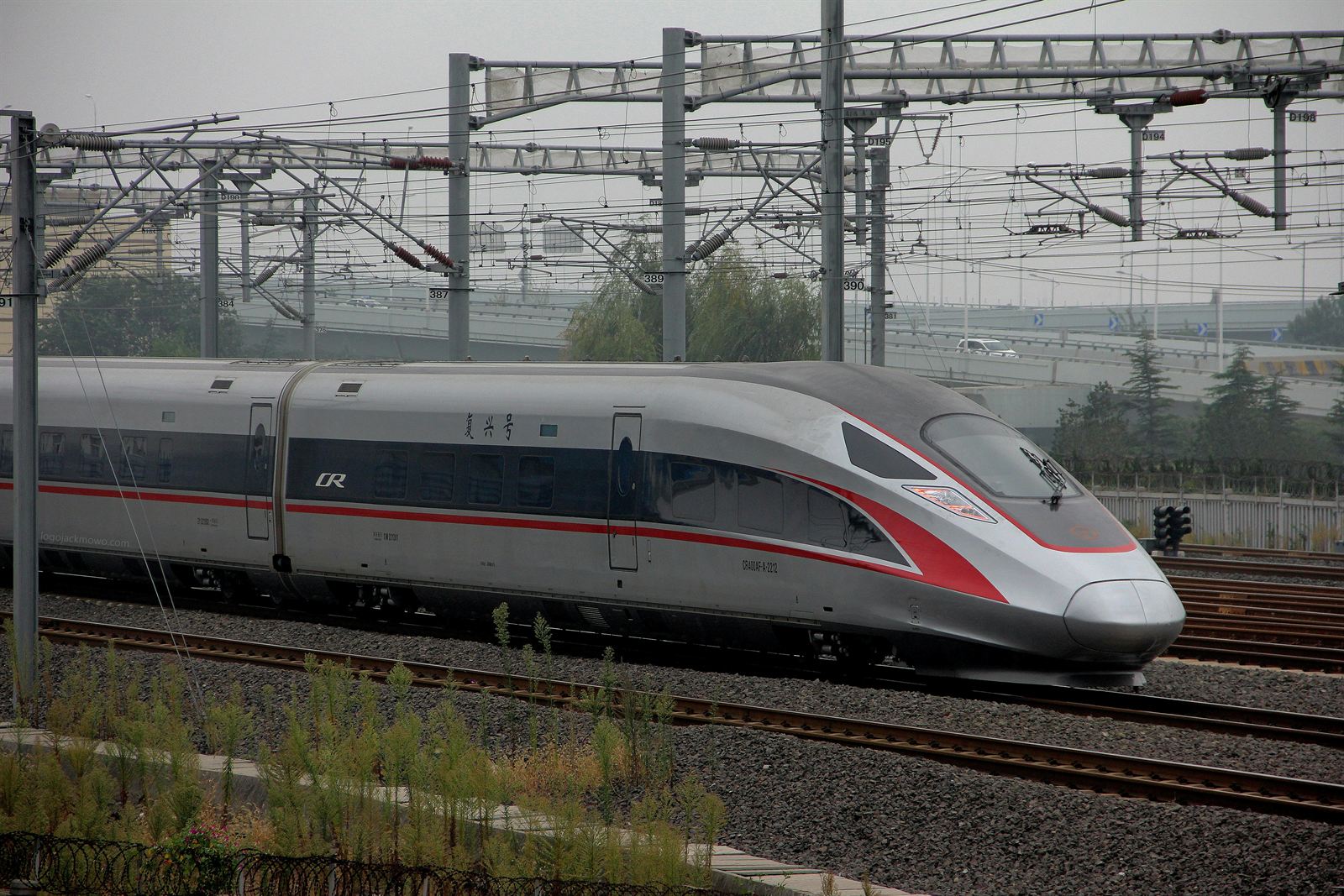
Suzhou has no operating Western consulate. The US, UK, Canadian, Australian and other east-China consular networks are based in Shanghai — and Suzhou sits closer to Shanghai than any other major Jiangnan city, roughly 25-30 minutes away by high-speed train (Suzhou or Suzhou North to Shanghai Hongqiao — see the Shanghai-to-Suzhou guide). A foreigner who loses a passport in Suzhou should phone their Shanghai consulate (or Beijing embassy) for instructions and will normally travel to Shanghai for in-person emergency-travel-document issuance — an easy same-day round trip. The local Suzhou PSB handles the police-report step regardless of where you travel for consular processing. The main municipal Exit-Entry office is at 平海路328号 by Pinglong Road East metro (Line 4); a central Gusu District window at 解放东路117号 serves the old-town garden district, and a Suzhou Industrial Park branch serves the modern Jinji Lake side. The foreigner-experienced hospitals are the Soochow University-affiliated hospitals — the First Affiliated Hospital has a central old-town campus on Shizi Street and a large modern main campus in the north.

Hospitals

For medical emergencies dial 120 (ambulance). The major hospitals listed below are large, well-equipped, and most likely to have English-speaking staff. For non-emergency visits, ask your travel insurance for in-network options.

  • First Affiliated Hospital of Soochow University (Shizi Street Campus)苏州大学附属第一医院(十梓街院区)十梓街188号Metro: Line 4 望星桥 (Wangxingqiao)The central old-town campus of one of Jiangsu's top general hospitals — walkable from the classical-garden district, Pingjiang Road and the Master of the Nets Garden. Among the most likely hospitals in Suzhou to have English-speaking doctors. Useful for foreigners staying in the old town; for a major emergency the larger main campus has the fuller 24h facilities.
  • First Affiliated Hospital of Soochow University (Main Campus)苏州大学附属第一医院(总院)平海路899号Metro: Line 4 平泷路西 (Pinglong Road West)The large modern flagship campus in the north of the city — the biggest and best-equipped of the Soochow University hospitals, with a 24h emergency department. A short walk from the main Suzhou PSB Exit-Entry office on the same road.
  • Fourth Affiliated Hospital of Soochow University (Dushu Lake Hospital)苏州大学附属第四医院(苏州市独墅湖医院)苏州工业园区崇文路9号Metro: Metro 松涛街 (Songtao Street) Exit 3 — adjacentA modern university hospital in Suzhou Industrial Park with a 24h emergency department — the convenient choice for foreigners staying on the Jinji Lake / SIP side, away from the old town.

PSB Exit-Entry Offices

Public Security Bureau Exit-Entry offices handle lost-passport reports, visa extensions, and foreigner residency registration. Use the most central municipal office for a standard lost-passport report; provincial or city-level offices handle complex cases such as visa-category changes.

  • Suzhou PSB Exit-Entry Administration (Main Office)苏州市公安局出入境管理支队平海路328号Metro: Line 4 平泷路东 (Pinglong Road East) Exit 1 — ~430m walkThe main Suzhou PSB office for foreigner cases — lost-passport reports, visa extensions, foreigner registration. Handles the police-report step before you travel to Shanghai for embassy/consulate processing. Typical hours 9am-12pm + 1pm-5pm weekdays. Bring all available passport photocopies, photo evidence and your hotel address.
  • Suzhou Gusu District PSB — Exit-Entry Window苏州市公安局姑苏公安分局出入境办证窗口解放东路117号姑苏区政务服务中心1层District-level Exit-Entry window inside the Gusu District government-services centre. Gusu is the central old-town district that contains the classical gardens, Pingjiang Road and Guanqian Street — so this is the convenient option for most tourists staying in the old town. Use it for a standard lost-passport report.
  • Suzhou Industrial Park PSB — Exit-Entry Reception Hall苏州工业园区公安分局出入境接待大厅苏州工业园区星塘大厦1层Metro: Line 3 星塘街 (Xingtang Street) Exit 4 — adjacentExit-Entry reception hall for Suzhou Industrial Park — convenient for foreigners staying on the modern Jinji Lake side, east of the old town.