Key takeaways
- Entry is free — but you need a real-name timed-entry reservation via the official WeChat channel; walk-up is almost never possible.
- Designed by I.M. Pei (his ancestral Suzhou), opened 2006, widely seen as his last great work.
- Closed Mondays; otherwise 09:00–17:00 (last entry 16:00). Booking opens 7 days ahead, slots at 08:00 daily — weekends and summer sell out in minutes.
- Metro Line 6 → 拙政园苏博 Exit 1/3, ~200 m walk; it shares a wall with the Humble Administrator’s Garden.
- Pair the museum, the Humble Administrator’s Garden and Lion Grove into one 5–6h morning, no transport between.
What the Suzhou Museum is
The Suzhou Museum’s main building is the I.M. Pei-designed museum that opened in 2006 at 204 Dongbei Street, in the northeast old town beside the Humble Administrator’s Garden. Pei (贝聿铭, 1917–2019), the Chinese-American architect of the Louvre glass Pyramid, traced his ancestral family to Suzhou — the family’s private garden, the Lion Grove (狮子林), is a short walk away — and treated the commission as a homecoming. He was 88 at the opening, and it is widely regarded as his last great completed work.
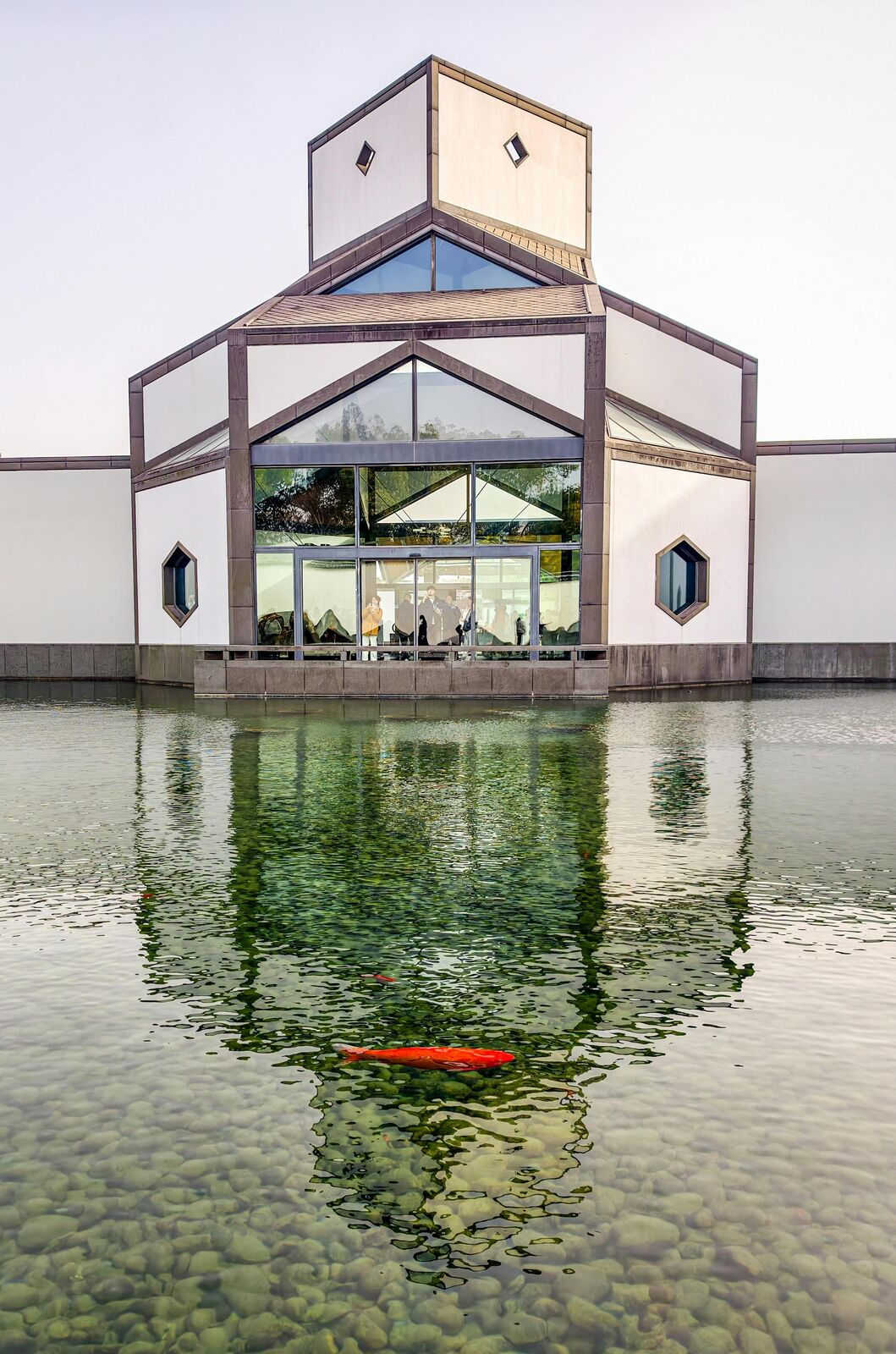
What makes it worth a visit in its own right is how Pei reinterpreted the Suzhou vernacular without copying it: the classical local palette of whitewashed walls, dark grey tile roof lines and water at the centre, rendered in crisp geometric forms with diamond-patterned glass skylights. The building is as much the experience as the collection — note that the larger, separate Suzhou Museum West (苏州博物馆西馆) in the high-tech district is a different, newer site (a 2021 building by the German firm GMP, not Pei) with its own collection; unlike the main building it needs no reservation — walk up with your passport. “The Suzhou Museum” almost always means this Pei building.
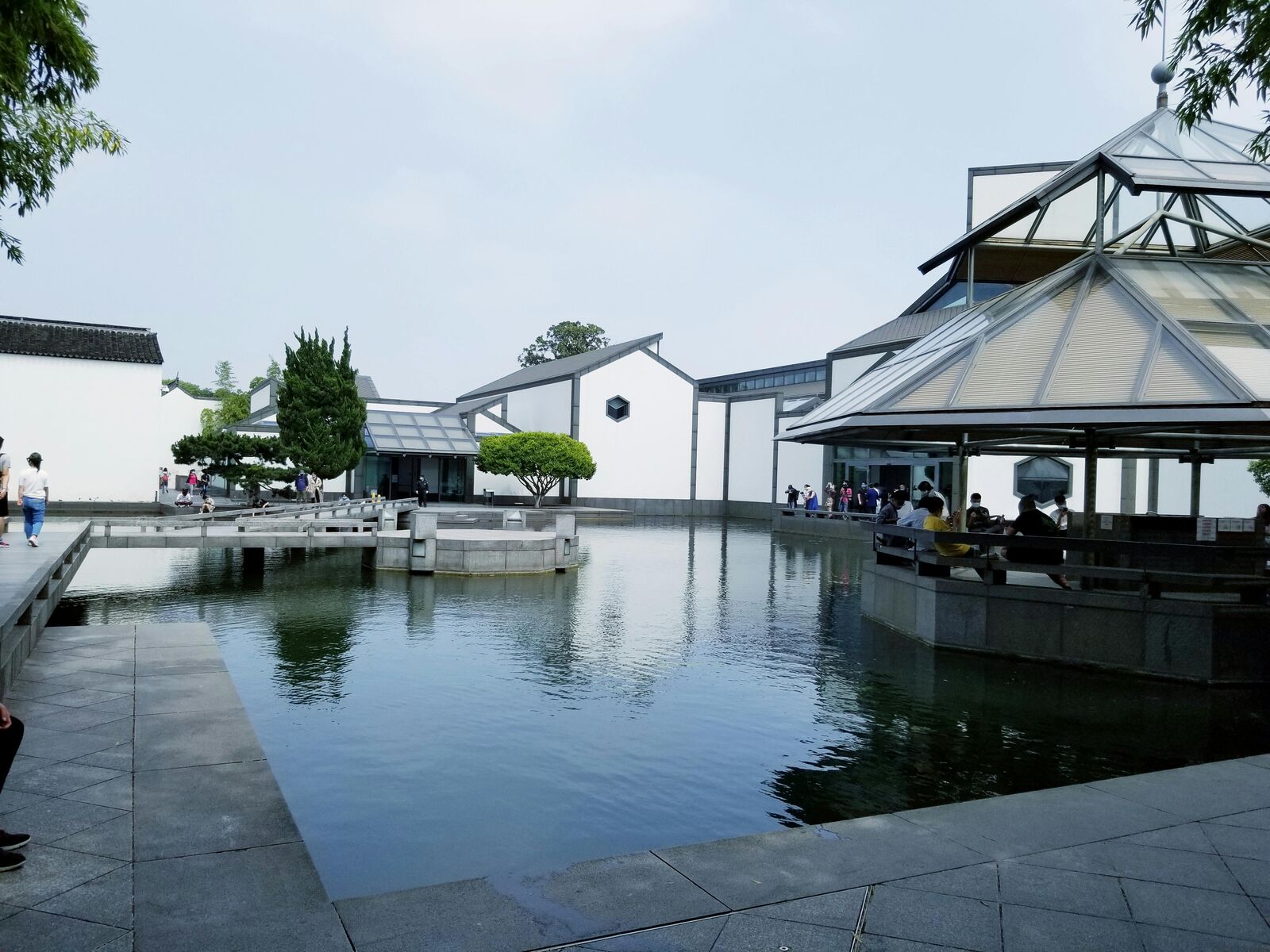
Free, but you must book a timed slot first
This is the single detail most foreign visitors miss. Entry is free — no ticket fee at all — but “free” does not mean “walk in whenever.” A real-name timed-entry reservation is required, and visitors who arrive at the gate without one are almost always turned away. The museum does not sell on-site tickets; the WeChat reservation is the only route.
| Step | Detail |
|---|---|
| How to book | Open WeChat, search the official Suzhou Museum (苏州博物馆) mini-program or account, complete the timed-entry reservation — name + passport number. Foreign passports are accepted. |
| When to book | Booking opens 7 days (counting the day itself) and slots release daily at 08:00 Beijing time. Weekdays are usually bookable within the week; weekends, the summer peak (Jul–Aug) and October Golden Week (1–7 Oct) sell out in minutes — have every visitor’s passport details pre-saved in the mini-program and submit at 08:00 sharp. |
| Hours | 09:00–17:00, last entry 16:00. Your slot is a specific entry window — arrive within it. |
| Closed | Mondays (and sometimes the day after a major public holiday). Plan around it. |
Book before you arrive in Suzhou. The Humble Administrator’s Garden next door uses a separate reservation system with its own daily cap — reserve both at the same time, or you may find the garden full on your chosen day.
Missed the slot? Check again the evening before or at 08:00 / 12:00 on the day, when unpaid holds are released. Failing that, the Suzhou Museum West (西馆) across town needs no reservation at all (walk up with your passport, also free) and is the strongest plan B; a paid special-exhibition ticket also admits you to the main building without the timed-slot scramble.
What to see inside
Two things to take in: the building and its garden, and the collection. The galleries rotate, so not everything below is on display at once — but the architecture is constant.
| Highlight | What it is |
|---|---|
| Central garden | A quiet courtyard with a lotus pond and the building’s signature sliced-stone “landscape painting” — jagged Taihu limestone set flat against a white wall to read as an ink-wash mountain range. The image most associated with the museum. |
| Geometric skylights | Diamond-patterned steel-and-glass roofs filter daylight onto delicate silk and paper without harsh direct sun — a Pei solution that doubles as the building’s defining look. |
| Jade & ceramics | Neolithic Liangzhu jade plus Tang, Song and Ming ceramics from Suzhou’s place on the trade routes. |
| Wu-school painting 吴门画派 | Ming-dynasty Suzhou was the centre of Chinese literati painting; the museum holds works of the Wu school (Shen Zhou, Wen Zhengming, Tang Yin) and rotating shows from its holdings. |
| Buddhist pagoda relics | Exceptional Song-dynasty deposits from the Ruiguang (瑞光塔) and Tiger Hill pagodas — sutras, reliquaries, and museum-rare silk embroidery and lacquerwork. |
| Ming & Qing furniture | Rosewood and huanghuali pieces from the height of Chinese cabinetmaking, with silk, embroidery and lacquerwork from the city’s craft trades. |
| The Zhongwangfu 忠王府 | The complex incorporates the surviving mansion of the Taiping “Loyal King” — one of the best-preserved Taiping-era buildings in China. It is included in the free reservation (no separate booking) and doubles as the visitor exit, so you pass through it on the way out — the nanmu-wood hall and a Wen Zhengming-planted wisteria are the highlights. |
Getting there & the old-town morning cluster
The museum is in the northeast old town at 204 Dongbei Street (东北街204号), sharing a block — and a wall — with the Humble Administrator’s Garden. Metro Line 6 (opened 2024) has a dedicated station for both, 拙政园苏博 (Zhuozhengyuan-Subo) — leave by Exit 1 or 3 and the museum is about 200 m / ~3 minutes’ walk. Three sites cluster within a five-minute walk — do them in one morning with no transport in between:
| Site | Walk · time | Why combine it |
|---|---|---|
| Suzhou Museum 苏州博物馆 | 1.5–2 h | The Pei building, central garden and galleries; the Zhongwangfu mansion is inside the complex. |
| Humble Administrator’s Garden 拙政园 | Shares a wall · 1.5–2 h | The largest and most celebrated of Suzhou’s UNESCO classical gardens — directly adjacent. |
| Lion Grove Garden 狮子林 | ~5 min walk · 1 h | The Pei family’s ancestral garden — completes the trio and the I.M. Pei connection. |
Suzhou Railway Station (苏州站) is about 3 km — roughly 10–12 minutes by taxi/DiDi, or Metro Line 2 to a Line 6 interchange. From Shanghai, the museum is a natural day trip: a G-train from Shanghai Hongqiao or Shanghai station to Suzhou Station (~23 min), then metro or a short taxi. The classical gardens of Suzhou guide covers the full day-trip logistics, including which station to use.
Best time & how long
Allow 1.5–2 hours for a comfortable visit — more if Wu-school painting, Buddhist relics or Ming furniture are a particular interest. Morning is best: the geometric skylights work with the angle of the morning sun, and the central garden reads cleanest before crowds build, so take an early reservation slot if you can.
- Avoid Golden Week (1–7 October) — the old town is among the most crowded places in China then, and both the museum and the garden hit their daily caps within minutes. If you must go, book weeks ahead and arrive at opening.
- Weekends fill fast — a weekday slot is calmer.
- Closed Mondays, so a Monday in Suzhou is best spent on Pingjiang Road or a water town.
See our things to do in Suzhou guide for how the museum fits a wider itinerary.
Practical for foreigners
- Foreign passports work for the WeChat reservation — this is one of the systems that accepts non-Chinese ID. Carry the passport you booked with.
- Photography is allowed in most areas — no tripods or flash; some galleries restrict photos on specific pieces, so follow the in-gallery signage.
- Fully accessible — ramps and lifts serve all levels; the garden areas are flat or gently sloped.
- Good museum shop — design-led gifts, silk items and reproductions that match the building’s aesthetic, better than most Chinese museum shops.
- Lunch is easy in the old-town lanes immediately around the sites.
How it fits a Suzhou trip
The museum is a free 1.5–2 hour stop at the centre of old-town Suzhou, best slotted into the morning cluster with the gardens next door. If you have both a museum slot and a Humble Administrator’s Garden ticket, sequence them back-to-back and add Lion Grove for a full 5–6 hour morning on foot. Base near Pingjiang Road (平江路) or Guanqian Street — 10–20 minutes’ walk away, and the most atmospheric part of the city for the evening; the where to stay in Suzhou guide has the neighbourhood breakdown.
Book a guided Suzhou old-town & gardens tourNASDAQ: TCOM
The museum’s own ticket is free and booked only through its official WeChat channel — Trip.com doesn’t sell it. What it does list are guided old-town & classical-garden day tours (often from Shanghai) that handle transport and the separate garden reservations in English on a foreign card.
Frequently asked questions
Is the Suzhou Museum free to enter?
Yes — admission to the Suzhou Museum's main I.M. Pei building is free. There is no ticket fee. However, free entry does NOT mean walk-up access: you must make a timed-entry reservation in advance, and without one you will almost certainly be turned away at the gate. Booking opens 7 days ahead and slots release daily at 08:00 Beijing time; on weekends, summer and Golden Week they sell out within minutes. The reservation is made online through the museum's official WeChat channel (the '苏州博物馆全预约' mini-program) using your real name and passport number — foreign passports are accepted. If you can't get a slot, the Suzhou Museum West across town needs no reservation at all.
How do I book a timed-entry ticket for the Suzhou Museum?
Open WeChat, search for the official Suzhou Museum mini-program ('苏州博物馆全预约') or official account (苏州博物馆), and follow the timed-entry reservation process. You will need each visitor's name and passport number for real-name verification (one reservation per passport per day). Booking opens 7 days ahead — counting the day itself — and slots release daily at 08:00 Beijing time. Weekdays are usually bookable within the week, but weekends, summer (Jul-Aug) and October Golden Week (1-7 Oct) sell out in minutes, so pre-save every visitor's passport details and submit at 08:00 sharp; if you miss it, re-check at 08:00/12:00 or the evening before for released unpaid holds. The museum is closed on Mondays.
What is the difference between the Suzhou Museum main building and the Suzhou Museum West?
The Suzhou Museum has two sites. The main building — the one covered in this guide — is the I.M. Pei-designed building at 204 Dongbei Street, in the northeast old town beside the Humble Administrator's Garden. It opened in 2006 and is widely regarded as Pei's last major work; entry is free but needs a timed-entry reservation. The Suzhou Museum West (苏州博物馆西馆) is a separate, much larger 2021 building by the German firm GMP (not Pei) in the Suzhou High-tech District, ~8 km west, on Metro Line 1/3 at Shizishan (狮子山) station, Exit 3A. It has its own, broader collection — a Suzhou history hall, a Suzhou-crafts hall and international loan shows — and, unlike the main building, needs NO reservation: you walk up with your passport (also free). Locals rate it a strong plan B, or even an upgrade, if the main building is sold out. When travellers say 'the Suzhou Museum' they almost always mean the I.M. Pei building covered here.
Who designed the Suzhou Museum, and what makes the building significant?
The new building of the Suzhou Museum was designed by Chinese-American architect I.M. Pei (贝聿铭, 1917-2019), who also designed the glass Pyramid at the Louvre in Paris, the East Building of the National Gallery of Art in Washington DC, and the Bank of China Tower in Hong Kong. Pei's ancestral family was from Suzhou — the Pei family's private garden, the Lion Grove (狮子林), is a short walk away — and he regarded the Suzhou Museum commission as a homecoming. He reinterpreted the Suzhou vernacular (whitewashed walls, dark grey tile roofs, water features) in a modernist idiom. He was 88 at the opening; it is widely regarded as his last major completed building.
What are the opening hours of the Suzhou Museum?
The museum opens at 09:00 and closes at 17:00 (last entry 16:00). It is closed on Mondays (and sometimes on the day after a major public holiday). Reservation slots are tied to a specific entry window, so arrive within your booked time. During peak season (October Golden Week in particular) the museum may operate extended hours — check the WeChat reservation channel for current dates.
Can I visit the Humble Administrator's Garden and the Suzhou Museum on the same day?
Yes, and this is the single best way to use a morning in old-town Suzhou. The Humble Administrator's Garden (拙政园) is directly adjacent — the museum shares a wall with it. The two sites each take roughly 1.5-2 hours. Start with whichever has the earlier reservation slot. Lion Grove Garden (狮子林) is a five-minute walk, and the Suzhou Museum incorporates the Zhongwangfu (忠王府) mansion, so you can absorb all three in a single 5-6 hour morning without any transport. Book both sites' timed-entry reservations in advance.
Which metro line goes to the Suzhou Museum?
Metro Line 6, which opened in 2024, has a station called 拙政园苏博 (Zhuozhengyuan-Subo) that serves both the Humble Administrator's Garden and the Suzhou Museum. Leave by Exit 1 or 3 and the museum entrance is about 200 metres — roughly a 3-minute walk. Line 6 connects via interchange to the rest of the Suzhou metro network. Suzhou Railway Station (苏州站), the central rail hub on the Shanghai–Suzhou–Nanjing line, is about 3 km away and reachable in about 10–12 minutes by taxi or DiDi.
How long should I plan to spend at the Suzhou Museum?
Allow 1.5 to 2 hours for a comfortable visit. The building itself — the geometry of the skylights, the central garden, the sliced-stone 'landscape painting' — rewards slow looking and is as much the experience as the collection. If you have a particular interest in classical Chinese painting (the Wu school), Buddhist relics or Ming furniture, the galleries can absorb more time. Combining the museum with the Humble Administrator's Garden next door and Lion Grove Garden nearby is a natural full morning.
Sources
Checked August 2026 · Written from our own first-hand travel in China.