This guide is written by an editorial team based in Chongqing — the editor has lived in mainland China since 2018 (8 years on the ground). The picks, ticket ranges and priority calls draw on aggregated 2024-2026 r/travelchina, r/chinalife and r/Suzhou threads, Trip.com listings, and 2026-05-22 Amap (高德地图) routing and search data. This is aggregated editorial coverage — corrections from Suzhou residents are welcomed (see the about page).
How to think about Suzhou
Suzhou — a canal city in southern Jiangsu province, about 23 minutes by high-speed train from Shanghai — is one of the oldest continuously inhabited cities in China, and one of the most concentrated for UNESCO-listed heritage. Its Classical Gardens (九处列入世界遗产) were inscribed by UNESCO in 1997 and extended in 2000. Its waterway network is the model the “Venice of the East” label was coined for, well before it was applied to a dozen other Chinese cities.
What this means in practice: Suzhou is a slow-pace city. The gardens reward being sat in, not rushed through. Pingjiang Road is best experienced at dawn or after dark, not on a midday sprint. The silk story takes half a day to do properly. The temptation — especially on a day trip from Shanghai — is to power through a check-list. The rewards are highest for travellers who resist that. Two nights is the honest minimum.
For arrival, the Shanghai to Suzhou high-speed train is the standard route: ~23 min from Shanghai Hongqiao, arriving at Suzhou Station (苏州站, central, Metro Line 2/4) or Suzhou North (苏州北站, the far-north HSR hub). For neighbourhood and accommodation choices, see where to stay in Suzhou. The full practical overview — getting around, emergency contacts, itinerary planner — is at the Suzhou city guide.
1. The Classical Gardens of Suzhou — the UNESCO headline sight
The Classical Gardens of Suzhou are the reason most foreigners make the trip, and they deserve the reputation. Nine gardens are inscribed under the UNESCO World Heritage listing; four are genuinely essential for a first visit.
The Humble Administrator's Garden (拙政园, Zhuōzhèng Yuán) is the largest and most celebrated — a 16th-century Ming-dynasty garden of pools, pavilions, rockeries and covered walkways that covers roughly 5 hectares in the city's northeast. It is also the most convenient: the 2024-opened Metro Line 6 station 拙政园苏博 sits directly outside it, making the garden cluster genuinely accessible without a taxi. Entry is roughly ¥90 in peak season; reserve online a day ahead on weekends.
The Lingering Garden (留园, Liú Yuán) is in the city's northwest, near Tiger Hill — pair these two for a northwest half-day. It is the most ornate of the four, with an extraordinary collection of decorative windows and the famous 6.5-metre Guanyun Peak limestone rock. Entry ~¥45.
Lion Grove Garden (狮子林, Shīzǐ Lín) is the most fantastical — its central rockery maze of limestone peaks, shaped to resemble lions, is like no other garden in China. It is five minutes walk from the Humble Administrator's Garden and easily combined in the same morning. Entry ~¥30.
The Master of the Nets Garden (网师园, Wǎngshī Yuán) is the smallest of the four and the most intimate — a Song-dynasty design that concentrates everything into a tight, meditative composition. It is best visited at dusk, when the crowds thin and the light softens. Entry ~¥30.
The full garden guide, with priority-visit sequences and booking advice, is at Classical Gardens of Suzhou.
2. The Suzhou Museum — I.M. Pei's last great building
Directly next to the Humble Administrator's Garden on the same Metro Line 6 stop (拙政园苏博) stands the Suzhou Museum (苏州博物馆) — the last major building designed by architect I.M. Pei, who grew up in Suzhou, and opened in 2006. It is a masterpiece of contextual modernism: white-washed walls, grey granite trim and geometric skylit galleries that echo classical garden aesthetics without copying them. The collection spans Suzhou history from neolithic jade to Song-dynasty ceramics to Ming furniture.
Entry is free but requires advance reservation — book through the official WeChat mini-program (search 苏州博物馆) or the museum website. Allow 1.5 to 2 hours. Combining it with the Humble Administrator's Garden and Lion Grove in one morning on Metro Line 6 is the most efficient sequence in Suzhou. The museum's rooftop garden and café are worth lingering over.
A deeper look at the collection and the building's architectural context is in the Suzhou Museum guide.
3. Tiger Hill (虎丘) — the leaning pagoda and the city's founding myth
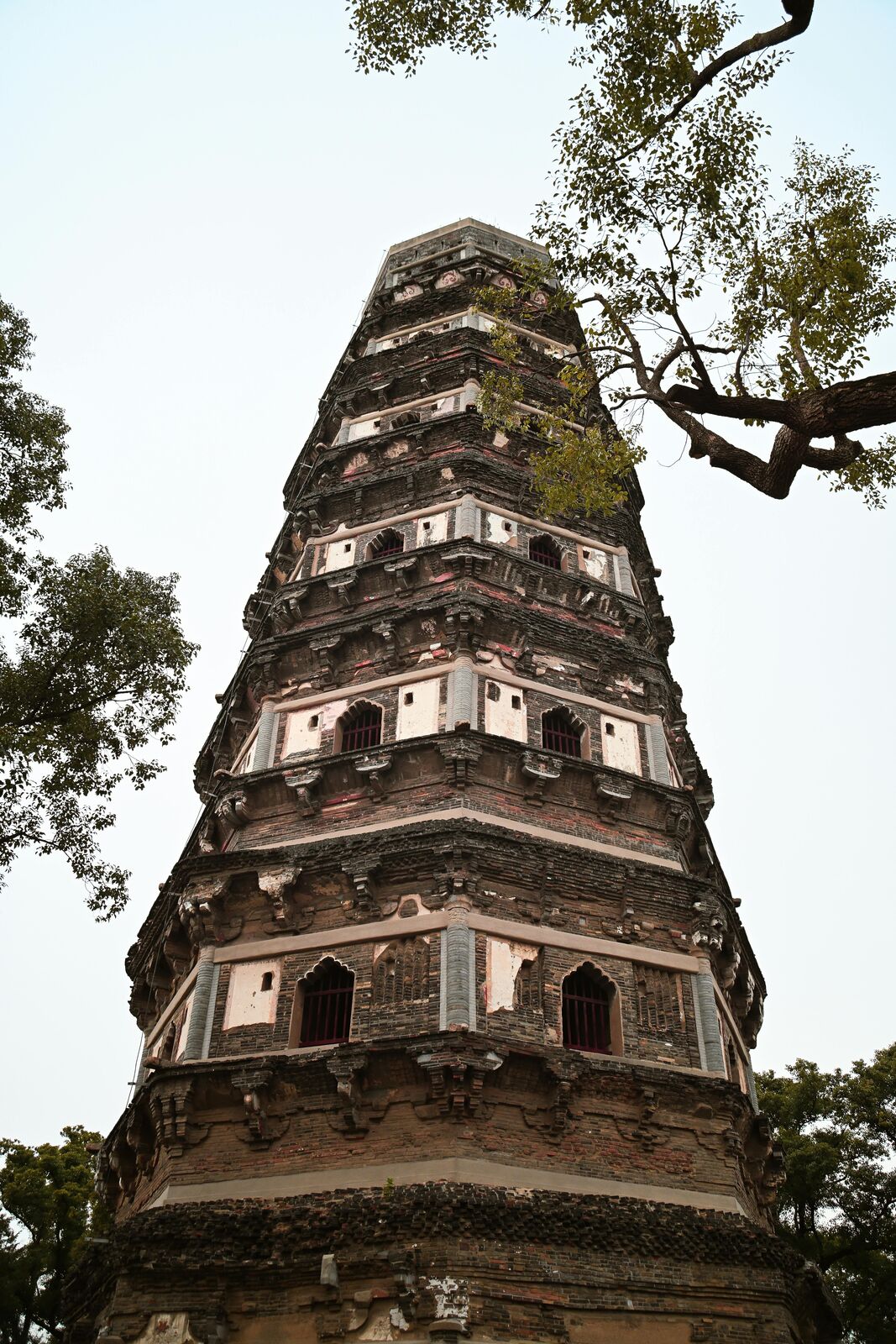
Tiger Hill (虎丘, Hǔ Qiū) is a wooded hill in the city's northwest, topped by the leaning Yunyan Pagoda (云岩寺塔, built 961 AD, “the Tower of Pisa of China”) and steeped in Suzhou's founding legend — King Helü of Wu is said to be buried here beneath the dramatic Sword Pool (剑池). It is the strongest non-garden sight in Suzhou, a half-day paired with the nearby Lingering Garden. Entry roughly ¥60; Metro Line 6 to 虎丘 station. Full guide: how to visit Tiger Hill →
4. Pingjiang Road (平江路) — the best-preserved historic street
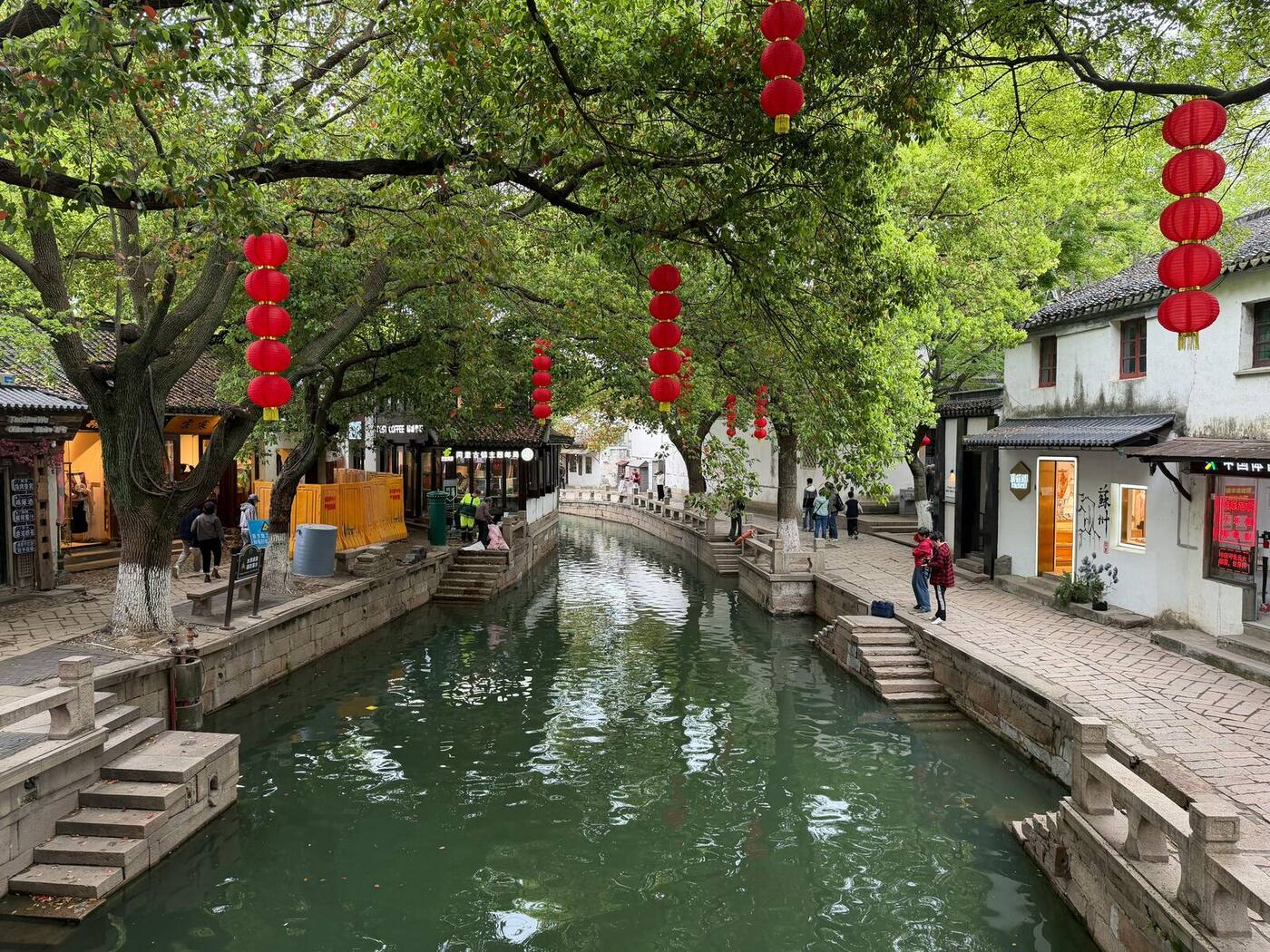
Pingjiang Road (平江路) is the old city's finest surviving historic street — a ~1.6 km lane along a canal in the northeast quarter, within the UNESCO World Heritage buffer zone, lined with whitewashed houses, stone bridges, teahouses and Kunqu opera (昆曲) and Pingtan storytelling parlours. It looks much as it did 800 years ago — the street appears on the 1229 AD Suzhou cadastral map. It is free to walk, best very early or after dark, and reached on Metro Line 6 (悬桥巷) or a short walk from the garden cluster. Full guide: how to visit Pingjiang Road →
5. Hanshan Temple (寒山寺) — the Cold Mountain Temple at Maple Bridge
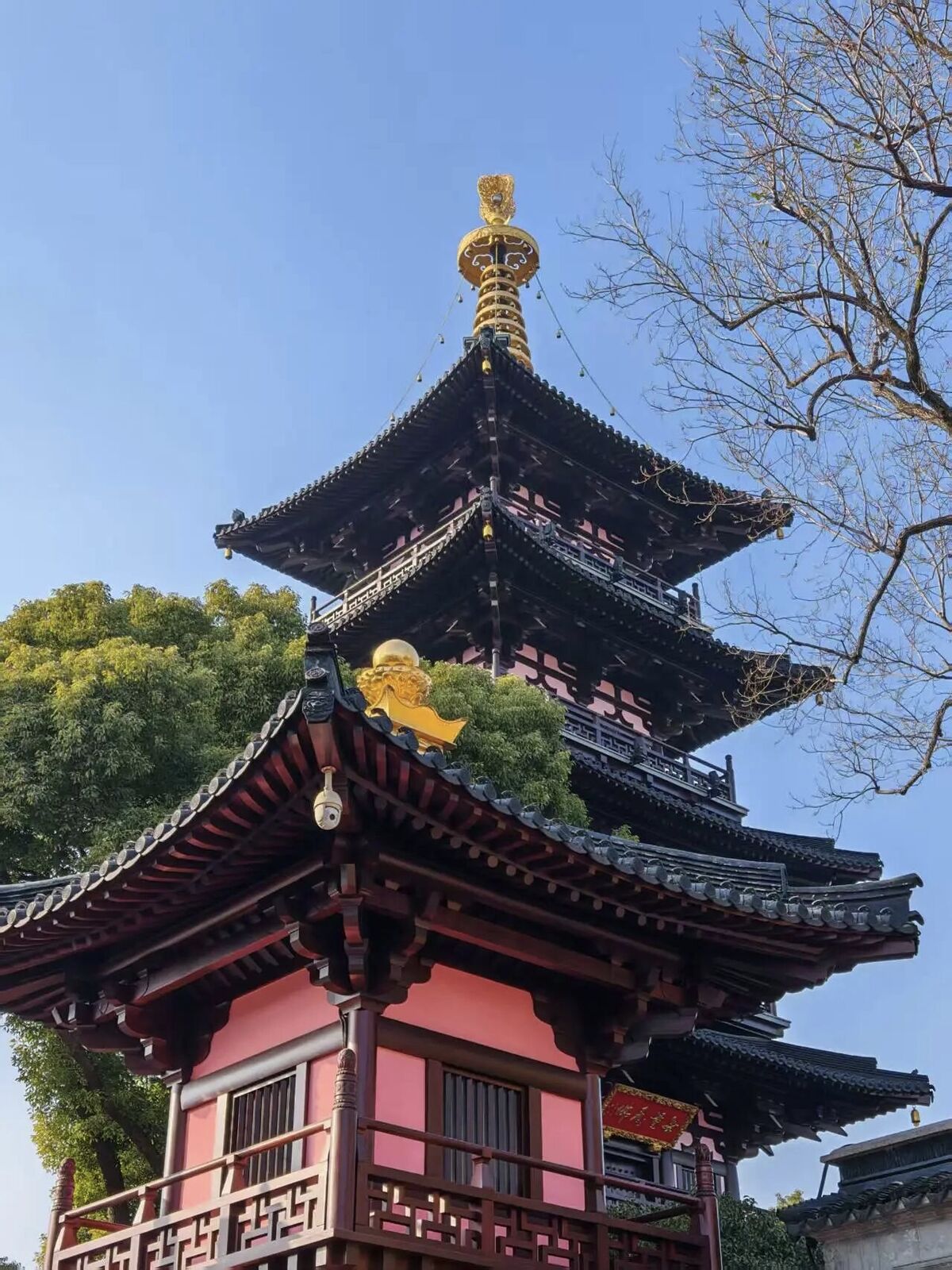
West of the old city on the Grand Canal near Maple Bridge (枫桥), Hanshan Temple (寒山寺) — the “Cold Mountain Temple”, about 1,400 years old — is one of the most literarily famous temples in China: the Tang poet Zhang Ji moored here, heard its midnight bell and wrote Maple Bridge Night Mooring (枫桥夜泊), still memorised in Chinese schools; on New Year's Eve the bell strikes 108 times. Entry roughly ¥25; best reached by taxi (~15-20 min from the centre). Full guide: how to visit Hanshan Temple →
6. Shantang Street (山塘街) — the Seven-Li Tang canal street
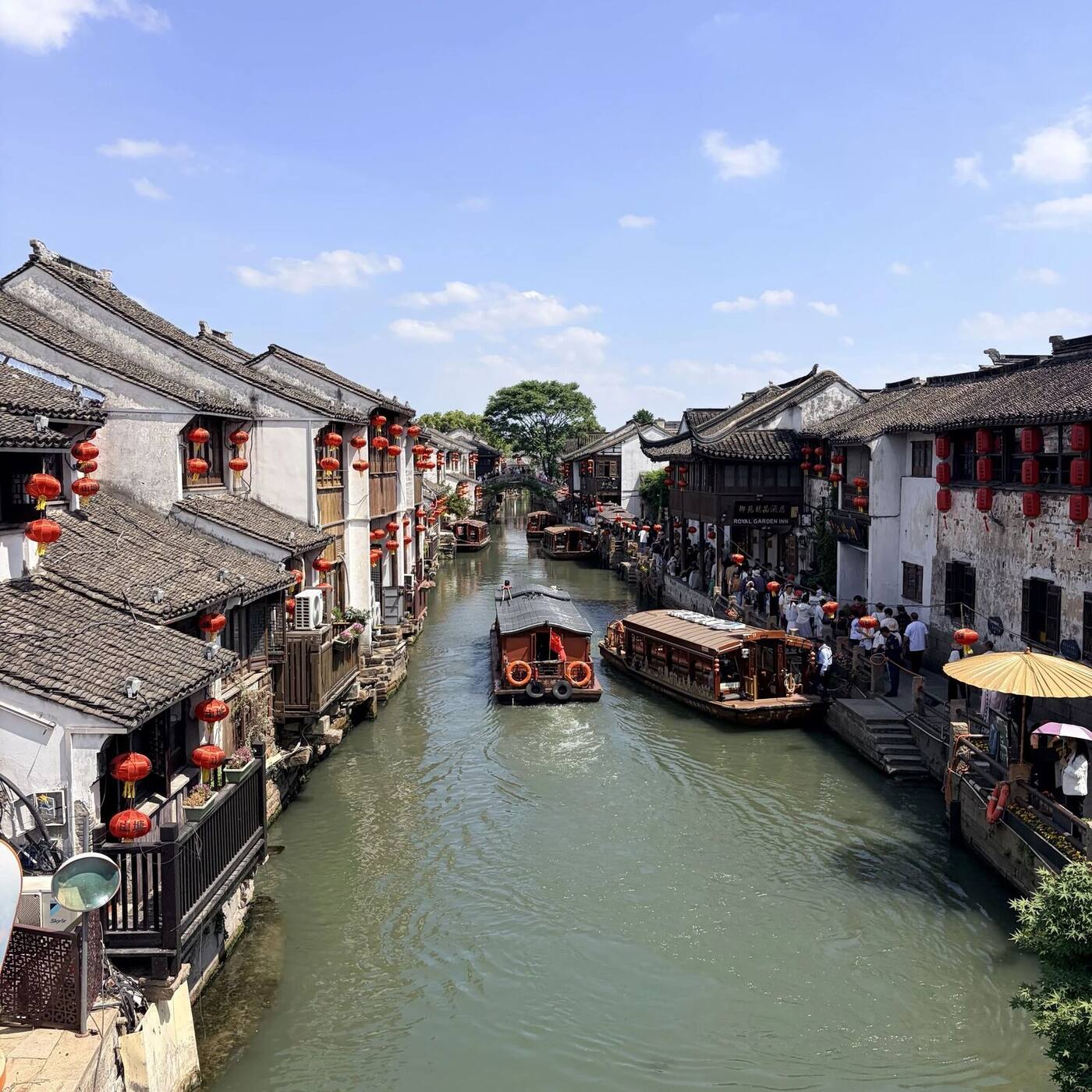
Shantang Street (山塘街) is the older, more commercial of Suzhou's two great canal streets — built in 825 AD by the Tang poet-official Bai Juyi and running ~3.5 km (“Seven-Li Shantang”) from Changmen gate toward Tiger Hill. The restored eastern half is a lively run of guild halls, snack stalls and night-lit waterfront restaurants, most atmospheric after dark; it is free to walk, with a canal boat ride about ¥30-50. Reach it on Metro Line 2 (山塘街). Pair it as an evening with Pingjiang Road in the morning. Full guide: how to visit Shantang Street →
7. The silk story — Suzhou Silk Museum and the No. 1 Silk Mill
Suzhou has been a silk weaving centre for over 2,000 years — the city's position on the Grand Canal made it the distribution hub for imperial tribute silk, and Suzhou embroidery (苏绣, Sū Xiù) is one of China's four great embroidery traditions. Engaging with the silk story is one of the most distinctively Suzhou things you can do, and it takes a half-day done properly.
Start at the Suzhou Silk Museum (苏州丝绸博物馆, near the Humble Administrator's Garden) — free to enter, with working displays of silkworm cultivation, reeling, dyeing and loom-weaving, plus historical textiles from the Han dynasty through the imperial period.
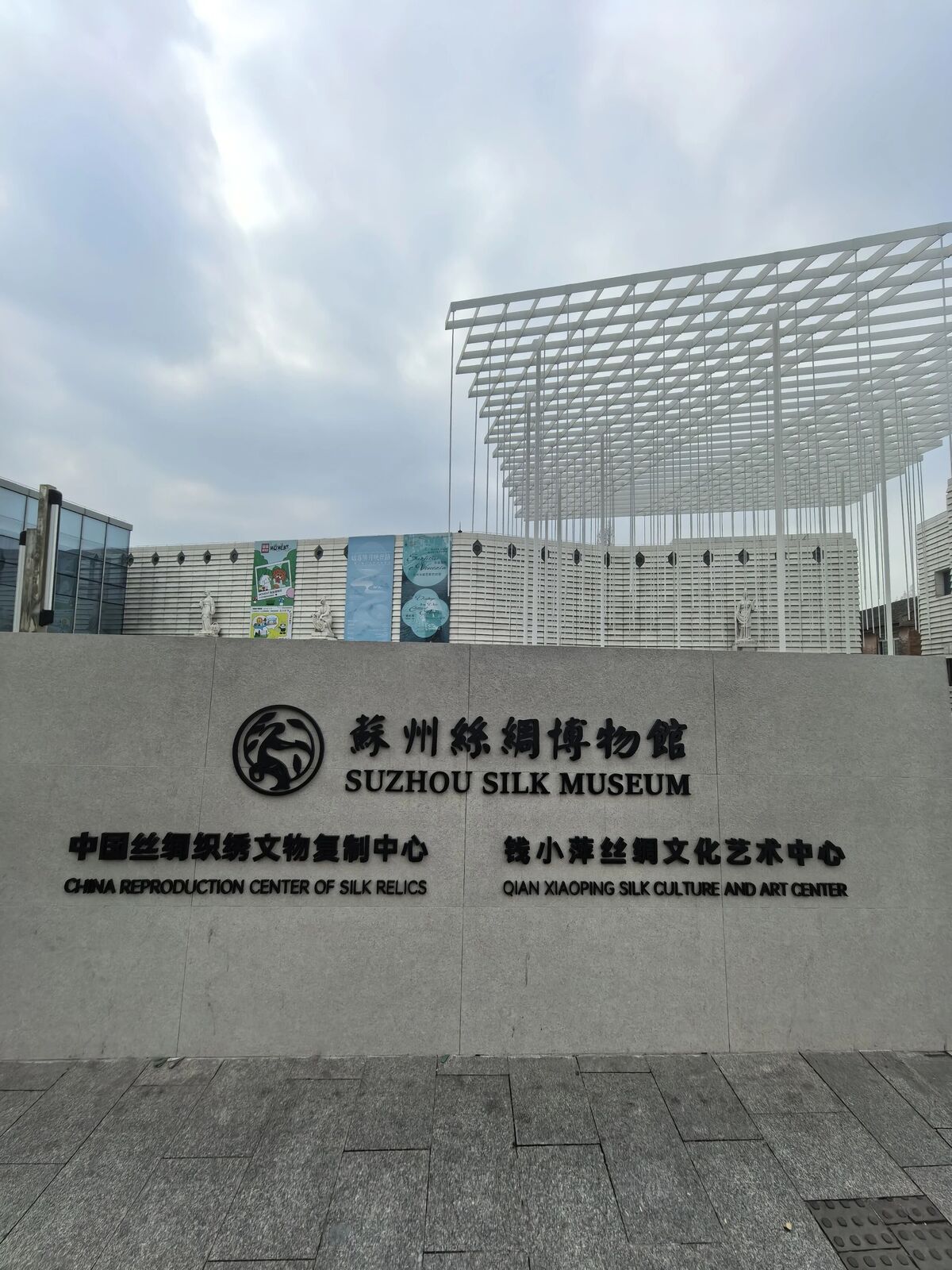
Then visit the Suzhou No. 1 Silk Mill (苏州第一丝厂) — an older working silk factory (now partly tourist-oriented) where you can watch filament reeling and industrial jacquard weaving, and buy directly from the manufacturer.
A word on buying silk: the “silk factory” stops on group-tour itineraries often sell low-grade blended fabric at high prices. Better options: the Silk Museum shop (fixed, vetted pricing), the established vendors around Shengmen Road, or buying after a real mill visit where you can verify the weave. Ask for a fabric-content receipt and request the burn test if you are uncertain: genuine silk smells like burning hair and leaves grey ash; synthetic fibres melt and smell of plastic.
8. The Grand Canal and Panmen — the old city gate
The Grand Canal (京杭大运河) passes through Suzhou's southwest, and the best point to engage with it is Panmen (盘门, the “Coiled Gate”) — the only surviving section of Suzhou's ancient city wall and watergate. The intact land-and-water gate, with the adjacent Ruiguang Pagoda (瑞光塔) and the high Wumen Bridge (吴门桥), forms the “Three Scenes of Panmen”. The scenic area takes about 1.5 hours, costs a modest ~¥25, and is a quiet, architecture-first alternative to the garden circuit. Full guide: how to visit Panmen →
9 & 10. Water-town day trips — Tongli and Zhouzhuang
The Jiangnan water towns near Suzhou — canal networks of stone bridges and whitewashed houses — make a strong third-day add-on. Tongli (同里) is the easy, quiet choice: about 20 km south, now on Metro Line 4, with the UNESCO-listed Retreat and Reflection Garden — the pick for a spare afternoon. Zhouzhuang (周庄) is the most famous (the double bridges) but the most crowded, in Kunshan about 1–1.5 hours by bus. Both are bundled at ~¥100; with one slot, Tongli wins on ease and crowds. Full guide: Tongli vs Zhouzhuang →
For an organised day trip that covers the logistics — including transfers and an English-speaking guide — comparing packaged options saves significant planning time:
Compare Suzhou water-town day tours on Trip.com →
Putting it together — a 2-3 day plan
Metro Line 6 (opened 2024) changes the practical sequencing of Suzhou significantly — the garden cluster is now one stop from the centre. A clean 2-3 day sequence:
- Day 1 — the garden cluster. Metro Line 6 to 拙政园苏博: the Humble Administrator's Garden in the morning (arrive by 8 am before the tour groups), then the adjacent Suzhou Museum and Lion Grove. Walk or take Line 6 one stop south to Pingjiang Road for the afternoon and early evening. Optional: Shantang Street for dinner and canal-side nightlife.
- Day 2 — northwest circuit. Metro Line 2 to 虎丘 station: Tiger Hill (including the Sword Pool and the leaning pagoda). Then 15-20 minutes south to the Lingering Garden. Afternoon: the Silk Museum and the No. 1 Silk Mill. Evening: Hanshan Temple and Maple Bridge (taxi or DiDi, 15-20 min from the centre) — best at dusk before the temple closes, or return during the day.
- Day 3 (if you have it). A full day in Tongli (Metro Line 4 south): the Retreat and Reflection Garden in the morning, lunch in the canal-side restaurants, a slow afternoon walk of the town. Or, if the Grand Canal history is the draw: the Panmen old city gate and Ruiguang Pagoda in the morning, then the Master of the Nets Garden at dusk.
The Suzhou city guide has the full 2 / 3 / 5-day itinerary planner, the metro line overview and the emergency essentials. Base in the old town (Guanqian Street / Pingjiang Road area) to have the garden cluster and the canal streets walkable from your hotel.
Browse Suzhou tours and attraction tickets on Trip.com →
Frequently asked questions
What are the top things to do in Suzhou?
How many days do you need in Suzhou?
Which Classical Garden in Suzhou should I visit?
Is the Suzhou Museum free?
How do I get around Suzhou?
Is Suzhou worth visiting or just a day trip from Shanghai?
What is the best time of year to visit Suzhou?
How do I get to Tongli or Zhouzhuang from Suzhou?
What silk should I buy in Suzhou, and how do I avoid getting ripped off?
Related Suzhou guides
- Suzhou city guide — getting in and out (no Suzhou airport — the Shanghai rail options), getting around, where to stay, and the itinerary planner.
- Classical Gardens of Suzhou and the Suzhou Museum guide — the headline UNESCO gardens and I.M. Pei's building, in full detail.
- Where to stay in Suzhou — old town vs. Jinji Lake vs. near Suzhou North Station; which area for the gardens and which for onward HSR.
- Shanghai to Suzhou by high-speed train — 23 minutes from Hongqiao; which Suzhou station to use for the gardens vs. the HSR hub.
Sources: editorial team based in Chongqing (8-year mainland-China resident), editor's about page, Amap (高德地图) routing and POI data queried 2026-05-22, and aggregated r/travelchina, r/chinalife and r/Suzhou threads 2024-2026. Ticket prices, reservation rules and Metro Line 4 Tongli-extension operational status change — confirm before your visit.