Key takeaways
- Check it is running before you set out. It shuts a full day roughly once a month for maintenance — usually a Tuesday or Wednesday, announced only two to three days ahead.
- Buy the ¥30 one-way, not the ¥50 return: the return leg makes you take a fresh queue number at the far station, so it is the same wait twice. Cross once, come back on the metro.
- The binding number is last admission, not closing — be inside by about 21:30 in summer, 20:30 in winter.
- A ticket is not a boarding pass: whatever you buy, you take a queue number on the day. There is no paid fast lane — anyone selling one is running a scam.
- You may not need to ride at all. Baixiangju and the Dongshuimen bridge deck are free, and the ¥15 Liangjiang ferry sells the on-the-water version for half the fare.
What the cable car actually is
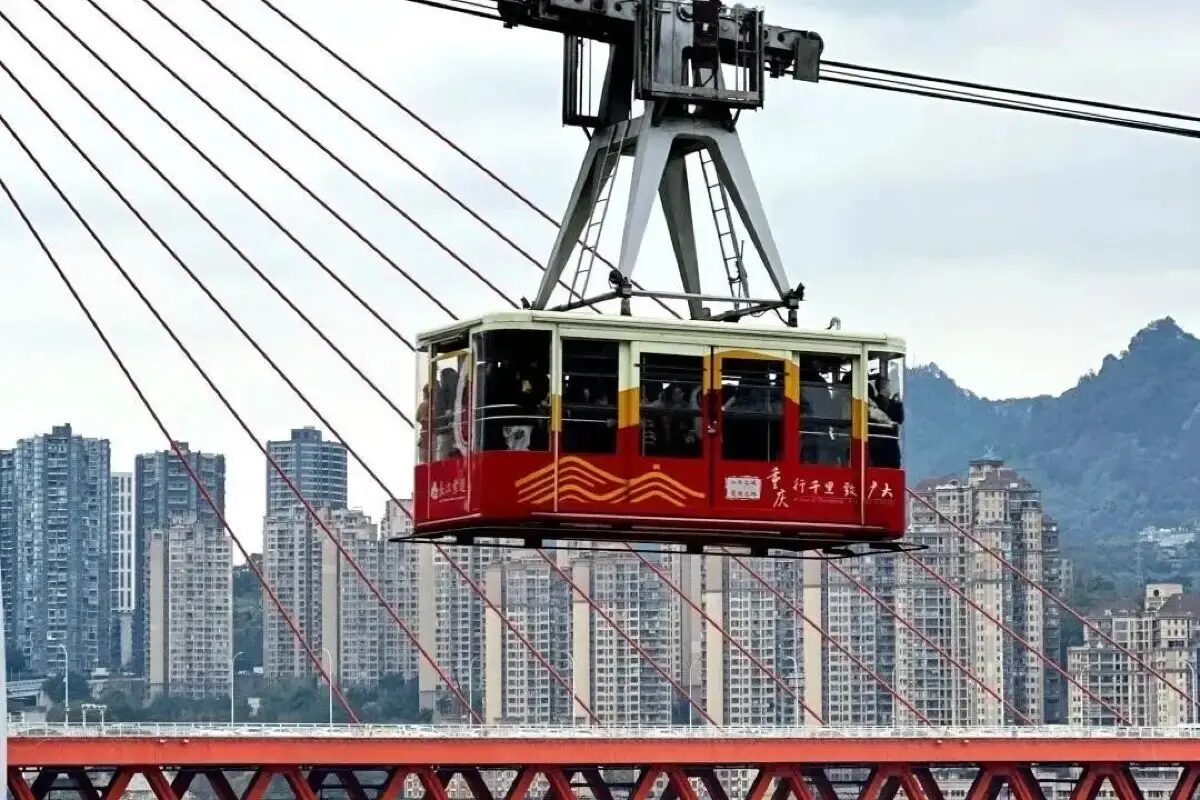
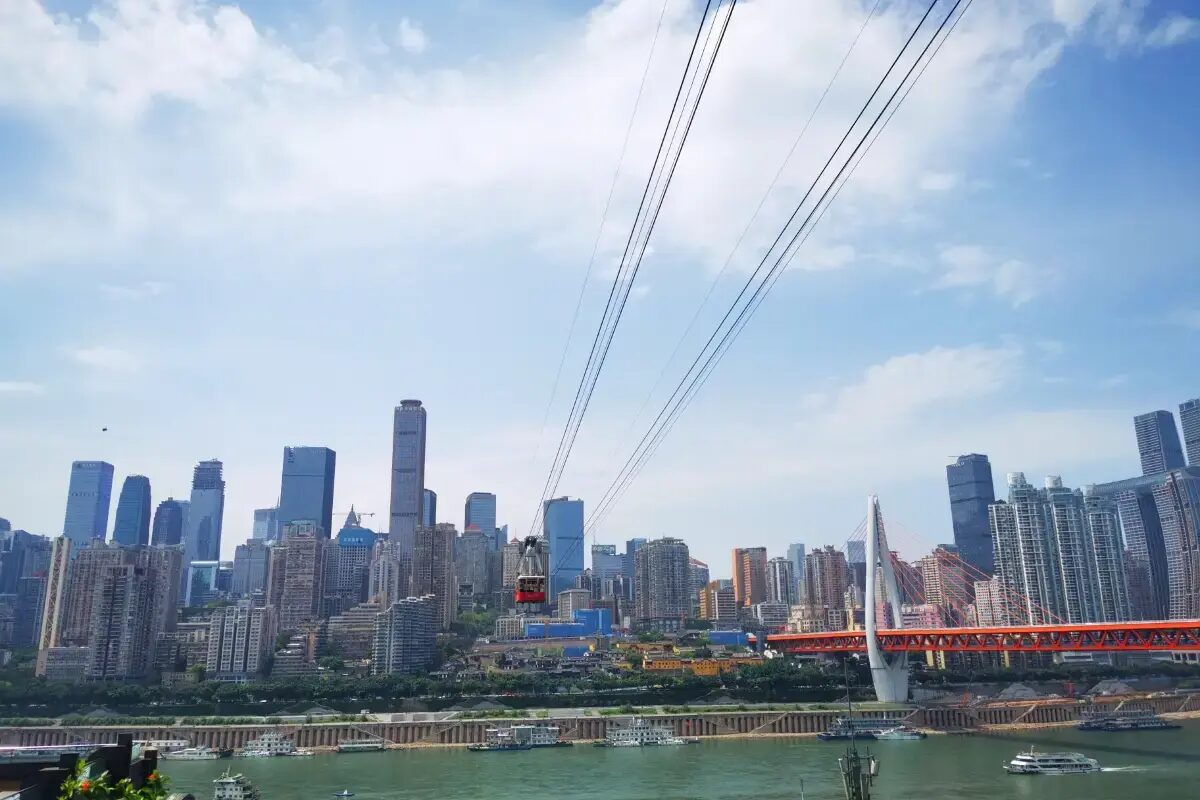
The Yangtze Cable Car — also written Yangtze River Cableway, which is how most official English listings render 长江索道 — opened in October 1987 as a working commuter line. Central Chongqing had no road bridge across the Yangtze at the time, and south-bank residents commuting to Yuzhong jobs took ferries; the cableway cut that crossing to about five minutes. Bridges came, then metro Line 1 went under the river, and the commuter traffic disappeared. What survived is a 1,166 m span of thirty-eight-year-old aerial infrastructure that now exists almost entirely because people want to ride it — industrial nostalgia kept running as tourism. It is not a thrill ride. It is four and a half minutes of slow height over a big river.
That is the easy part. The hard part is that almost everything that decides whether this is a good hour of your trip happens before you board: whether it is running that day, which ticket you bought, when admission closes, and whether you end up at a window or behind three rows of shoulders. This guide is built in that order.
Where the cableway sits, and what it crosses
18 km across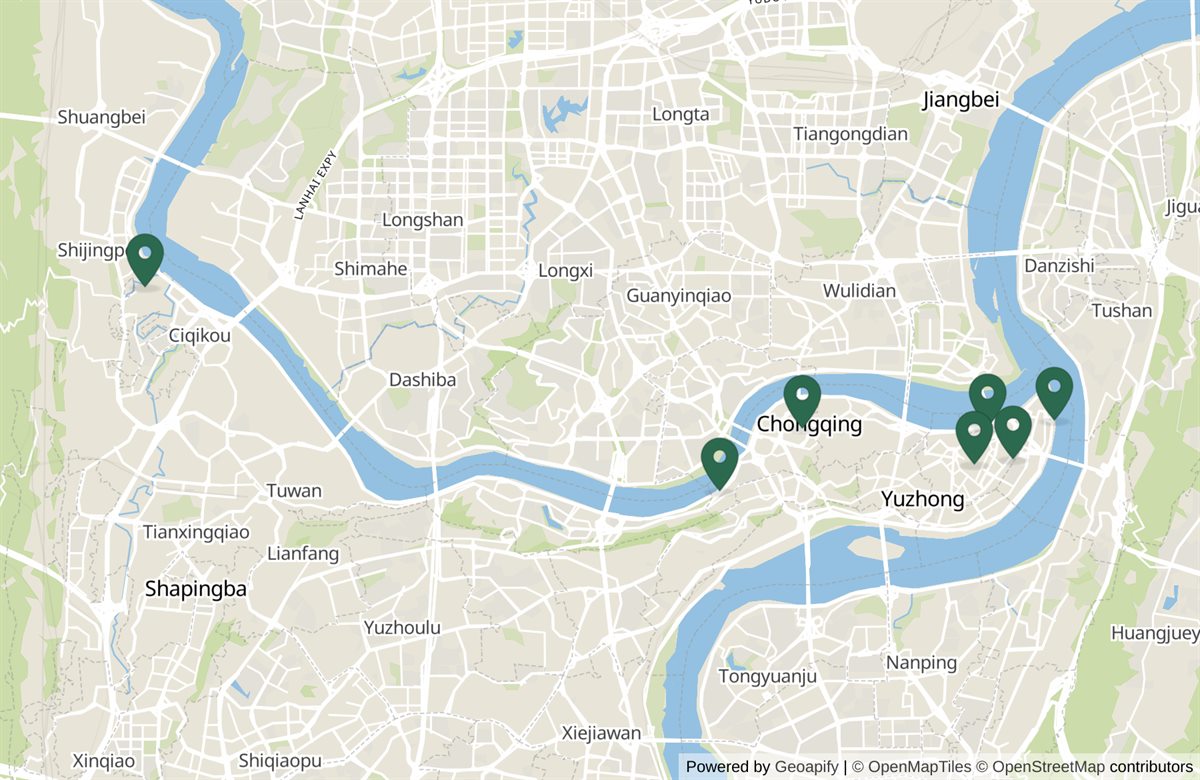 Ciqikou Ancient TownCiqikouLizibaCablewayThree Gorges Museum3 Gorges Museum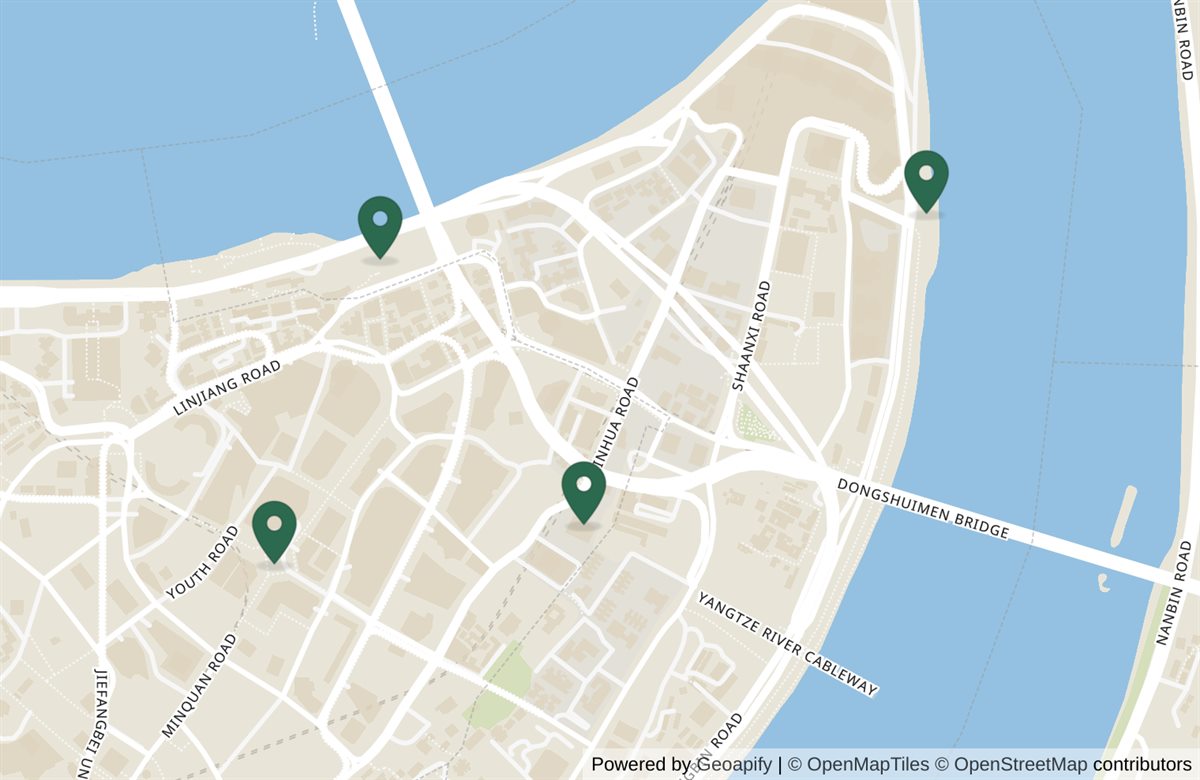
Check it is running before you set out
Nothing else on this page will cost you an evening as cheaply as this will, and it is almost impossible to find in English:
Shuts for a full day roughly once a month for scheduled maintenance — usually a Tuesday or Wednesday, announced only about two to three days ahead on the operator's WeChat account (2026 dates on record: 31 Mar, 22 Apr, 27 May, 29 Jul). Heavy fog or storms can also suspend it at no notice — so keep the fallbacks in the plan: the ¥15 Liangjiang ferry, or the free viewpoints at Baixiangju and on the Dongshuimen bridge.
Two things about that make it worth planning around rather than shrugging at. The closure falls on a weekday — which is exactly the day a queue-conscious visitor would pick. And the notice period is short enough that a plan made a fortnight out cannot account for one, so the check belongs in the last few days before you go, not in your original itinerary. The announcement goes out on the operator’s WeChat account and is picked up by the Chongqing municipal government site, which is where the dates in the box come from.
Weather is the other half. Chongqing fogs in seriously from January to March, and heavy fog or a storm can suspend the service with no notice at all. Even when it runs in fog, the crossing is a white-out — you pay ¥30 to look at cloud for four minutes. If the forecast is thick, spend the evening somewhere with a roof.
Tickets, hours, and why not to buy the return
The fare is ¥30 one-way / ¥50 round-trip, and the round-trip is the one genuine trap on this page. It looks like a ¥10 saving on two singles. It is not, because of how the return works:
A return ticket does not hold your place. When you want to come back, you take a fresh queue number at the far station and join the line like everyone else. There is no through-ticket lane. On a busy evening ¥50 buys you the same wait twice, for a ride that lasts four and a half minutes each way.
So the default is a one-way at ¥30: cross once, spend the time you would have spent queuing on the far bank, and come back on the metro or in a taxi. Buy the return only if you are riding at genuinely quiet hours in both directions — a mid-morning crossing out and a late one back, say. Children under 1.2 m ride free with a paying adult.
Three combos are sold, all built on a one-way crossing rather than a round-trip:
| Combo | Price | What it adds |
|---|---|---|
| One-way cableway + Cloud Eye observation deck 长江索道单程索道票+重庆云端之眼观景台门票 | ¥98 | Sold from the south station. The deck alone is ¥68 and a cableway single is ¥30, so the bundle is the sum — it buys convenience, not a discount. |
| One-way cableway + audio-guide headset 长江索道单程索道票+智能导览耳机 | ¥40 | Adds a ¥10 headset to a single crossing. |
| One-way cableway + souvenir ticket 长江索道单程索道票+索道纪念票 | ¥45.9 | A printed keepsake ticket on top of a single crossing. |
Do the arithmetic on the Cloud Eye bundle before you buy it. A ¥98 headline reads like a package deal; add the two component prices in the row above and you get the same figure. What you are buying is one transaction instead of two.
Hours — and the number that actually binds
| Fact | Detail |
|---|---|
| Opened | October 1987 (38 years old in 2026) |
| Length · crossing | 1,166 m · ~4½–5 minutes |
| Hours | 08:00–22:00 Mar 1–Nov 30; 08:00–21:00 Dec 1–end Feb; public holidays 07:30–22:30 |
| Last admission | Admission stops before closing — allow 30 minutes, i.e. be inside by ~21:30 in summer and ~20:30 in winter |
| Closed | One full day a month for maintenance — see operatingStatus; occasionally two consecutive days |
| North station (Yuzhong) | Xinhua Road — Line 1/6 to Xiaoshizi (小什字), exit 5B; visitor centre at exit 5A |
| South station (Nan’an) | 上新街 4号 — Line 6 / Loop to Shangxinjie (上新街), exit 2, then 634 m on foot (~8 min) |
If you are timing a crossing for dusk — and most people are — the closing time is not the number you need; the last-admission row above is. Sources differ on the exact cut-off, some giving twenty minutes and some thirty, and Amap’s own listing shows an earlier one at the north station than at the south. Thirty minutes is therefore the figure to work to rather than the finest one you can find.
The queue, and the queue number nobody mentions
Queue length is what decides whether this is twenty minutes of your evening or two hours of it, and it swings hard:
| When | Typical wait | What to do |
|---|---|---|
| Ordinary weekday | Little to none, or 10–15 min | Just go. This is the window. |
| After ~20:30 | South station close to walk-on | The quiet late option, but mind last admission. |
| Weekend / holiday evening | An hour and up | Check the live count first; consider the free viewpoints. |
| Golden Weeks, Spring Festival | Two hours at worst | Buy a day ahead, or skip it entirely. |
The mechanism first-timers do not expect is that buying a ticket is not the same as boarding. Whatever channel you bought through, you take a queue number on the day — at the self-service machines on site, or through the 电商取号 (“e-commerce number collection”) function on the operator’s account — and you board when your number comes up. Aim to be there about thirty minutes before your slot.
Two things follow. First, the operator’s account shows a live queue count for each station, which is the only honest way to pick an end on a busy day; the old advice that the south station is the quiet one dates from before the crowds levelled out. Second, there is no paid fast lane. The system is a single queue plus numbers, so anyone at the station offering an “inside channel” or a skip-the-line ticket for cash is running a scam — they walk you to the same ordinary line.
One more piece of friction worth knowing before you buy: the operator names 携程 (Ctrip, whose international site is Trip.com) and 同程 as its only authorised resellers. A ticket bought through another platform is still valid, but it has to be exchanged for a queue number at the visitor centre in person rather than online — which on a busy day is the slower of the two doors.
Which end to start from, and which side to stand on
Because the return leg re-queues you, the end you start from is really the question of where you want to be afterwards — not a queue-avoidance tactic. The two banks hand you completely different evenings:
| Start from | You land at | Pick this if |
|---|---|---|
| North (Yuzhong) Xinhua Rd, Xiaoshizi 5B | The south bank — Longmenhao Old Street (龙门浩老街) and Xiahaoli (下浩里), old-street lanes and cafés, then Nanbin Road for dinner | You are staying around Jiefangbei and want the evening to end on the far bank looking back at the skyline |
| South (Nan’an) Shangxinjie exit 2, 634 m | Yuzhong — Jiefangbei, Hongyadong and Baixiangju all within a short walk of the north station | You are already on the south bank, or you want to arrive into the lit skyline rather than away from it |
Inside the cabin, adjust your expectations before the doors open. There are no seats. Several dozen people board at once, there is no air conditioning, and the glazing has yellowed with age. Which side you end up on is the whole difference between seeing the river and seeing the back of someone’s head, and it is decided in the ten seconds while everyone files in — so move to a window as you board rather than working it out mid-crossing.
Travellers consistently report the same side is the one worth having, whichever way you are going: the left riding north to south, the right riding south to north — which is the same side of the crossing either way — for the angle on the Dongshuimen Yangtze Bridge. Press the lens flat against the glass to cut reflections, and expect a slight sway over the water; it is normal, and it is over in four and a half minutes.
Watching it without riding it
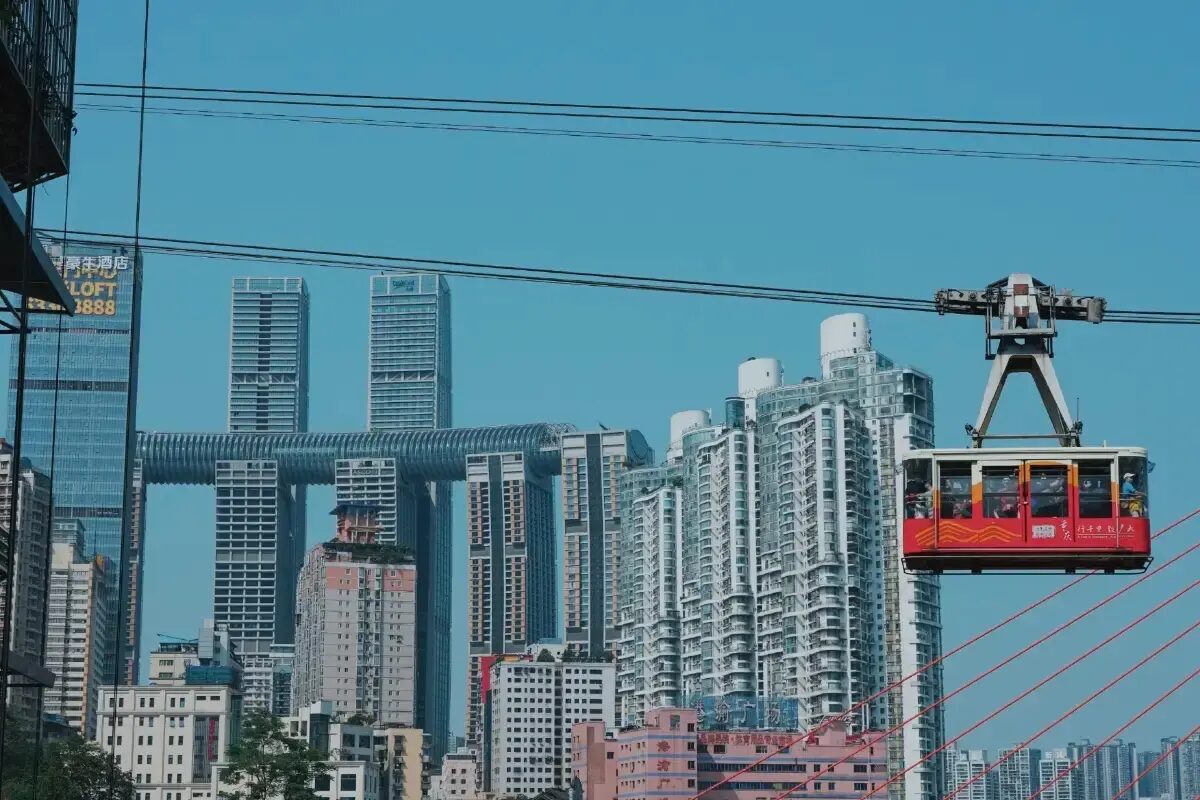
Some of the best photographs of the cableway are taken from the ground, and none of the places below costs anything or has a queue. This is the honest answer when the wait is an hour, when it is a maintenance day, or when ¥30 is competing with dinner.
| Where | Getting there | What you get |
|---|---|---|
| Baixiangju 白象居 | 658 m / ~9 min walk from the north station | A lift-less 24-storey block from the 1980s; from its lanes and upper levels the cabins pass between the old towers. The signature shot. |
| Dongshuimen bridge deck 东水门长江大桥 | Take the lift up to the bridge | The cables run overhead; wait for a cabin. The Raffles towers close the background. |
| Below the south station | Ground level at 上新街 4号 | Stand under the arrival span and shoot straight up — red cabin, yellow building, sky. |
| Zhonglou Square 南滨路钟楼广场 | On Nanbin Road, south bank | The long-lens frame from across the water. Best in the soft light before dusk. |
The ¥15 ferry that locals suggest instead
If what you actually want is to be out on the water looking at Chongqing, the Liangjiang ferry (两江小渡) is the local recommendation and it costs ¥15 — under 1.2 m free, bought at the pier, no booking. Hongyadong to Danzishi sails 09:30–18:00 and Danzishi to Hongyadong 09:00–17:30; a loop service leaves Danzishi once a day at 18:30, calling at Jiangbeizui and Yemaoxi. It is a bigger, emptier space than a cable car cabin, and nobody queues for it.
Don’t confuse the two boats. The Liangjiang ferry (两江小渡) is the ¥15 working passenger boat described here. The Two Rivers night cruise (两江游) is a sightseeing product from ¥158. The names are nearly identical in English and the prices are an order of magnitude apart. One caveat on the ferry: it is not a substitute for the crossing itself, because it works the Jialing side rather than the Yangtze span the cableway makes.
Making the ride functional: the south-bank evening
The most defensible way to use the cable car is as transport you were going to need anyway — cross once in the late afternoon, spend the evening on the south bank, and come home on the metro. That way the ¥30 buys a crossing you wanted rather than a novelty you queued for, and you never face the return queue at all.
| Step | Distance | What |
|---|---|---|
| Cross north → south | 1,166 m · ~4½ min | ¥30 one-way from the Xinhua Road station. Late afternoon, before the evening peak builds. |
| Longmenhao Old Street 龙门浩老街 | 386 m from the station | Restored lanes on the slope above the river. Open all hours; the shops keep their own. |
| Xiahaoli 下浩里 | 202 m past Longmenhao | The quieter, more café-ish half, at the bridge junction. Grounds 08:30–24:00, shops from 10:00. |
| Dinner on Nanbin Road, then the metro | 166 m to Shangxinjie | The lit riverside strip, with the Yuzhong skyline as the view back. Home on Line 6 — no second queue. |
That is about 750 m of walking after you land, in one direction, ending at a metro entrance rather than back at a ticket barrier. The reason the sequence ends on the metro rather than a return crossing is not laziness: in winter the last admission is around 20:30, so a post-dinner ride back is often not available at all — and when it is, it is another queue number.
Book a Chongqing day tour — 3 platforms compared
Sorted by format, not commission · all take a foreign card & English checkout
- GetYourGuide★ Editor’s pick
Chongqing Deep Explore — Private Car Service (incl. meals)
★ 4.9(118 reviews)Private carFull day · mealsFree cancellation
Verified Aug 2026 · re-checked quarterly
Book on GetYourGuide$189from · per person - Viator
Chongqing 8D Mountain-City Full-Day Join-In Tour
★ 4.8(43 reviews)Group join-in7–8 hoursPickupFree cancellation
Verified Aug 2026 · option pre-selected on landing
Book on Viator$49from · per person 
Chongqing 10-Hour Customized Tour (optional English guide)
Custom privateBuild your own route10 hours
Verified Aug 2026 · re-checked quarterly
Book on Trip.comCustomprice varies by configuration
Editor’s note: private car (GetYourGuide) for comfort and meals · group join-in (Viator) for value · fully custom (Trip.com) to pick the stops. We sort by format, not commission.
When to skip it — and what to do instead
Skip the crossing if any of these hold:
- It is a maintenance day, or the forecast is heavy fog. In thick fog you pay to look at white for four minutes.
- The live queue count is an hour or more and you have no reason to be on the far bank afterwards.
- You have already done the Liziba monorail and your trip is two days — the marginal value of a second transit-as-attraction ride is low.
- Money is tight. ¥30 each is real when the free viewpoints above exist and the ferry is ¥15.
The closest substitute in spirit is the Liziba monorail — the same transit-as-attraction idea, free and with no queue, about twenty-five minutes all in. For the skyline from the water there is the ¥15 ferry above, or the bigger, slower Two Rivers night cruise. And if you only wanted the picture, the free viewpoints get you a better one than the window seat would have.
Practical logistics
Paying, with a foreign passport and a foreign card
A foreign passport is accepted at the visitor-centre window and at the self-service machines on site, so a passport holder is never locked out; the friction is that the WeChat account wants a Chinese number, and that a ticket bought outside 携程/同程 has to be exchanged for a queue number at the visitor centre rather than online. In practice that gives you three routes, in rough order of ease:
- Bind a foreign card to Alipay before you arrive. Alipay International accepts most Visa and Mastercard from major Western markets, and once bound you scan and pay anywhere, the cable-car booths included. See the pre-trip checklist for the setup.
- Book in English on Trip.com — it is Ctrip’s international site, and Ctrip is one of the two resellers the operator authorises, so your ticket converts to a queue number online rather than at the visitor-centre counter.
- Turn up with your passport and cash. The visitor-centre window and the self-service machines both take a passport in person. The booths take cash, WeChat Pay and Alipay — not a foreign credit card directly.
In the cabin, and getting around it
No seats, no air conditioning, windows that open for ventilation: summer afternoons are hot inside and winter mornings are cold, so spring and autumn afternoons are the comfortable months and in summer an after-dusk slot is kinder. On accessibility, the north station has step-free street entry but the cabins have a raised threshold and a tight standing interior, and the south station involves sloped walkways — the free viewpoints above give a comparable across-the-Yangtze view with no boarding at all.
Where to stay nearby
Nothing about this attraction should decide where you sleep — the north station is a short walk from the district almost every first-time visitor stays in anyway.
Frequently asked questions
Is the Yangtze Cable Car running today?
Usually — but it shuts for a full day roughly once a month for scheduled maintenance, and travellers regularly report turning up to a closed gate because of it. The closures land on a weekday, usually a Tuesday or Wednesday, and are announced only about two to three days ahead on the operator's WeChat account; dates on public record for 2026 include 31 March, 22 April, 27 May and 29 July — announced only on the operator's WeChat account, in Chinese. Heavy fog or a storm can also suspend it at no notice, and in thick fog the crossing is a white-out even when it does run. If it is down, the free viewpoints at Baixiangju and on the Dongshuimen bridge still work, and the ¥15 Liangjiang ferry still sails.
Should I buy a one-way or a round-trip ticket?
One-way, in almost every case. A single is ¥30 and the round-trip is ¥50, which looks like a ¥10 saving — but the return leg makes you take a fresh queue number at the far station and join the line again, and there is no through-ticket fast lane. On a busy evening that is the same wait twice for a four-and-a-half-minute ride. The standard local advice is to cross once, walk the far bank, and come back on the metro or by taxi. Buy the round-trip only if you are riding at a genuinely quiet hour in both directions.
How much does the Yangtze Cable Car cost?
¥30 one-way and ¥50 round-trip (2026). Children under 1.2 m ride free with a paying adult. Three combos are sold, all built on a one-way crossing rather than a round-trip: ¥40 adds an audio-guide headset, ¥45.9 adds a printed souvenir ticket, and ¥98 pairs the crossing with the Cloud Eye observation deck in the tower beside the north station. Check the arithmetic on that last one before you buy it — the deck alone is ¥68 and a single is ¥30, so ¥98 is the sum of the two and buys convenience rather than a discount.
What are the opening hours, and how late can I still get on?
08:00–22:00 from 1 March to 30 November, 08:00–21:00 from 1 December to the end of February, and 07:30–22:30 on public holidays. The number that actually binds is the admission cut-off, not the closing time: they stop letting people in before the last cabin, so allow 30 minutes and plan to be inside by about 21:30 in summer and 20:30 in winter. Sources differ on the exact minute — some say twenty minutes, some thirty, and Amap's listing shows an earlier cut-off at the north station than the south — so treat 30 minutes as the safe figure rather than cutting it finer.
Do I need to book ahead, and can I buy with a foreign passport?
You do not have to book ahead; you can turn up and buy. Tickets go on sale each morning at 07:45 on the operator's WeChat account (07:15 on public holidays) and can be bought up to two days in advance, which is worth doing for Spring Festival and the Golden Weeks, when the day's tickets often sell out the day before. A foreign passport is accepted in person at the visitor-centre window and at the on-site self-service machines, so a passport holder is never locked out. The operator names 携程 (Ctrip, whose international site is Trip.com) and 同程 as its only authorised resellers — a ticket bought elsewhere is still valid but has to be exchanged for a queue number at the visitor centre instead of online, which is slower.
How long is the queue, and what is a queue number?
On an ordinary weekday there is often little or no queue, or a wait of ten to fifteen minutes; after about 20:30 the south station is close to walk-on. Public holidays and peak evenings run an hour and up, and two hours at the worst. The mechanism people do not expect is that buying a ticket is not the same as boarding: whatever channel you bought through, you take a queue number on the day, either at the self-service machines or through the 电商取号 function on the operator's account, and you board when your number is called. Arrive about 30 minutes before your slot. The operator's account also shows the live queue count at each station, which is the honest way to choose which end to start from. There is no paid fast lane — anyone at the station offering to sell you one for cash is running a scam and will walk you to the ordinary line.
Where are the two stations and how do I reach them?
The north (Yuzhong) station is on Xinhua Road, immediately beside exit 5B of Xiaoshizi (小什字) metro station on Lines 1 and 6; the visitor centre is at exit 5A. It is about a 10-minute walk from Chaotianmen and 12 from Jiefangbei plaza. The south (Nan'an) station is at 上新街 4号: take Line 6 or the Loop to Shangxinjie (上新街), leave by exit 2, and walk 634 m — about 8 minutes, and in Chongqing that means 8 minutes of gradient. The south station puts you beside Longmenhao Old Street and Xiahaoli; the north station is the Jiefangbei, Hongyadong and Baixiangju side.
Which side of the cabin should I stand on?
Stand, not sit — the cabins have no seats and no air conditioning, they take several dozen passengers at a time, and the glazing has yellowed with age. Which side you end up on decides whether you see the river or the back of someone's head, so the move is to push to a window as you board rather than to work it out afterwards. Travellers consistently report the same side of the cabin is the one worth having in either direction: the left going north to south, the right going south to north, for the angle on the Dongshuimen bridge. Press the lens against the glass to cut reflections; there is a slight sway over the water, which is normal.
Can I see the cable car without paying or queuing?
Yes, and several of the best photographs of it are taken from the ground rather than from inside. Baixiangju (白象居) is a lift-less 24-storey block about 658 m — nine minutes on foot — from the north station, and its lanes and upper levels give the shot of the cabins passing between old towers. The deck of the Dongshuimen Yangtze Bridge, reached by lift, puts the cables directly overhead. The plaza immediately below the south station looks straight up at the cabins arriving. Zhonglou Square (钟楼广场) on Nanbin Road is the long-lens frame from across the water. All four are free and none of them queue.
What's the difference between the Liangjiang ferry and the Two Rivers night cruise?
They are different products with confusingly similar names, and the price gap is large. The Liangjiang ferry (两江小渡) is a working ¥15 passenger boat — under 1.2 m free, bought at the pier, no booking. Hongyadong to Danzishi sails 09:30–18:00 and Danzishi to Hongyadong 09:00–17:30, and a loop service leaves Danzishi once a day at 18:30 calling at Jiangbeizui and Yemaoxi. High water on the Yangtze or Jialing suspends the ferry routes outright — routine in summer — so treat the ferry as the bonus, not the plan. The Two Rivers night cruise (两江游) is a sightseeing product costing ¥158 and up. Locals routinely recommend the ferry over the cable car if what you want is to be out on the water looking at the skyline — but note it is not a substitute for the crossing itself, because it works the Jialing side rather than the Yangtze span the cableway makes.
Is the cable car worth doing if I only have one or two days in Chongqing?
Conditionally. On a tight two-day trip the irreducible Chongqing experiences are the Hongyadong night view, the Liziba monorail and a hot-pot dinner, and the cable car is a fourth-priority add. It becomes worth doing when you have three days or more, when the live queue count is low, and when the weather is clear. Skip it when the queue is over an hour and you have no reason to be on the far bank anyway, when the river is fogged in, or when you have already done Liziba and your time is short — the marginal value of a second transit-as-attraction ride is low. The Liziba monorail is free and has no queue.
Sources
Checked August 2026 · Written from our own first-hand travel in China.