Key takeaways
- ⭐ The deadline is the boat, not the gate. Cruise boats stop boarding about 14:40 (Central) and 14:00 (Southeast) while the zones stay open to 15:30 / 15:00. Arrive mid-afternoon and you see the lake but reach no island.
- You must choose a zone. The piers are ~8 km / 16 min apart and the boat routes do not interconnect. Central = the classic view and the crowds; Southeast = quieter.
- Entry is ¥130 peak / ¥110 off-peak either zone (official). The island bundle is reported at ~¥195 = entry + ~¥65 boat — and the entry half reportedly works in both zones, so a second zone next day is a boat top-up.
- ⭐ The bundle charges the same total however many islands you land on — so two islands is the worst value. Do one properly, or do them all.
- The station is ~26–27 km from both piers, about a 35-minute drive. For the Southeast Zone that means being off the train by roughly 13:00.
Which lake this is
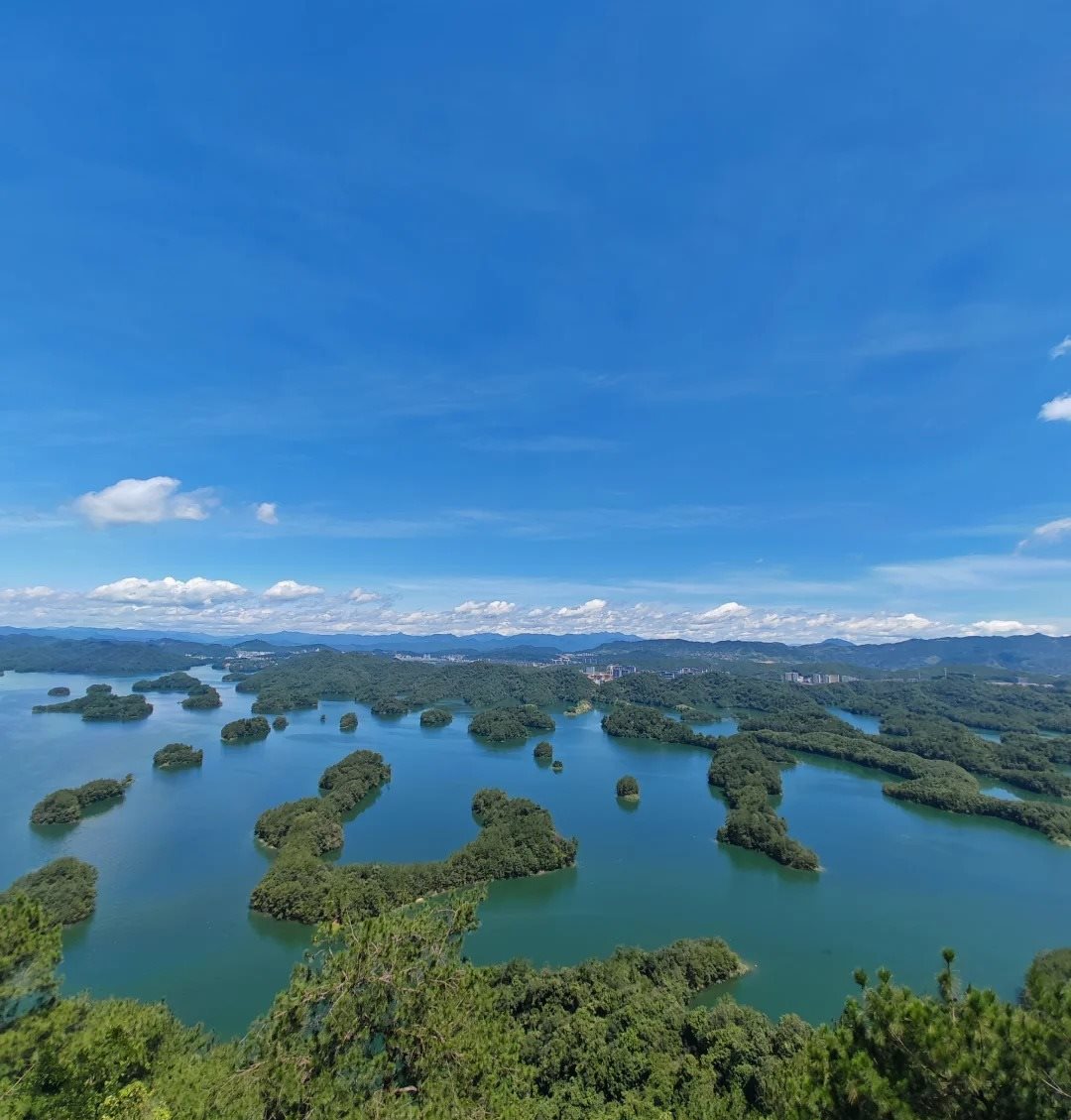
Qiandao Lake (千岛湖, “thousand-island lake”) is a reservoir in Chun’an county, Zhejiang, roughly two hours west of Hangzhou. It was made in the 1950s when the Xin’an River was dammed for a hydroelectric scheme; the water rose, two towns went under, and more than a thousand hilltops were left standing as islands. That origin is why the scenery looks the way it does — these are drowned hills, steep and evenly sized, not a natural archipelago.
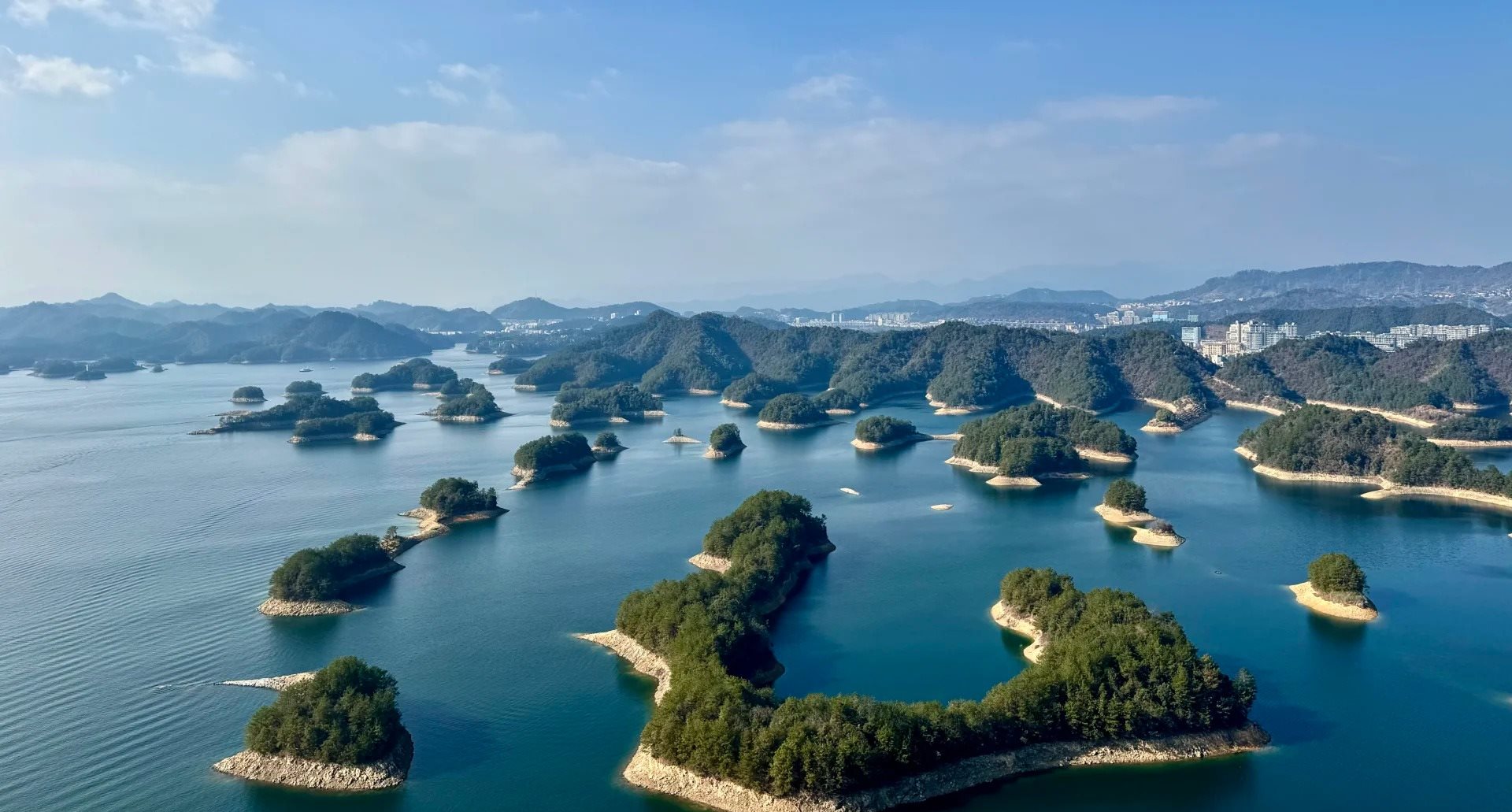
One of those two drowned towns has been rebuilt on dry land, and the names catch people out. Shicheng itself is still under the water and reached only by licensed divers; what you can walk into is Wenyuan Shicheng, a full-scale reconstruction at Jiangjia on the south-west shore. It is ticketed, and it is about 36 km round the lake from the Central pier — a separate day, not an add-on to a boat trip.
⚠️ A name worth getting right. Translated, “Thousand Island Lake” points at three different places — this one, one in Taiwan and one in California — and in English search data Taiwan’s is actually the bigger of them. Use Qiandao Lake or 千岛湖 with drivers, hotels and ticket counters, and you will not end up looking at the wrong reservoir.
Two zones, and their boats never meet
This is the decision the whole trip hangs on, and it is almost absent from English write-ups. The lake is sold as two scenic zones with separate piers about 8 km and a 16-minute drive apart, running boat networks that do not interconnect. A ticket in one does not drift you into the other. Buy at the wrong pier and the mistake costs half a day.
One lake — and two boat networks that never meet
Piers 8 km apartIslands 24 km apartHow to read it. The blue is one lake, drawn as a single body because that is what it is. The two coloured loops are the boat networks, and they are what is separate — green from the Central pier, red from the Southeast. Each dashed leg is the run out to that zone’s furthest island; the solid line is the chain of stops the boat works on the way back. The triangle is Tianyu Shan, which is on the shore and needs no boat.
⭐ And “8 km apart” understates it. The piers really are neighbours — about 6 km apart in a straight line, on the same stretch of shore. But the waters they serve run in opposite directions. The Central Zone’s islands lie west, out to Meifeng roughly 9 km from its pier; the Southeast Zone’s run south-east, out to Guihua roughly 12 km from its. Meifeng and Guihua are about 24 km apart. So the two networks are not dividing up one small bay — they are working opposite ends of a large reservoir, which is why nothing you buy on one side is any use on the other.
Central Lake Zone 中心湖区
First visit, short on time, or you want the postcard view. The classic and the busiest, built around Meifeng Island with the widest archipelago view and the best facilities — and the peak-season queues and the 3–5 day booking pressure. Islands: Meifeng 梅峰岛, Yule 渔乐岛, Longshan 龙山岛, Yueguang 月光岛. Its 14:40 cruise cut-off is the more forgiving of the two.
- Pier
- Central pier, Menggu Road 348 · open 08:00–15:30
- Boats
- Cruise boats board 08:30–14:40 · speedboats to 15:30
- Islands
- Meifeng 梅峰岛 · Yule 渔乐岛 · Longshan 龙山岛 · Yueguang 月光岛
Southeast Lake Zone 东南湖区
You would rather have calm and fewer people. Quieter and more pristine, built around Huangshanjian, from where local guides say a cluster of islands reads as the characters 天下为公 (a local claim, not an official one). Islands: Huangshanjian 黄山尖, Tianchi 天池岛, Guihua 桂花岛. ⚠️ Its 14:00 cruise cut-off is the tightest constraint on the lake, and Tianchi Island — inside its bundle — is the one domestic visitors most often call big and dull, so "Huangshanjian and nothing else" is a common and sensible plan here.
- Pier
- Southeast pier, Zhenzhu Avenue 1988 · pier 07:20–18:00, ticket office 08:00–17:30
- Boats
- Cruise boats board 08:30–14:00 · speedboats to 15:00
- Islands
- Huangshanjian 黄山尖 · Tianchi 天池岛 · Guihua 桂花岛
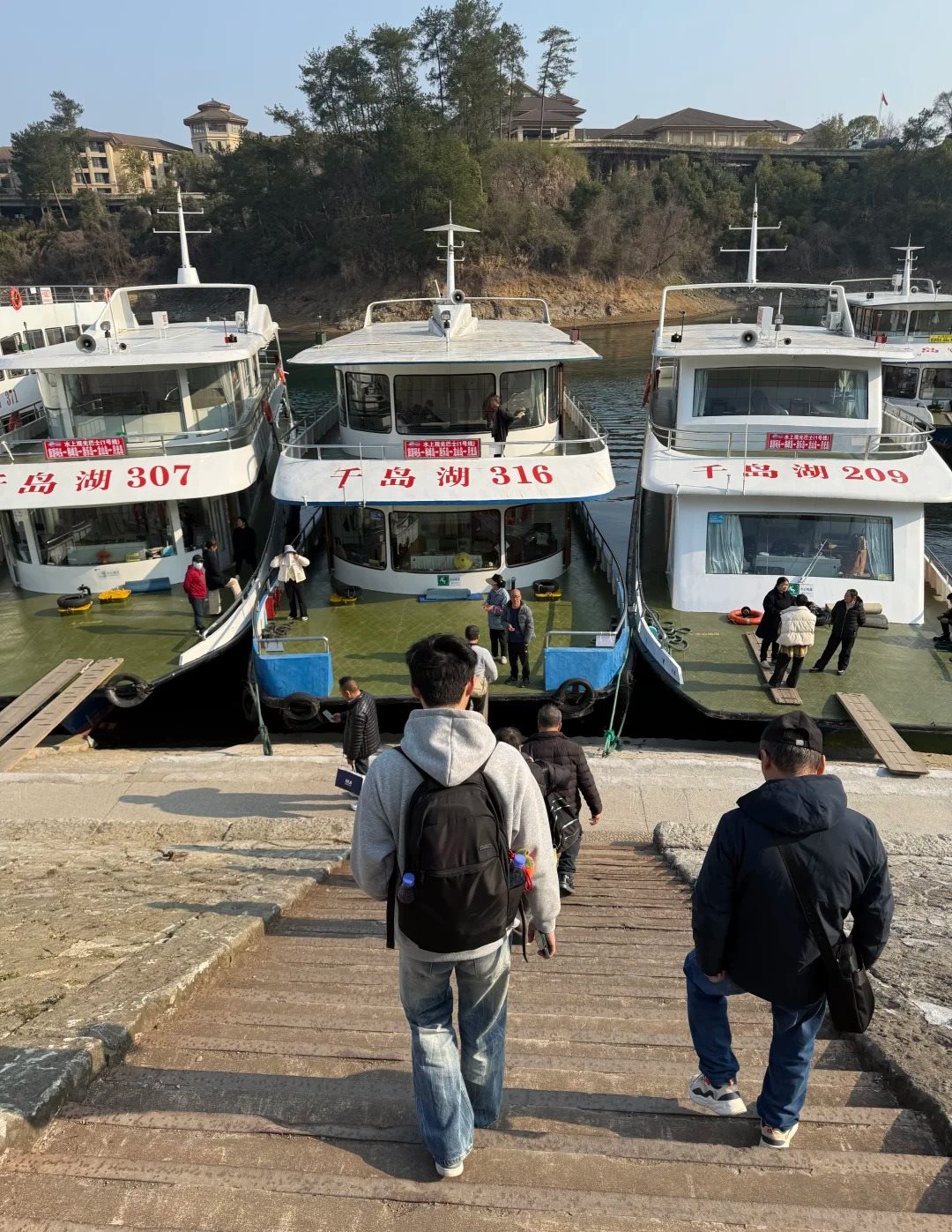
One thing that softens the choice, reported consistently by travellers rather than stated in the official policy: the entry half of the ticket works in either zone. So if you pay the full bundle for one zone and want the other the next day, you top up the boat fare of roughly ¥65 rather than buying a second entry. The scenic area’s own ticket policy does describe a next-day free-entry option taken alongside a boat purchase, which is consistent with that — but confirm it at the window before you plan two days around it.
The clock that actually binds — and it is not closing time
Every guide quotes the zones’ opening hours. Those are not the numbers that decide whether you get onto an island. The cruise boats stop admitting passengers well before the zone shuts, and the two zones differ by forty minutes:
| Zone | Zone open | Cruise boat boarding | Speedboat boarding |
|---|---|---|---|
| Central 中心湖区 | 08:00–15:30 | 08:30–14:40 | 08:00–15:30 |
| Southeast 东南湖区 | 08:00–15:00 | 08:30–14:00 | 08:00–15:00 |
Work the arithmetic backwards, because it is tighter than it looks. Qiandaohu railway station is 26–27 km from both piers, about a 35-minute drive — it is not in town. Add the transfer, a ticket queue and the walk to the boat, and the Southeast Zone wants you off the train by roughly 13:00; the Central Zone gives you until about 13:40. A train that lands at 14:00 is a shore day, and that is a perfectly good day — but decide it deliberately rather than discovering it at the pier.
The speedboats (游艇) run to the zone’s closing time and are the fallback if you are late and determined, at a higher price and with a different, faster feel. If neither is running, everything in the shore section below is still open.
Two things that soften the deadline, and one that tightens it. The cut-off is an admission window, not a last-arrival time — you have to be through the gate by then, not back on shore. And it does not end the day on the water: an evening cruise runs from its own pier in Qiandaohu town, separate from both scenic zones, so an afternoon arrival can still get on the lake after dark. ⚠️ Tightening it: in autumn and winter the last Southeast sailing to Huangshanjian is reported to leave nearer 13:30 — earlier than the published 14:00 admission cut-off. Both of those are traveller-reported; confirm at the pier.
What it costs
The entry ticket is one official price for either zone, and it is seasonal:
| Entry ticket (official) | Adult | Concession |
|---|---|---|
| Peak: 1 Mar – 30 Nov | ¥130 | ¥65 |
| Off-peak: 1 Dec – end Feb | ¥110 | ¥55 |
Concessions cover ages 6–18 and heights 1.2–1.5 m, university students with ID, and visitors aged 60–69. Free entry applies under 6 or under 1.2 m, at 70 and over, and for military and fire-service personnel, disabled visitors, licensed guides, local residents, blood donors and journalists — each on production of the document.
On top of that you pay for the water. Here the figures are traveller-reported from mid-2026 rather than official, and they are consistent enough to plan with but should be confirmed at the window:
| Add-on | Reported | Note |
|---|---|---|
| Island bundle | ~¥195 | The ¥130 entry plus roughly ¥65 boat, sold as one transaction |
| Boat only, no landing | ~¥65 | If you want the cruise without the islands |
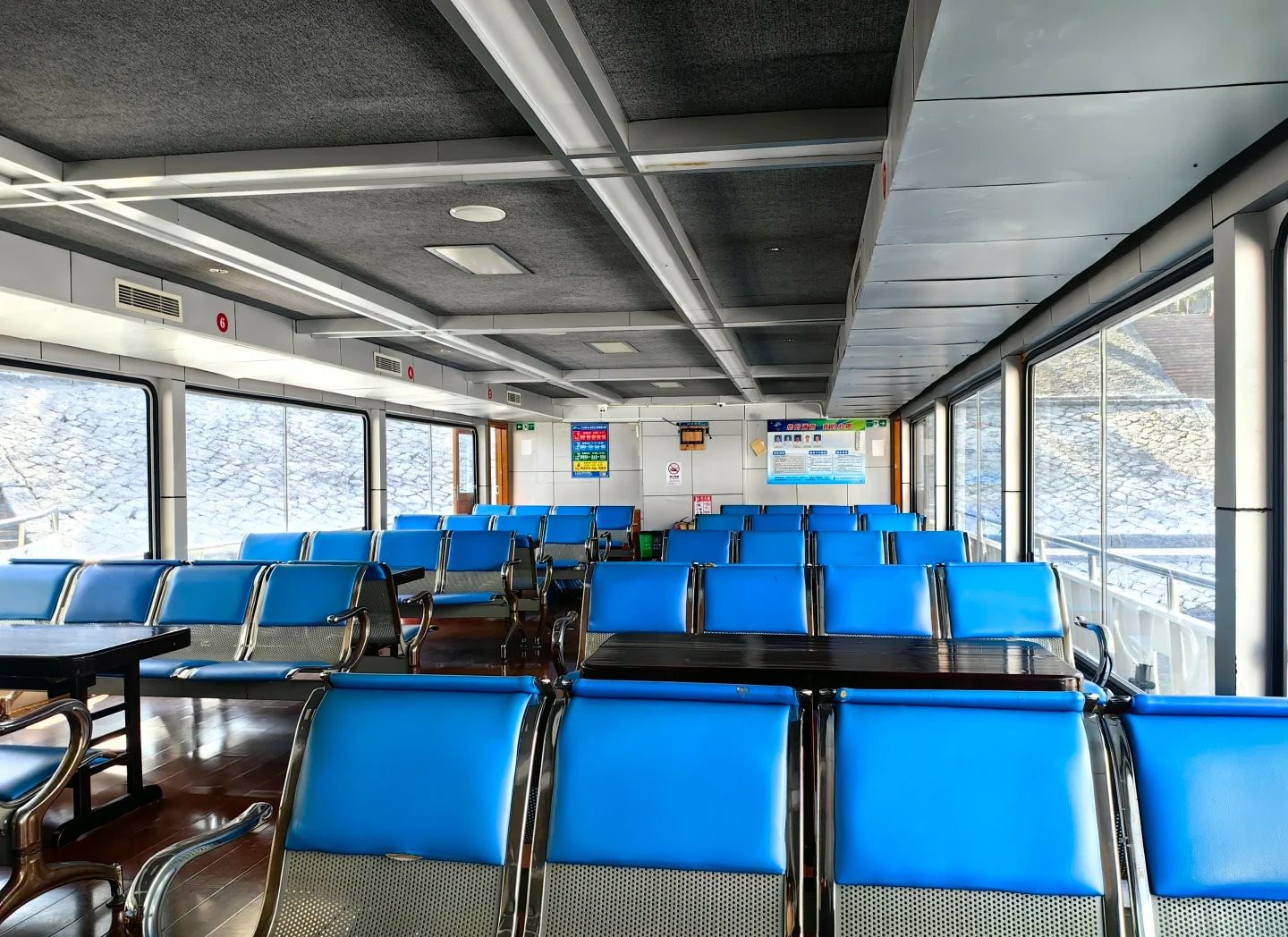
| Cabin upgrade 升舱 | +¥30–33 | Base fare is the lower economy cabin; the upgrade buys the air-conditioned deck. Widely rated worth it in summer |
| Meifeng cable car | ~¥60 return | Saves a climb; travellers note the ride is short |
| Huangshanjian cable car | ¥50 return on the day, ~¥40 bundled | Cheaper bought with the ticket than on the day. Walking up is 15–20 min and steep |
⚠️ A promotion worth checking, not relying on. Secondary Chinese sources report that for 2026, April to October, entry is free on Fridays (excluding public holidays), with boat tickets at 30% off and under-18s free, plus one-off half-price days. We could not find this in the official policy text, so treat it as reported: if your dates are flexible it is worth confirming on the scenic area’s own channel, because it would change the budget materially.
Islands, or not at all
Chinese visitors argue about this openly, and the argument is worth understanding before you spend ¥195. The case against landing: the bundle is not cheap, there is more spending once ashore, and the view from a high lakeside room or from Tianyu Shan is not far off what the islands give you. The case for: an archipelago only reads as an archipelago from a summit inside it.
So the honest split is by what you came for. First visit, clear weather — take one core island, Meifeng in the Central Zone or Huangshanjian in the Southeast. Here to slow down, or travelling with elderly relatives or small children — skip the boats, book a room with a genuine lake view, and ride the shore roads.
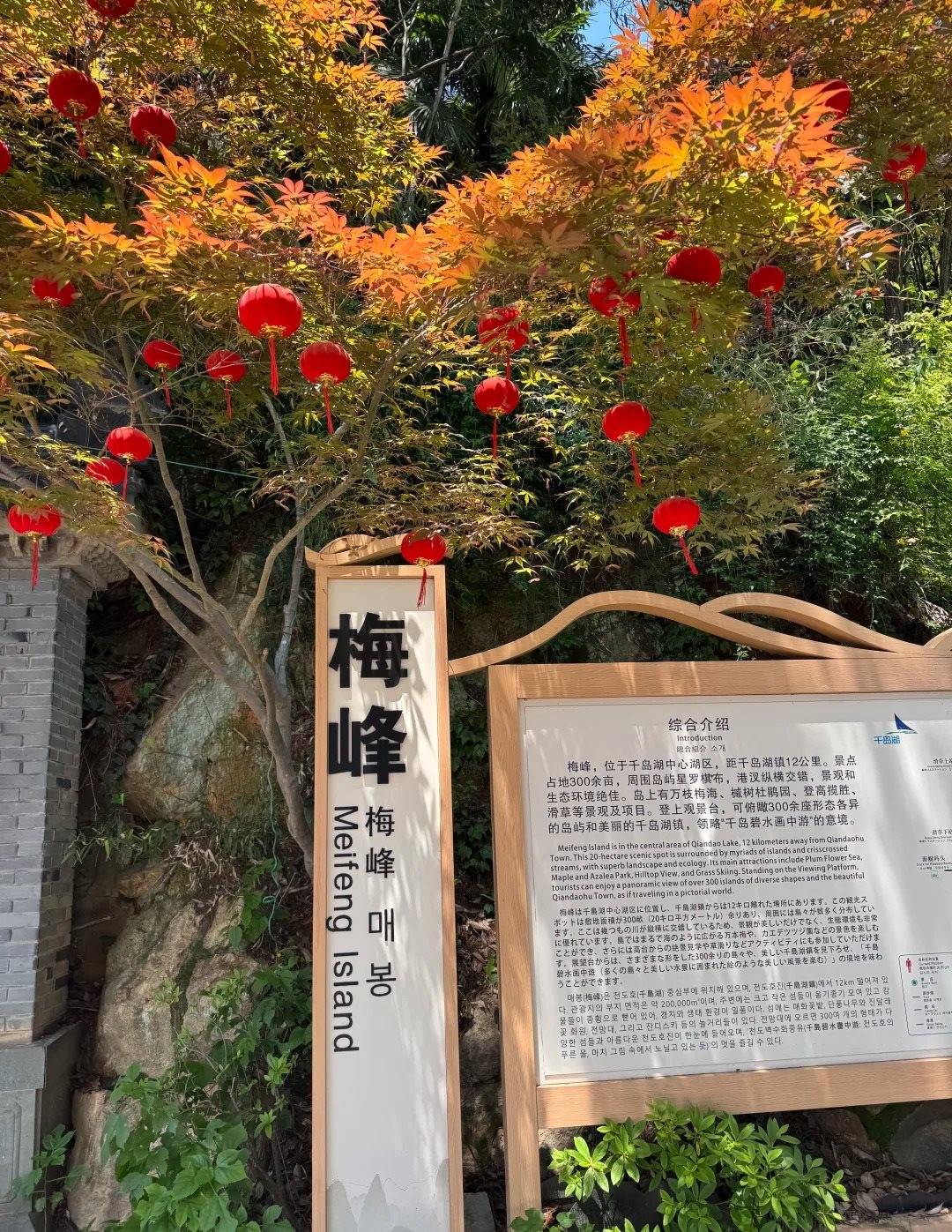
⭐ The bundle maths: one island or all of them, never two
The island ticket is a bundle, and travellers report that the total is the same however many islands you get off at. So the per-island value falls off a cliff if you land on exactly two and then run out of afternoon — which, given the boarding cut-offs above, is exactly what happens to people who start late. Either commit to one core island and do it properly, or start at 08:30 and work the whole line. ⚠️ And in the Southeast Zone note that Tianchi Island, inside that bundle, is the one domestic visitors most often call big and dull — so “Huangshanjian and nothing else” is a common and sensible plan there.
Book the boat before you go
The Central Zone’s island boarding is capacity-capped and reportedly wants 3–5 days’ notice; the official channel is a Chinese-language WeChat mini-programme. An English booking with a foreign card sidesteps that.
The shore, which several people prefer
It is worth saying plainly that the best-liked parts of a Qiandao Lake trip are often not on the water at all. Nobody comes here to speed-run it; the standard shape among Chinese visitors is a deliberately slack two days and one night.
| On the shore | What it is |
|---|---|
| Tianyu Shan 天屿山 | ⭐ The sunset viewpoint everyone ranks first, and an escalator does the climb. ⚠️ It is ticketed, unlike the rest of this table: ¥50 entry + ¥30 escalator, or ¥80 together; deck open 08:00–19:00. ⭐ The ¥50 evening ticket from 18:30 includes both plus the ride down — so the sunset session is the cheap one |
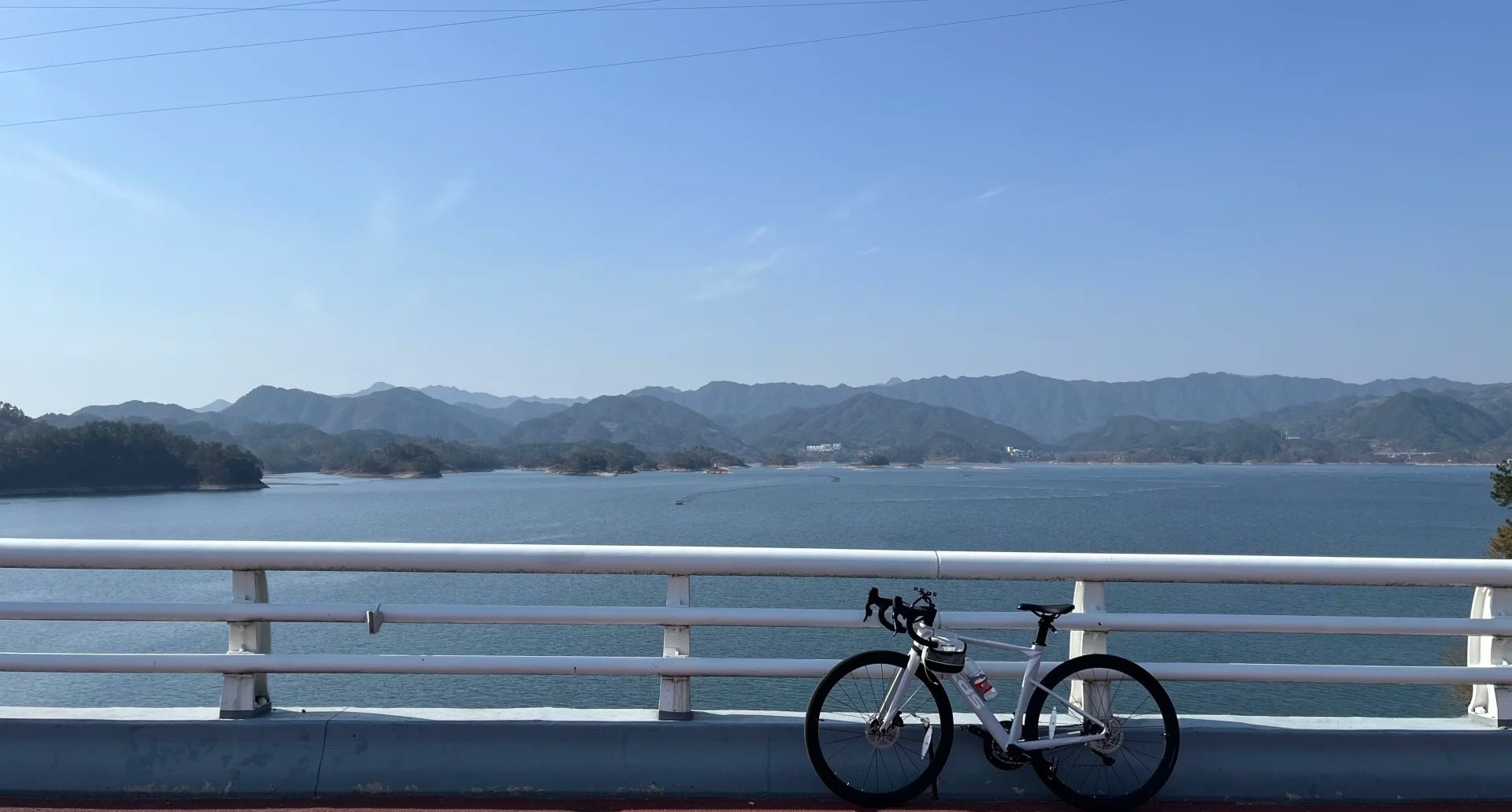
| Chunyang Line 淳杨线 Qianfen Line 千汾线 | The two scenic ring-lake roads, and what “cycling round the lake” actually means. Most people rent an e-bike rather than a bicycle: the hills are real, the sun is unforgiving, and the road has tight bends and frequent speed limits |
| Qilong Alley 骑龙巷 | A hillside snack lane nicknamed the little Chongqing — an evening wander rather than a sight. Domestic verdict: pleasant, commercialised, skippable if pressed |
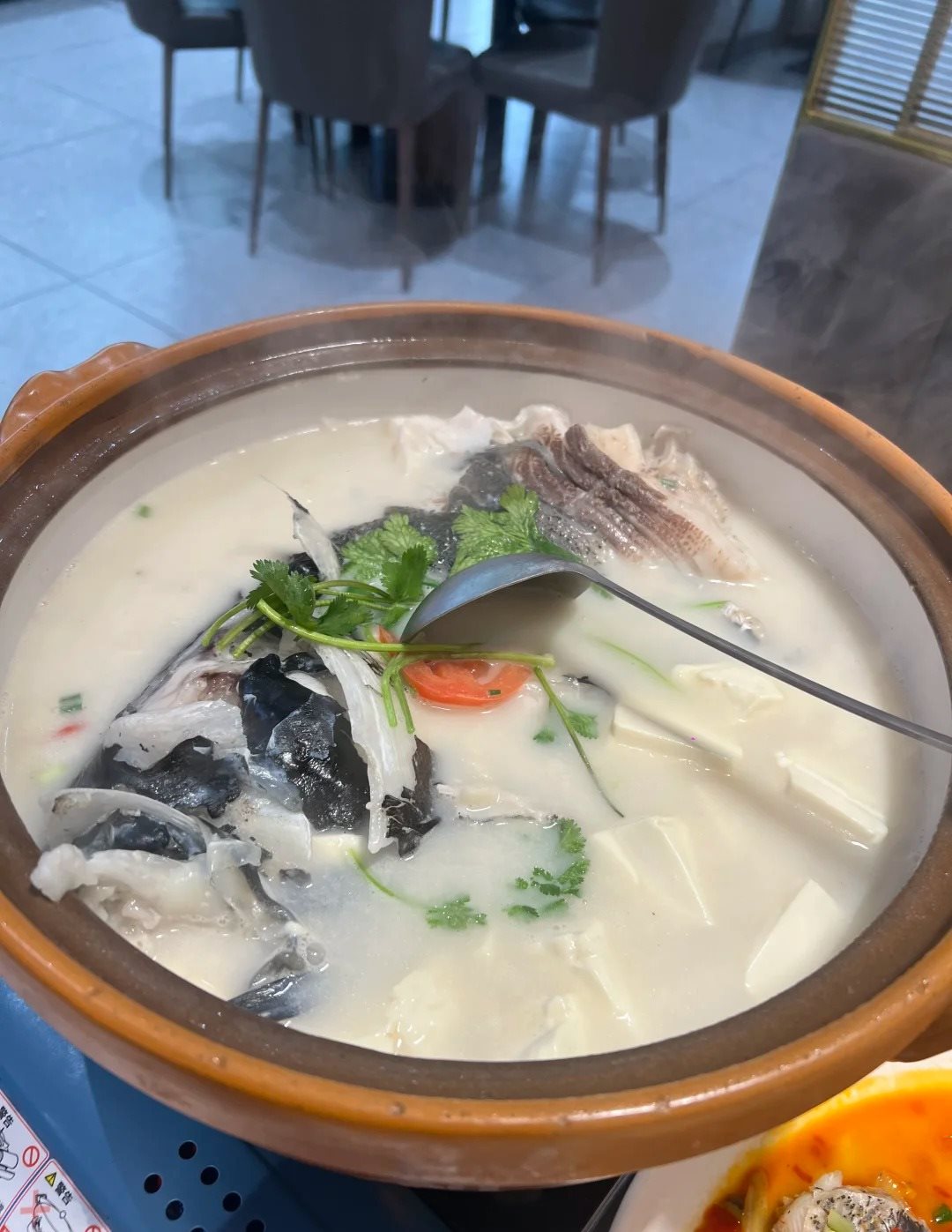
| Fish-head soup 鱼头 | The local dish, and the one thing people get overcharged on. Normal is ¥38–58 per 斤 (500 g) with the fish weighed in front of you. Eat in town, not at anyone who approaches you near a scenic gate |
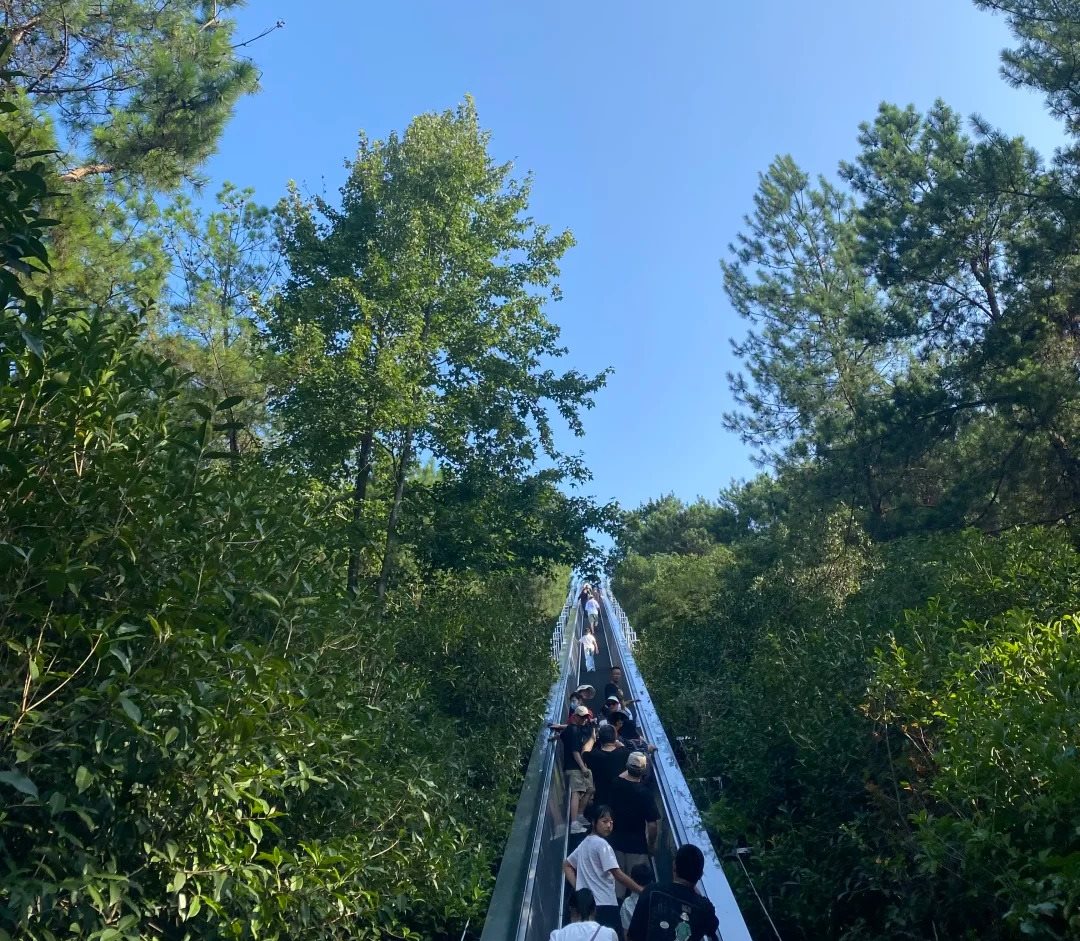
One small warning from people who went. The lakeside midges are notorious — bring repellent rather than buying it there.
Getting there, and where to sleep
Qiandao Lake has its own railway station, Qiandaohu (千岛湖站), about two hours from Hangzhou — but read the geography before you build a schedule on it.
| Leg | Distance | Driving |
|---|---|---|
| Qiandaohu station → Central pier | ~27 km | ~36 min |
| Qiandaohu station → Southeast pier | ~26 km | ~34 min |
| Central pier → Southeast pier | ~8 km | ~16 min |
⚠️ The station is not in town and not near either pier. It sits out at Wenchang, so every arrival includes a 30-plus-minute transfer — which is exactly what makes the boat cut-offs bite. Getting around here is a car-or-bus proposition; there is no metro, and the shore roads are the kind of terrain the Hangzhou getting-around guide does not cover, because this is a different county.
Where to sleep, and why it matters more here than usual
This is one of the few places where the room is part of the attraction: a genuine high-floor lake view gives you the water and the sunset without a ticket, which is why “skip the islands and book the view instead” is a real strategy rather than a consolation. The trade-off travellers describe is straightforward — a lakeside room buys the view; the town centre is cheaper and better placed for food and taxis.
⚠️ Check what the window actually faces before you pay a view premium. The most-repeated complaint about staying here is booking a “lake view” that turns out to be a narrow slot, or a room on a main road. Ask for a high floor, and ask what is between the building and the water.
Rooms at the lake, not in HangzhouNASDAQ: TCOM
Searching “Hangzhou” puts you 140 km from the water. This lands on Chun’an / Qiandao Lake itself, where the listings carry the distances that matter here — minutes to the piers, to Qilong Alley, to the Tianyu Shan viewpoint. Filter by lake view and read what the window faces.
Frequently asked questions
Is Qiandao Lake the same as Thousand Island Lake?
It is the literal translation, and it is worth being careful with because the English name points at three different places. Qiandao Lake (千岛湖) is the reservoir in Chun'an county, Zhejiang, about two hours west of Hangzhou, formed when the Xin'an River was dammed in the 1950s and left more than a thousand hilltops standing as islands. There is also a Thousand Island Lake in Taiwan and one in California, and in search data Taiwan's actually outranks Zhejiang's on the English term. If you are planning from Hangzhou, the pinyin — Qiandao Lake, or 千岛湖 — is the name to use with drivers, hotels and ticket counters.
Central zone or Southeast zone — which should I pick?
You do have to pick, and this is the single decision the trip turns on: the two zones have separate piers about 8 km and a 16-minute drive apart, and their boat routes do not interconnect, so one ticket does not let you drift between them. The Central Lake Zone (中心湖区) is the classic and busiest, built around Meifeng Island with the widest archipelago view and the best facilities — and the peak-season queues. The Southeast Zone (东南湖区) is quieter and feels more pristine, built around Huangshanjian, from where local guides say a group of islands reads as the characters 天下为公. First visit, short on time, or want the postcard view: Central. Prefer calm and fewer people: Southeast. And note the entry half of the ticket is reported to work in both zones, so a second zone on a second day is a boat-fare top-up rather than a second full ticket.
What does Qiandao Lake cost?
The entry ticket is officially a single price whichever zone you choose: ¥130 for an adult in peak season (1 March to 30 November) and ¥110 off-peak (1 December to end of February), with a ¥65 / ¥55 concession rate. Ages 6–18 and heights 1.2–1.5 m are half price, as are visitors aged 60–69 and university students with ID; under-6s, under-1.2 m and over-70s go free, along with military, fire service, disabled visitors, licensed guides and a few other categories. What you then add is the boat. Travellers in mid-2026 consistently report the island bundle at about ¥195, which is the ¥130 entry plus roughly ¥65 for the boat, with a boat-only ticket at about the same price if you want to cruise without landing. Cabin upgrades run ¥30–33; the Meifeng cable car is about ¥60 return and Huangshanjian's ¥50 return on the day, ~¥40 bundled. Prices and promotions move, so confirm at the scenic area's own channel before you travel.
What time do the island boats stop running?
Much earlier than the scenic area closes, and this is the mistake that ruins the day. The cruise boats — the ones that take you out to the islands — stop admitting passengers at about 14:40 in the Central Zone and about 14:00 in the Southeast Zone, while the zones themselves stay open until 15:30 and 15:00. Speedboats run slightly later, to about 15:30 and 15:00 respectively. Because the railway station sits some 26–27 km out, roughly a 35-minute drive from either pier, the Southeast Zone in practice wants you off the train by about 13:00 to be safe. Arrive mid-afternoon and you can look at the lake, but you will not get onto an island.
Do I need to book in advance, and how does that work without WeChat?
For the Central Zone, yes. Travellers report that island boarding there is capacity-limited and wants booking about three to five days ahead; the Southeast Zone is under less pressure but still wants one to two days in peak season. The official channels are the scenic area's own WeChat account and mini-programme, which is the usual friction for a foreign visitor — Chinese-language, and tied to an ID number. Two practical routes around it: an English-language booking site sells the tickets and boat passes with a foreign card, and a hotel front desk will usually make the booking if you ask a day ahead. What you should not do is turn up at the Central Zone pier on a summer weekend and expect to buy same-day.
Is it worth going onto an island at all?
This is the genuine argument among Chinese visitors, and the honest answer is that it depends on what you came for. The case against: entry plus boat comes to roughly ¥195, there is more spending once you land — cable cars, cabin upgrades — and the view from a high lakeside hotel room or from Tianyu Shan is not far off what you get from the islands. The case for: the archipelago only really reads as an archipelago from a summit on it. So if it is your first visit and the weather is clear, take one core island — Meifeng in the Central Zone or Huangshanjian in the Southeast. If you are here to slow down, or travelling with elderly relatives or small children, skip the boats entirely, book a room with a real lake view and ride the shore roads instead. Nobody regrets that version.
How many islands should I visit on one ticket?
One, or all of them — but not two. The island ticket is sold as a bundle and travellers report that the total is the same however many islands you get off at, so the per-island value collapses if you land on exactly two and then run out of afternoon. Either commit to a single core island and spend the time properly, or start early and work through the whole line. It is also worth knowing that Tianchi Island, inside the Southeast Zone bundle, is the one domestic visitors most often call big and boring — so in that zone the honest plan is often Huangshanjian and nothing else.
What else is there apart from the boats?
The shore, and several people's favourite part of the trip is entirely on it. Tianyu Shan (天屿山) is the sunset viewpoint everyone rates first, and it has an escalator up, so it costs no effort. The two scenic ring-lake roads, Chunyang Line (淳杨线) and Qianfen Line (千汾线), are what people mean by cycling around the lake — usually on a rented e-bike, because the hills are real and the sun is unforgiving. Qilong Alley (骑龙巷) is a hillside snack lane locals nickname the little Chongqing, good for an evening. And the local dish is fish-head soup, normally ¥38–58 per 斤 with the fish weighed in front of you — buy it in town rather than from anyone touting at a scenic gate. Bring repellent: the lakeside midges are notorious.
Sources
Checked July 2026 · Written from our own first-hand travel in China.