This guide is written by an editorial team based in Chongqing — the editor has lived in mainland China since 2018 (8 years on the ground). The picks, ticket ranges and priority calls draw on aggregated 2024-2026 r/travelchina, r/chinalife and r/Hangzhou threads, Trip.com listings, and 2026-05-22 Amap (高德地图) routing data. This is aggregated editorial coverage coverage — corrections from Hangzhou residents are welcomed (see the about page).
How to think about Hangzhou
Hangzhou — the capital of Zhejiang province, an hour south of Shanghai — is unusual among big Chinese cities in having a single, clear centre of gravity: West Lake. Almost everything worth your time radiates out from it. There is no Forbidden City or Terracotta Army here; instead there is a UNESCO-listed cultural landscape of water, causeways and pagodas that Chinese poets and painters have been celebrating for a thousand years, plus a ring of temples, gardens and tea hills around it.
That shapes how you visit. Hangzhou is a city to slow down in — to walk a causeway, take a boat, sit in a tea house in the hills — not to power through a checklist. Two to three days is the right length. The food deserves planning too: see the Hangzhou food and Longjing tea guide, and the Hangzhou city guide for the full 2 / 3 / 5-day itinerary planner. Many travellers arrive from Shanghai — the Shanghai-to-Hangzhou high-speed train takes only about 45-60 minutes.
1. West Lake (西湖) — the unmissable headline sight
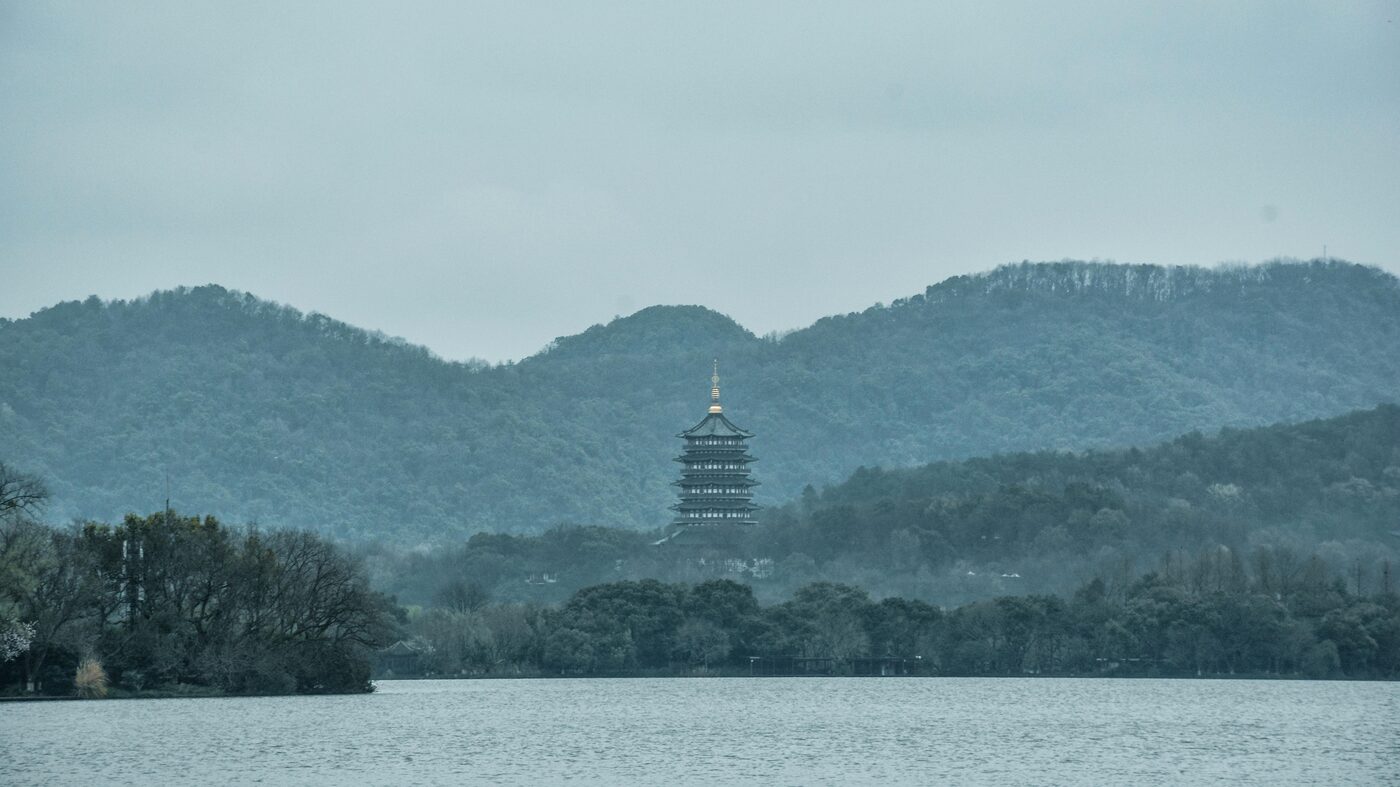
West Lake is the reason to come to Hangzhou. A UNESCO World Heritage cultural landscape, it is a freshwater lake ringed by hills and laced with two great causeways — the Su Causeway and the Bai Causeway — that let you walk straight across the water. Out on the lake sit small islands, the most famous being the “Three Pools Mirroring the Moon”, reached by boat. The shoreline is a string of celebrated viewpoints: the Broken Bridge, the Su Causeway in spring, the lotus beds in summer.
The lake is free and open around the clock — rare for a sight of this rank in China. You can easily fill a full day: walk a causeway, take the island boat (¥55 plain, ¥70 painted), rent a bike, and time the south shore for sunset. It is best at dawn and dusk, before and after the day-trip crowds. The full detail — the ten classic scenes, the boats, where to walk — is in the West Lake guide. If you do only one thing in Hangzhou, do this.
2. Lingyin Temple (灵隐寺) and the Feilai Feng grottoes
In the wooded hills just west of West Lake, Lingyin Temple — the “Temple of the Soul's Retreat” — is one of China's oldest and largest Chan (Zen) Buddhist temples, founded in the 4th century and still an active monastery. Opposite it, the limestone cliff of Feilai Feng (“the Peak that Flew Here”) is carved with hundreds of stone Buddhist figures from the 10th to 14th centuries — among the finest grotto art in southern China.
Since 1 December 2025 it is free — both the old ¥45 scenic-area ticket and the ¥30 temple ticket were abolished. What it costs you now is planning: entry is a compulsory free timed reservation, released 7 days ahead, with no same-day option and no window on site. Allow a half-day. The full walkthrough is in the Lingyin Temple guide. This is the strongest non-lake sight in Hangzhou and worth the trip into the hills.
3. Xixi National Wetland Park (西溪国家湿地公园)
Xixi is the antithesis of the city — a large, calm national wetland park of slow waterways, reed beds and persimmon groves on Hangzhou's western edge, explored by electric boat. Quiet, green and far less crowded than West Lake, it is a lovely half-day on a second or third day — the most skippable of the close-in sights if your trip is short and lake-focused. Admission ¥80, electric boat ¥60–100 extra; main entrance at Zhoujiacun (周家村), 518 Tianmushan Road. Full guide: how to visit Xixi Wetland →
4. Qinghefang / Hefang Street old quarter (清河坊 / 河坊街)
Qinghefang, with its pedestrian spine Hefang Street, is Hangzhou's best-preserved old quarter — a run of restored Qing-era shophouses below Wushan hill, south-east of West Lake. Touristy but atmospheric: snack stalls, tea and silk shops, and the historic Huqing Yu Tang traditional-medicine hall. It is free to wander, central, and best as an afternoon or evening snack crawl — an hour or two, not a half-day. Full guide: how to visit Qinghefang →
5. The China National Tea Museum and the Longjing tea villages
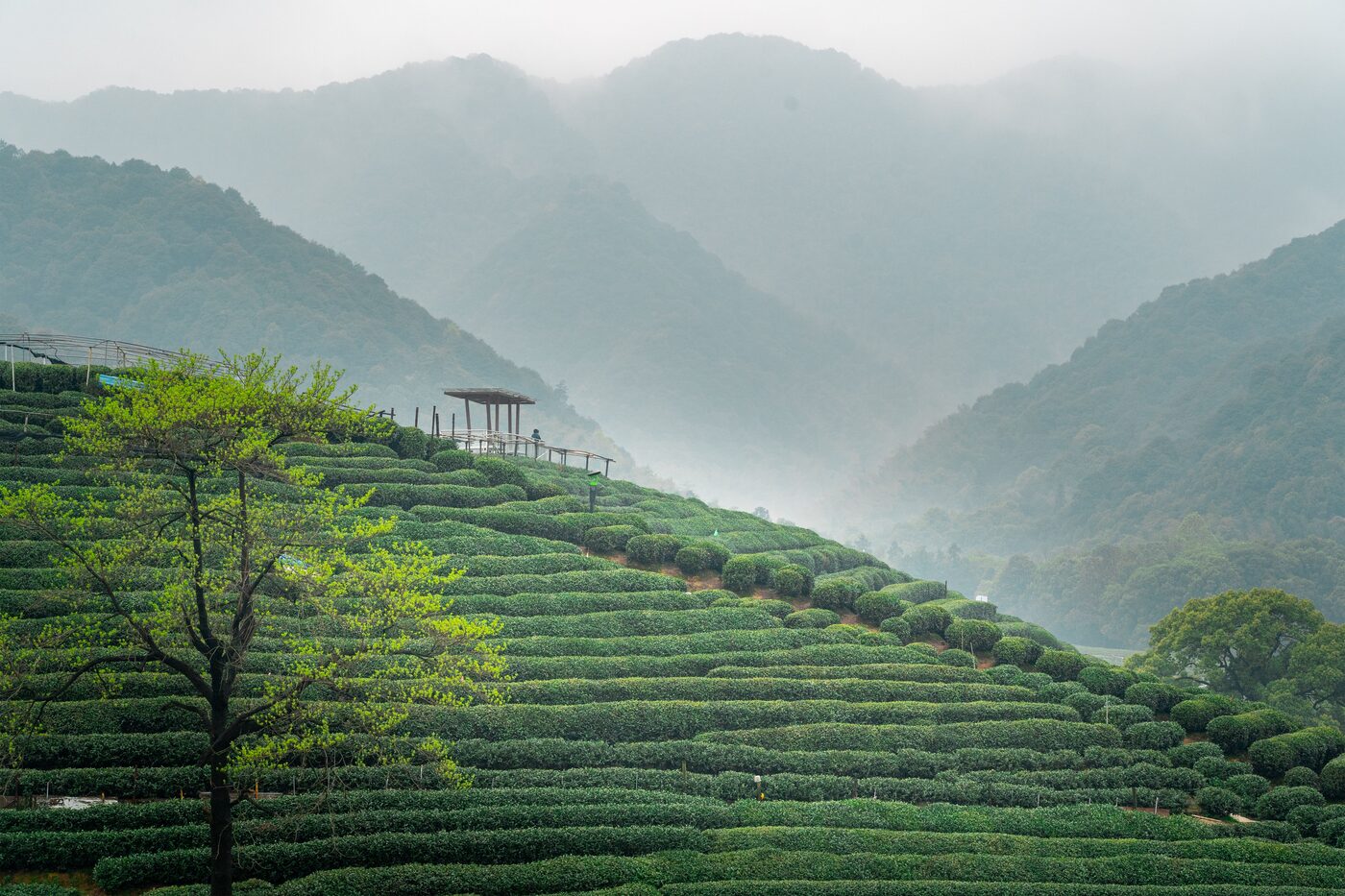
The hills southwest of West Lake grow West Lake Longjing (Dragon Well), one of China's most famous green teas. The China National Tea Museum (中国茶叶博物馆) is free among the terraces; just beyond, Longjing Village (龙井村) and Meijiawu (梅家坞) are working tea hamlets for a walk and a tasting. A relaxed half-day and a highlight for tea lovers — but buy only after tasting and beware aggressively-priced “new season” tea. No metro; bus or taxi from the lake. Full guide: the Longjing tea villages →
6. The Grand Canal (京杭大运河)
Hangzhou is the southern terminus of the Grand Canal — the world's longest ancient canal (~1,800 km to Beijing) and a UNESCO World Heritage site. The atmospheric stretch is around the Gongchen Bridge (拱宸桥) and the restored Qiaoxi historic district — old warehouses turned museums, teahouses and lanes, with a canal water-bus the nice way to see it. It is free to walk and reachable on Metro Line 5; a good quieter half-day, below the lake and temple on a tight schedule. Full guide: how to visit the Grand Canal →
7. Leifeng Pagoda (雷峰塔)
On West Lake's south shore, Leifeng Pagoda is a modern reconstruction (2002) raised over the ruins of a 10th-century pagoda that collapsed in 1924 — its fall woven into the famous Legend of the White Snake. An escalator and a lift carry you up; the reason to come is the panorama, the best elevated view back over the lake and the causeways, especially at sunset. Entry is about ¥40; treat it as the scenic high point of a West Lake day and time it for late afternoon. Full guide: how to visit Leifeng Pagoda →
8. Museums — the Zhejiang Provincial Museum and the Deshou Palace ruins
Hangzhou was the capital of the Southern Song dynasty (1127-1279), when it was called Lin'an and was, by some accounts, the largest city in the world. Two free museums tell that story. The Zhejiang Provincial Museum has a lakeside branch in the Gushan area of West Lake and a larger modern hall elsewhere in the city, covering the region's history and art. The Southern Song Deshou Palace (德寿宫), opened in 2022, is an immersive ruins museum built directly over the excavated foundations of a Southern Song imperial residence — one of the city's most engaging modern attractions.
Both are free. The Deshou Palace is a walk-in on weekdays and needs a free advance booking only at weekends and on holidays, and they suit travellers who want the historical context behind Hangzhou's lake-and-garden surface. Skippable on a pure-scenery trip; rewarding if you like your sightseeing with history attached.
9. The Liangzhu Museum and Archaeological Park
Northwest of the city, the Liangzhu Archaeological Site preserves the remains of a 5,000-year-old Neolithic walled city — the centre of the Liangzhu Culture, and a UNESCO World Heritage site since 2019. The well-designed Liangzhu Museum displays the culture's extraordinary jade artefacts, while the archaeological park lets you walk the ancient earthworks and water systems. ⚠️ These are two separate sites 4–5 km apart, not one visit: the museum is free but needs a booking, the ruins park is ticketed at ¥60 plus ¥20 for the shuttle you will want across its 3 km². Which one to choose is set out in the Hangzhou museums guide.
It is a half-day round trip out of the centre and clearly a specialist pick — essential for anyone interested in early Chinese civilisation, comfortably skippable on a short first visit focused on West Lake. Treat it as a third-day or repeat-visit choice.
10. Day trips — Wuzhen (乌镇) and Qiandao Lake (千岛湖)
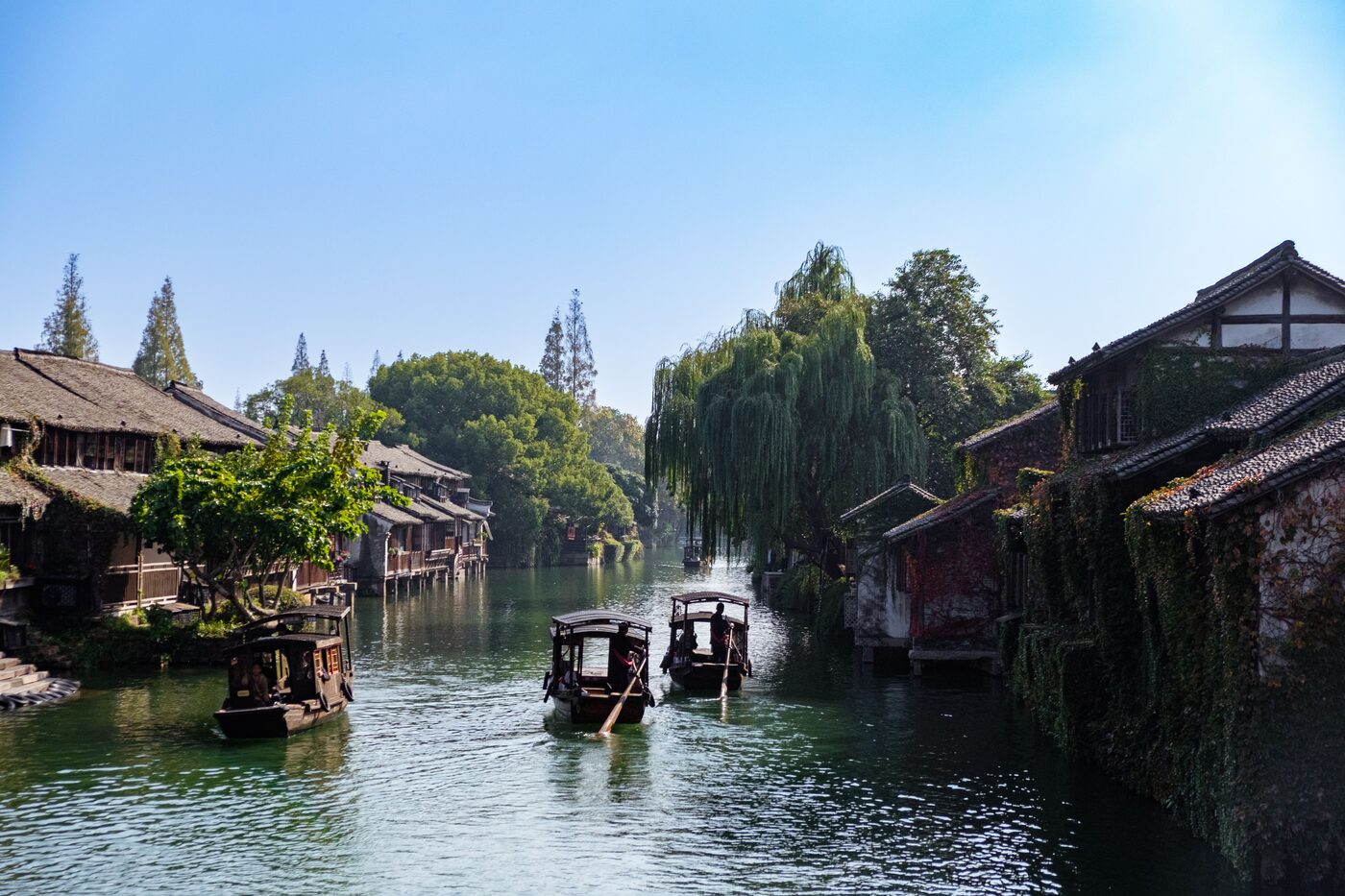
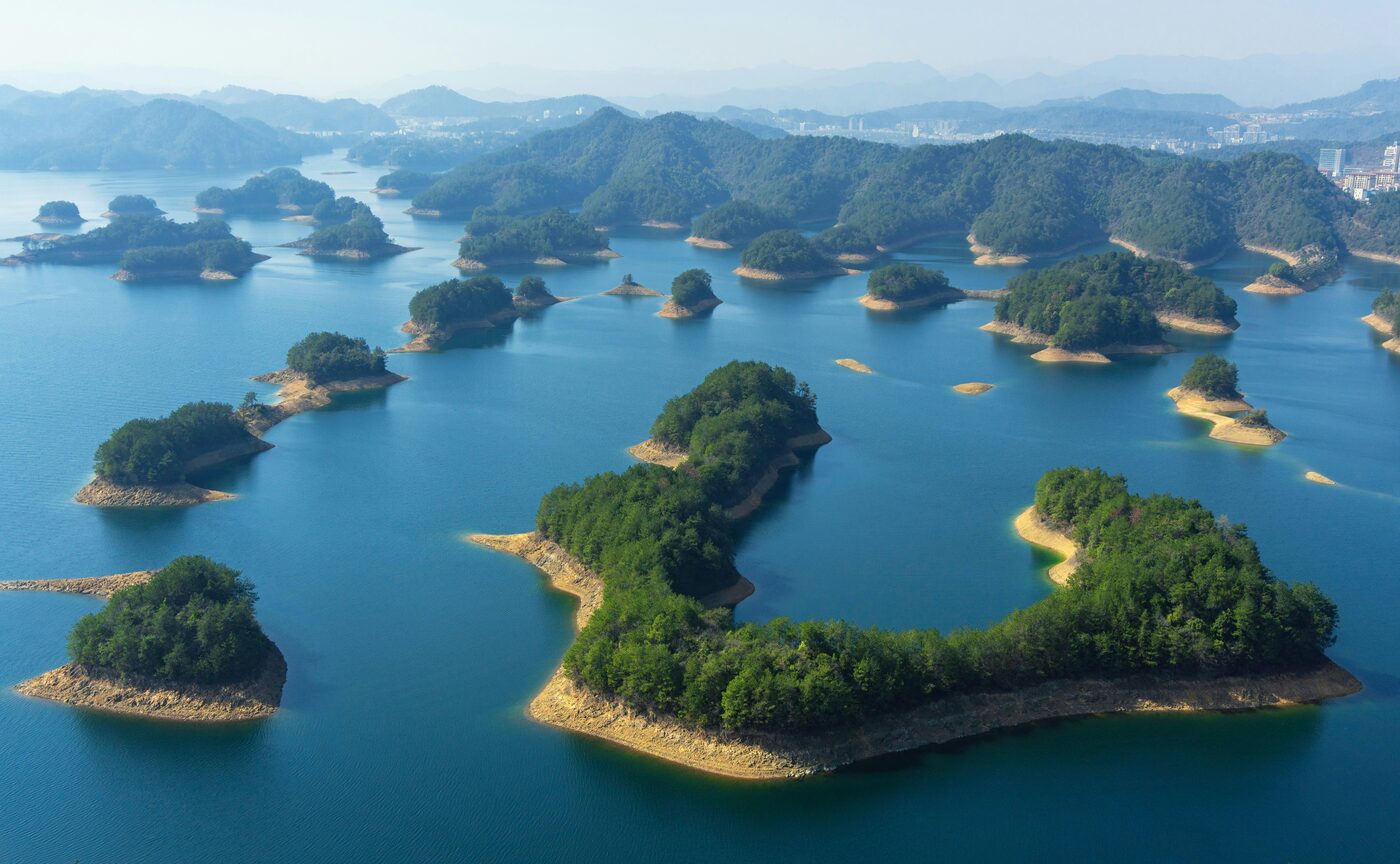
Hangzhou is a strong base for day trips. Wuzhen, about an hour away, is the photogenic canal water town of stone bridges, black-tiled houses and waterside lanes — its East and West Scenic Zones are ticketed, and the West Zone after dark, lit up, is the celebrated version. Qiandao Lake (Thousand Island Lake), about 1.5 hours southwest, is a vast man-made reservoir studded with more than a thousand green islands — boat tours, cycling and clean air.
Worth noting in reverse: Hangzhou is itself the classic day trip from Shanghai — high-speed trains from Shanghai Hongqiao take only about 45-60 minutes (see the Shanghai-to-Hangzhou train guide). For an organised Wuzhen or Qiandao Lake day trip, comparing packaged options is often easier than self-arranging the transfers.
Compare Hangzhou day tours and tickets on Trip.com →
Putting it together — a 2-3 day plan
A clean way to sequence Hangzhou:
- Day 1 — West Lake. Walk the Bai or Su Causeway in the morning, take the island boat, and time Leifeng Pagoda for sunset over the lake. End at the Qinghefang old street for dinner and snacks.
- Day 2 — the hills. Lingyin Temple and the Feilai Feng grottoes in the morning; the China National Tea Museum and a Longjing tea village in the afternoon.
- Day 3 (optional). Xixi Wetland for a calm half-day, or the Grand Canal district, or the Liangzhu Museum — or take a Wuzhen water-town day trip.
The Hangzhou city guide has the full 2 / 3 / 5-day itinerary planner and the practical essentials. Stay central — see where to stay in Hangzhou — so the lake is on your doorstep at dawn and dusk.
Browse Hangzhou hotels near West Lake on Trip.com →
Frequently asked questions
What are the top things to do in Hangzhou?
How many days do you need in Hangzhou?
Is West Lake free to visit?
Is Hangzhou worth visiting, or just a day trip from Shanghai?
What is the best time of year to visit Hangzhou?
Do I need to book Lingyin Temple in advance?
How do I get around Hangzhou between the sights?
Is Liangzhu worth the trip out of the city?
Related Hangzhou guides
- Hangzhou city guide — getting in and out, getting around, where to stay, and the itinerary planner.
- West Lake guide and the Lingyin Temple guide — the headline sight and the strongest temple, in full detail.
- What to eat in Hangzhou — Hangzhou cuisine and Longjing tea culture, the other half of the reason to come.
- Shanghai to Hangzhou by high-speed train and where to stay in Hangzhou — how to arrive from Shanghai and which area to base in.
Sources: editorial team based in Chongqing (8-year mainland-China resident), editor's about page, Amap (高德地图) routing data queried 2026-05-22, and aggregated r/travelchina, r/chinalife and r/Hangzhou threads 2024-2026. Ticket prices, reservation rules and opening details change — confirm before your visit.