Key takeaways
- ⭐ The entrance is charged per entry — but a free desk at the island’s pier registers your face and lets you back on within 24 hours for the ferry alone. Do it before you leave.
- The gates do not read passports. Buy at the staffed window, use the staffed lane at both gates, and allow about 40 minutes more than you would otherwise.
- The ¥220 “combined” pass is exactly ¥160 + ¥60 — one queue instead of two, not a discount. Several temples then charge ¥5–¥6 at their own doors.
- ⚠️ Use the Wugongzhi pier. The Banshengdong alternative looks closer to Ningbo but its last boat is around 16:30–17:00.
- ⭐ Zhoushan Putuoshan airport is 4 km from the pier — about eight minutes. Flying in is a real option, not an afterthought.
What Mount Putuo is — and where it actually is
Mount Putuo is not really a mountain. It is a small island in the Zhoushan archipelago, off the Zhejiang coast in the East China Sea, and it is one of the four sacred mountains of Chinese Buddhism — the one dedicated to Guanyin, the bodhisattva of compassion, who is known across Southeast Asia as Kuan Im and to English readers, usually, as the Goddess of Mercy.
What distinguishes it from almost every other Buddhist site a visitor to China will see is that it is still doing its job. The temples open at six in the morning. The canteens are canteens, not restaurants with a theme. Most of the people around you have come to pray, not to photograph, and a good number of them have come a long way to do it. That is the reason to make an awkward journey to a small island, and it is also the reason the practical details on this page matter more than usual: the island is organised around pilgrims who know how it works.
⚠️ It is not a Hangzhou day trip, whatever an itinerary tells you. Putuoshan sits out at sea off Zhoushan, and in practice it is planned from Shanghai or Ningbo. The last boat back is what settles it: treat this as a night away, not a long day.
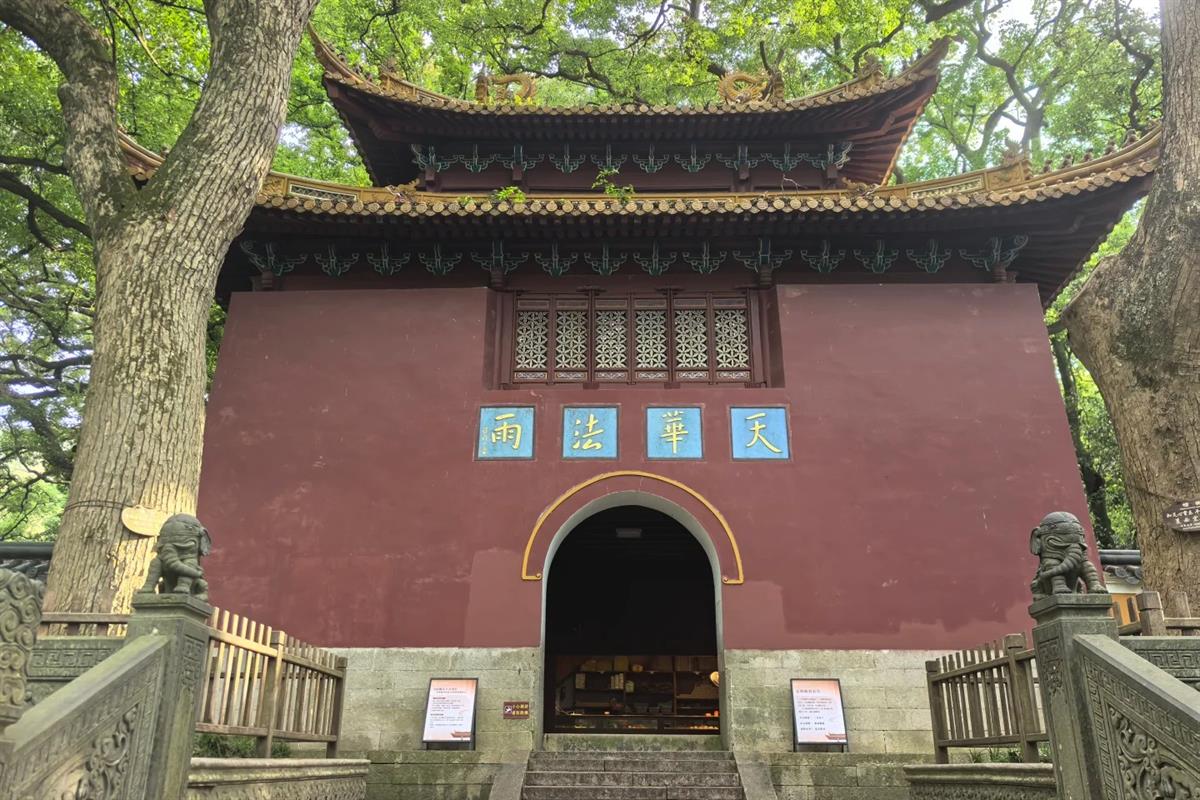
One note on the name, because it will affect what you find when you search. This island is written in English as Mount Putuo, Putuoshan, Putuo Mountain and Putuoshan Island, and different sources use different ones — the pinyin form is the one you will see most in Southeast Asia, the “Mount Putuo” form the one Wikipedia and most Western coverage use. They are all the same place. ⚠️ Do not confuse it with Putuo District in Shanghai, which is an ordinary inner-city district and shares nothing but the name.
Getting there — every route ends in a boat
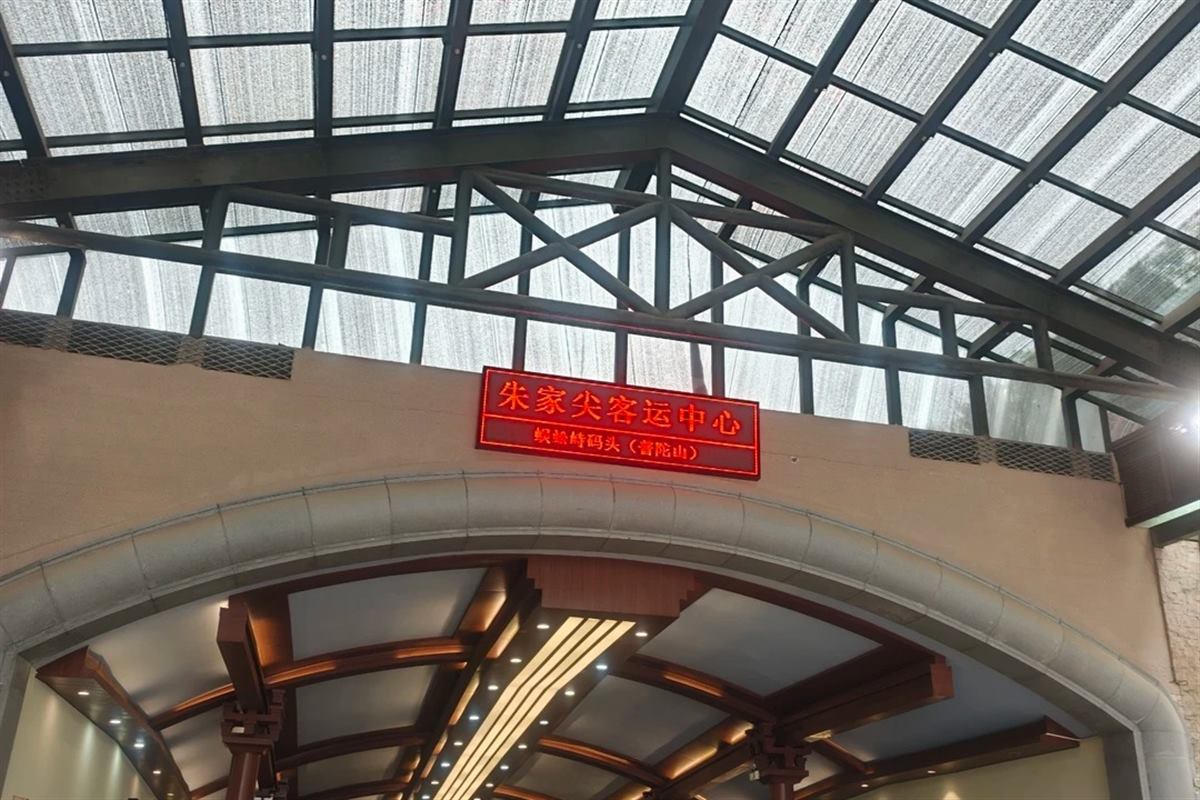
There is no bridge and no road. Whatever else your journey involves, it finishes at a pier, and the pier you want is Zhujiajian Wugongzhi (蜈蚣峙码头).
Three piers — the one nearer Ningbo is furthest from the island
No bridgeAirport beside the pierThe line lengths are to scale. Banshengdong sits nearer Ningbo, which is why it keeps getting suggested — and two and a half times further from the island than Wugongzhi, which is why it should not be. The airport road is drawn at the same scale as both crossings.
| From | How | Time |
|---|---|---|
| ⭐ Zhoushan Putuoshan airport | Taxi to the pier — the airport is 4.0 km away | ~8 min, about ¥10 |
| Ningbo | Coach or taxi to the pier, 112 km by road | ~1.5–2 h |
| Shanghai | Direct coach from People’s Square or Nanpu Bridge, 271 km by road | ~4–4.5 h |
| Shanghai, via rail | High-speed train to Ningbo, then a coach from the station beside it | ~2 h from Ningbo |
| Wugongzhi pier → the island | Ordinary boat ¥30 single / ¥60 return, or the business fast craft at ¥100 single | ~15 min / ~7 min |
⭐ The airport nobody mentions. Zhoushan Putuoshan International Airport is four kilometres from the ferry pier — about eight minutes in a taxi. This trip is usually planned as a four-hour coach out of Shanghai, which makes it sound like an expedition. If you are coming any real distance, price the flights before you commit to the road: the transfer at this end is trivial.
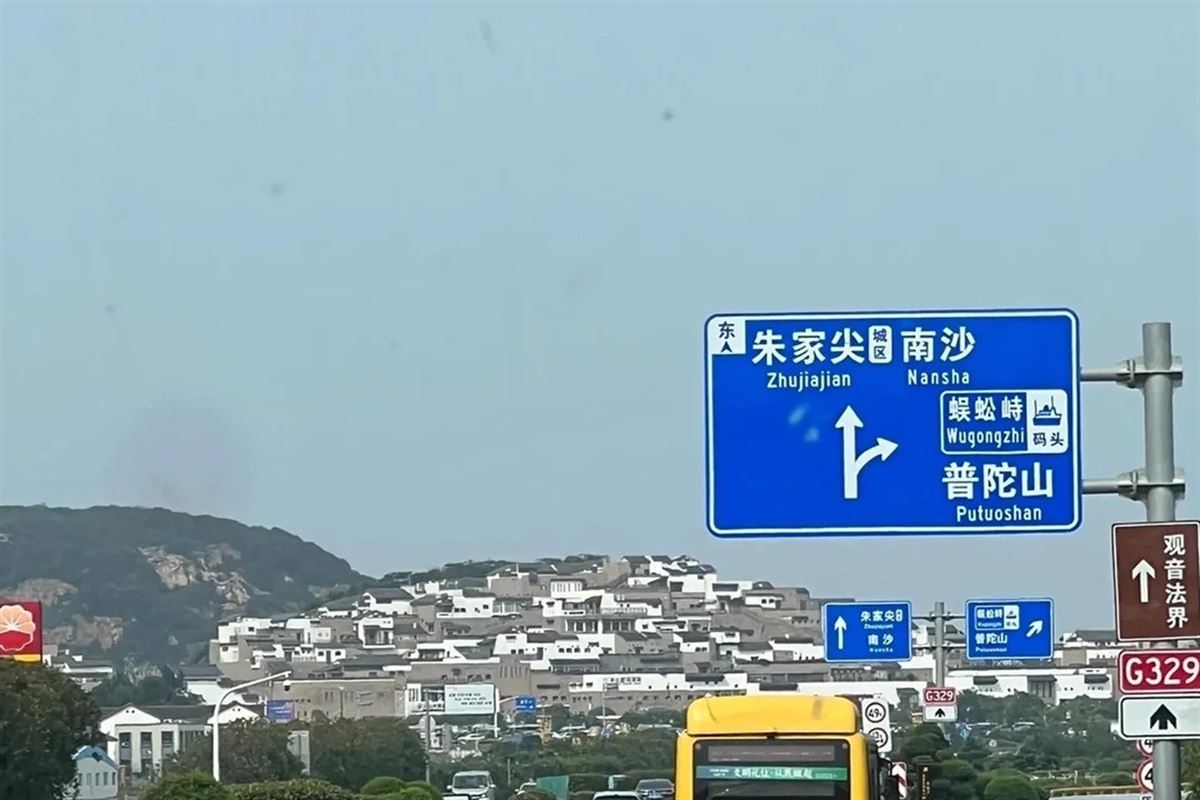
- ⚠️ Use Wugongzhi, not Banshengdong. The Banshengdong pier is closer to Ningbo city and looks like a shortcut, but it has few sailings and its last boat is around 16:30–17:00 — early enough that an ordinary day on the island will strand you, since the temples themselves stay open until 17:30 or 18:00.
- Wugongzhi runs roughly 06:30–07:00 until about 21:30, later in summer, and it has by far the most departures. The fast craft is worth its ¥100 if you are travelling with older relatives or small children, mostly because it has its own lane rather than because it saves eight minutes.
- Book ahead where you can. Entrance tickets open one to fifteen days out and ferry seats release only three days ahead, so a peak-day walk-up rarely gets a good sailing. See the passport section below for what that means in practice for a foreign visitor.
Tickets, ferries & day toursNASDAQ: TCOM
The official booking channel is a WeChat mini-programme that wants a Chinese ID number. Guided trips from Shanghai and Ningbo bundle the coach, the boat and the entrance, which removes the part of this trip that is genuinely awkward for a foreign visitor.
What it costs — and why it is not one number
The headline figure is the island entrance, and it moves with the season:
| When | Island entrance |
|---|---|
| February–November | ¥160 |
| December–January | ¥140 |
| Lunar new year days 1–5 · 1–3 May · 1–5 October | ¥200 |
That is the entrance only. On top of it sit the return ferry at ¥60, the island buses at ¥5–¥10 a ride, the cable car at ¥40 one way or ¥70 return — and a layer that English coverage almost universally omits: several temples charge their own small ticket at the door, roughly ¥5 at Fayu and Huiji and ¥6 at the Guanyin statue. So “how much is Putuoshan” is a sum of components rather than a figure — and the number you will usually see quoted is the entrance on its own.
⚠️ The “combined ticket” is not a discount. Entrance plus return ferry sells as one product at about ¥220. That is ¥160 + ¥60 — the plain sum, to the yuan. It is still the right thing to buy, because it is one transaction at one window instead of two, but it is worth knowing that you are buying convenience rather than a saving, especially when a booking site presents it as a package deal.
⭐ Bring cash, in small notes. This is the detail that catches people out hardest, because every guide to China now says you will never need it. Some temple ticket desks, offering boxes and religious-goods counters here take cash only. One, five and ten yuan notes. The temple canteen at Puji is also cash, about ¥10, and its window is roughly 10:30–11:30 only — miss it and lunch is snack stalls.
The second day — the rule that changes your whole trip
The island entrance is charged per entry. Not per day, not per visit — per entry. So the plan almost everyone arrives with quietly costs double: sleep cheaply on the mainland at Zhujiajian, come back for a second day, pay another ¥160 on top of another boat.
⭐⭐ Unless you register before you leave. At the island’s pier, just past the ticket hall — travellers place it on the right, near the little yellow bus stop — there is a re-entry desk. It is free. You show your passport, staff enter your details and photograph your face, and for the next 24 hours you come back through a dedicated lane on a face scan, paying only the ferry. It is confirmed to work with a foreign passport. The catch is entirely in the timing: it has to be done before you get on the boat out, and nothing on the way to the pier tells you it exists.
Which is what makes the cheaper mainland base work at all: register, and the second morning is just the ferry, wherever you slept. Skip it, and the money you saved on the room goes straight back out at the gate.
If you have been to a Chinese scenic area before, this will look familiar and then stop being familiar. Wuzhen’s ticket admits you once, on the day you buy it. Nanxun’s house pass runs 48 hours and lets you come and go. Putuoshan is neither: the ticket really is per entry, and the latitude that softens it is not written into the ticket at all — it is a desk you have to find and ask at. That is the part worth remembering, because it is the part nothing on the island prompts you to do.
Passports, gates and the booking app
Putuoshan runs on the mainland identity card, and a foreign passport does not fit the machinery. This is entirely manageable, but only if you know it before you are standing at a turnstile that will not open.
- The official booking mini-programme will probably not take you. It requires a mainland ID number and generally cannot complete a passport booking at all. Do not spend an hour fighting it.
- ⭐ Buy at the pier’s staffed window instead. Staff enter passport details by hand and issue the combined entrance-and-ferry ticket. This is the normal, expected route for a foreign visitor — not a favour you are asking for.
- Neither gate reads a passport — not the boarding gate at the pier, not the island entrance. Skip the turnstiles and go to the staffed lane, show the original passport, and let someone check it by hand.
- Allow about forty minutes more than you otherwise would at the pier. The manual check is not slow in itself; the problem is that it is a different queue from the one everyone else is in, and finding it costs time.
- Carry the physical passport at every stage — buying, boarding, entering, and the re-entry desk. A photograph on your phone or a photocopy is not accepted.
A practical trick travellers suggest: keep a note on your phone, in Chinese, saying that you are a foreign visitor travelling on a passport and need the staffed lane. It turns four minutes of gesturing into ten seconds. Set up Alipay or WeChat Pay before you arrive as well, for the boat, the buses and the shops — but see the cash note above, because the temples are the exception.
The sights, in the order people actually rank them
Three great temples, one very large statue, and a long tail that most visitors quietly skip. The tiers below are how the domestic corpus ranks them, which is not how a brochure does.
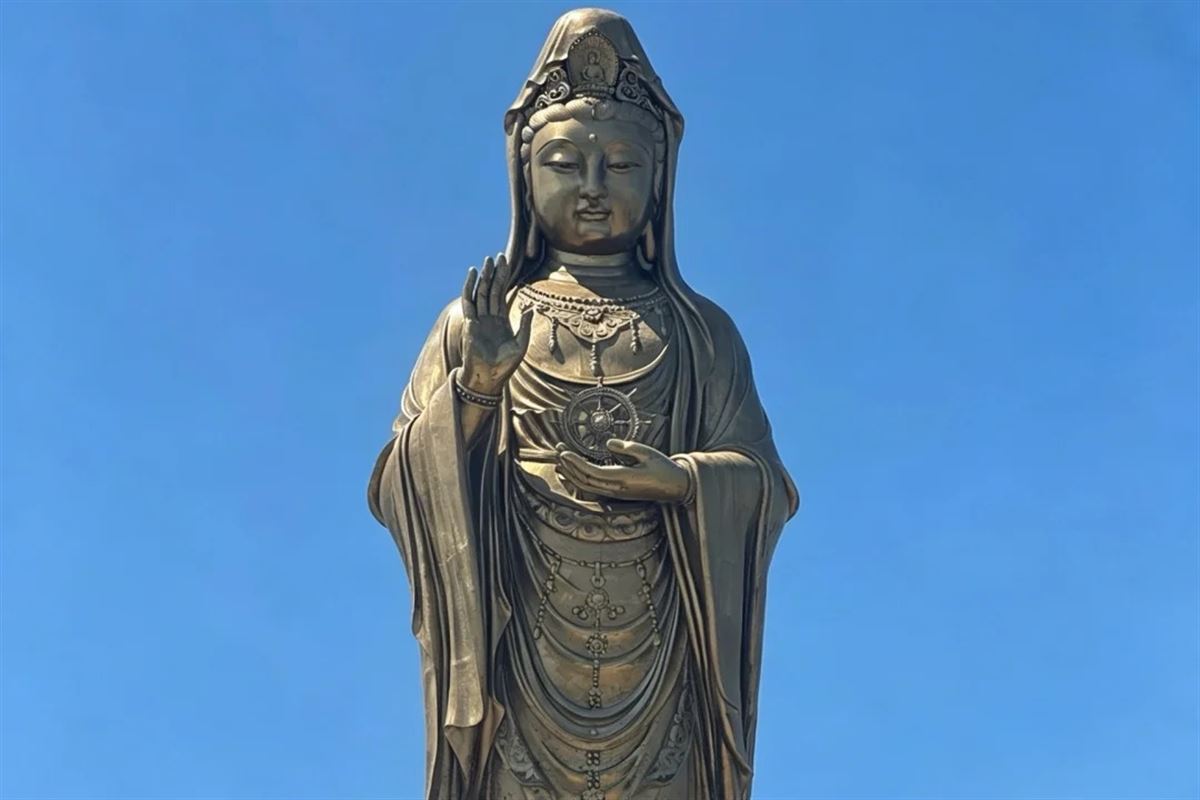
Nanhai Guanyin statue
南海观音Must see06:00–17:30 weekdays · 06:00–18:00 weekends
A 33-metre bronze Guanyin standing above the sea, and the island's single image. It has its own ticket desk. Afternoon light is the good light.
Puji Temple
普济寺Must see06:00–17:30
The largest, oldest and busiest of the three great temples, and the one most pilgrims come to first. Baibusha beach is next door, and the temple canteen here is the cheap lunch.
Fayu Temple
法雨寺Must see06:00–17:30
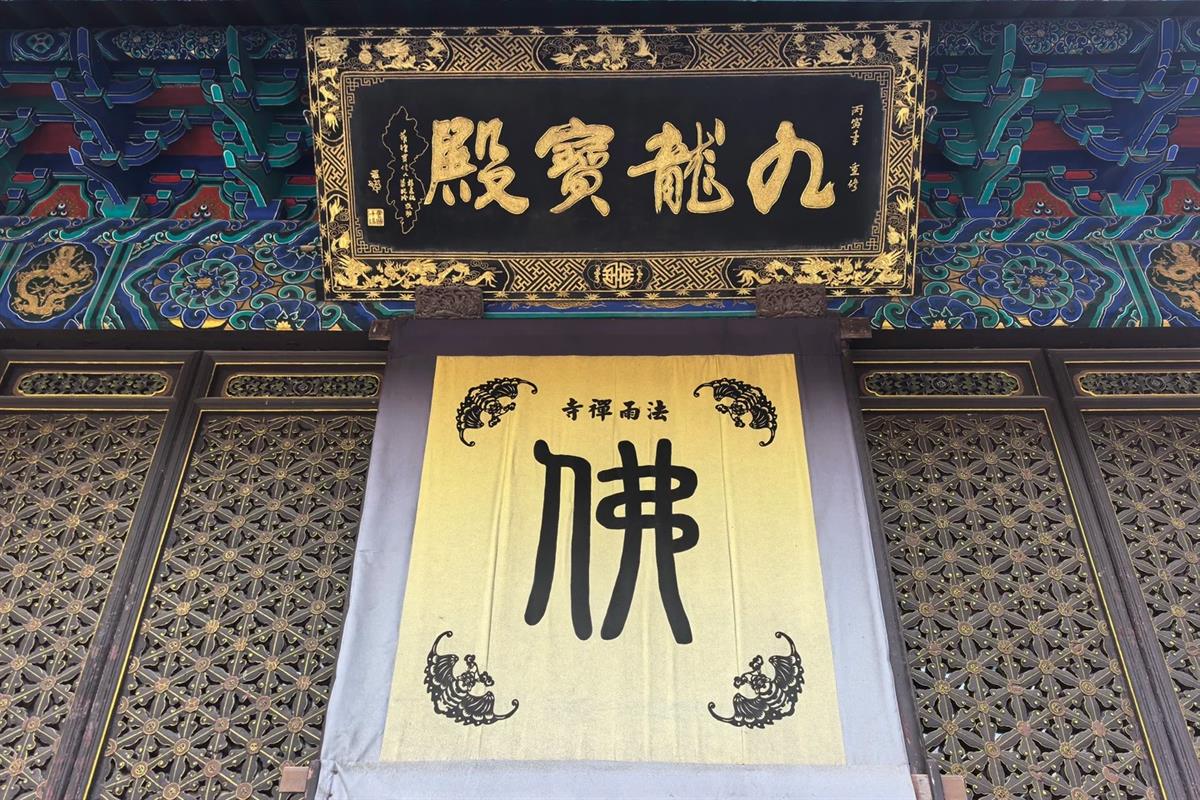
Imperial in style, built into the hillside, with a nine-dragon coffered ceiling that is the best single thing to look up at on the island. Qianbusha beach beside it takes the sunset.
Huiji Temple
慧济寺Must see06:00–18:00
On the summit of Foding Shan, the highest of the three and the quietest, looking out over the archipelago. ⚠️ Two ways up, and they start at opposite ends of the island: 1,088 steps from Fayu Temple's back gate on the south flank, or the cable car, whose lower station is up at the island's northern tip.
Shancai Cave
善财古洞If you have time06:00–17:30
Petitioned for money, and consequently the worst queue on the island — travellers report one to two hours on holidays. Go before seven or after three, or skip it.
Baibusha & Qianbusha beaches
百步沙 · 千步沙If you have timeOpen, free
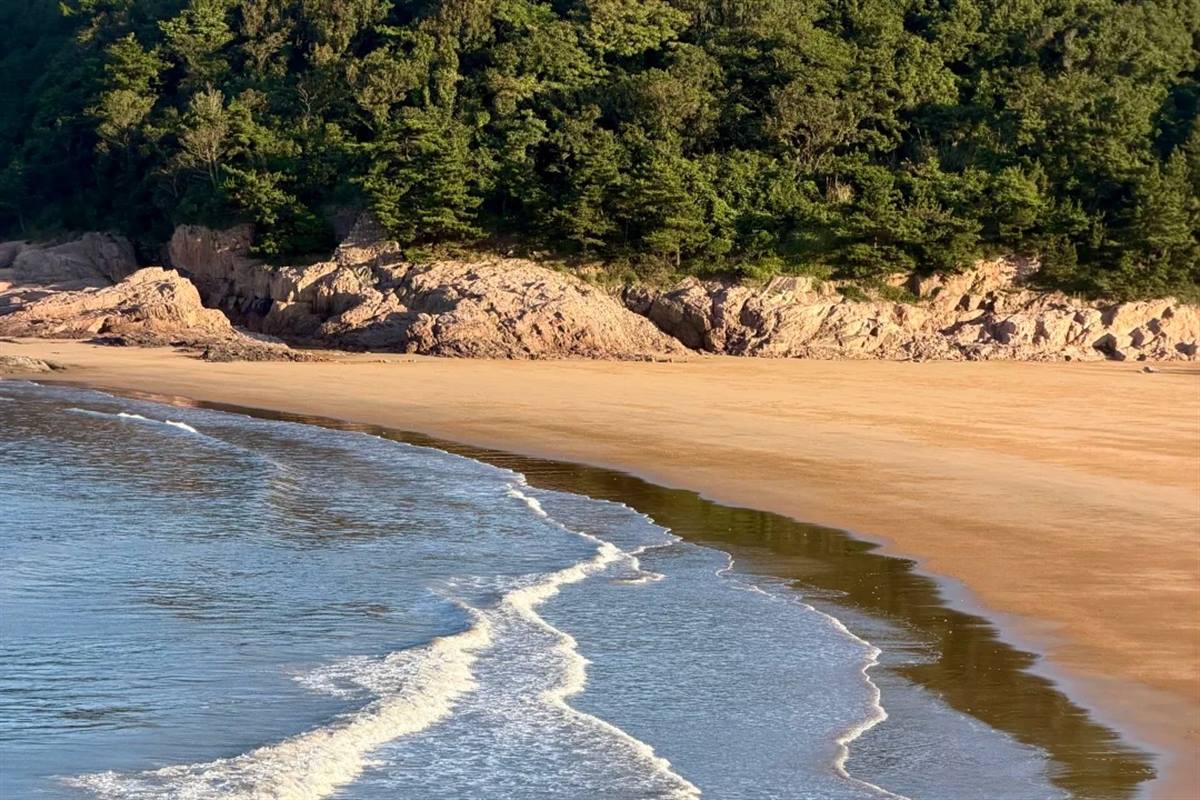
The two beaches, and both are free. Baibusha is small and was used as a Journey to the West location; Qianbusha is the long one. ⚠️ There are no rinse-off facilities anywhere on the island.
Purple Bamboo Forest & Buyinqu Hall
紫竹林 · 不肯去观音院If you have time06:00–17:30
The island's earliest temple site, and the origin story: a monk's Guanyin statue that "would not go" any further. About half an hour, and next door to the big statue.
Luojia Island
洛迦山SkippableSeparate boat
The saying goes that you have not finished the pilgrimage without it. Travellers still say skip it: a separate 20-minute boat each way and 750 steps once you land.
Fanyin Cave
梵音洞Skippable06:00–17:30
Remote, at the far end of the island, and only worth the trip if you are already going to Shancai Cave — the bus out here stops at 17:00.
⭐ Note that the temples do not close together. Puji and Fayu stop at 17:30, the Guanyin statue at 17:30 on a weekday but 18:00 at weekends, and Huiji — the one at the top, the one that needs the cable car — stays open until 18:00. That last pairing is the trap: the temple is open later than the lift that gets you to it.
Getting around the island
The sights are spread across a few kilometres of hilly island and the standard local advice is unambiguous: take the bus, do not walk it.
One spine north from the pier — and the two caves are a detour, not a stop
Take the busEverything except the two caves sits on one north–south line. The eastern arm is no exaggeration — it really is that far out, which is what turns the caves into a morning rather than an hour. And the cable car is placed where it actually runs, over the north flank, with the stairs climbing the other side.
- Island buses cost ¥5–¥10 a ride, single-use, paid by scanning a QR code on the seat back. ¥5 covers the core runs — the pier, Puji Temple, the Guanyin statue — and ¥10 the outlying ones.
- Core routes run 06:30–22:00 in summer and 07:00–22:00 in winter. ⚠️ But the lines out to Shancai Cave and Fanyin Cave run only 07:00–17:00, all year. If those are on your list, they are a morning, not an afternoon.
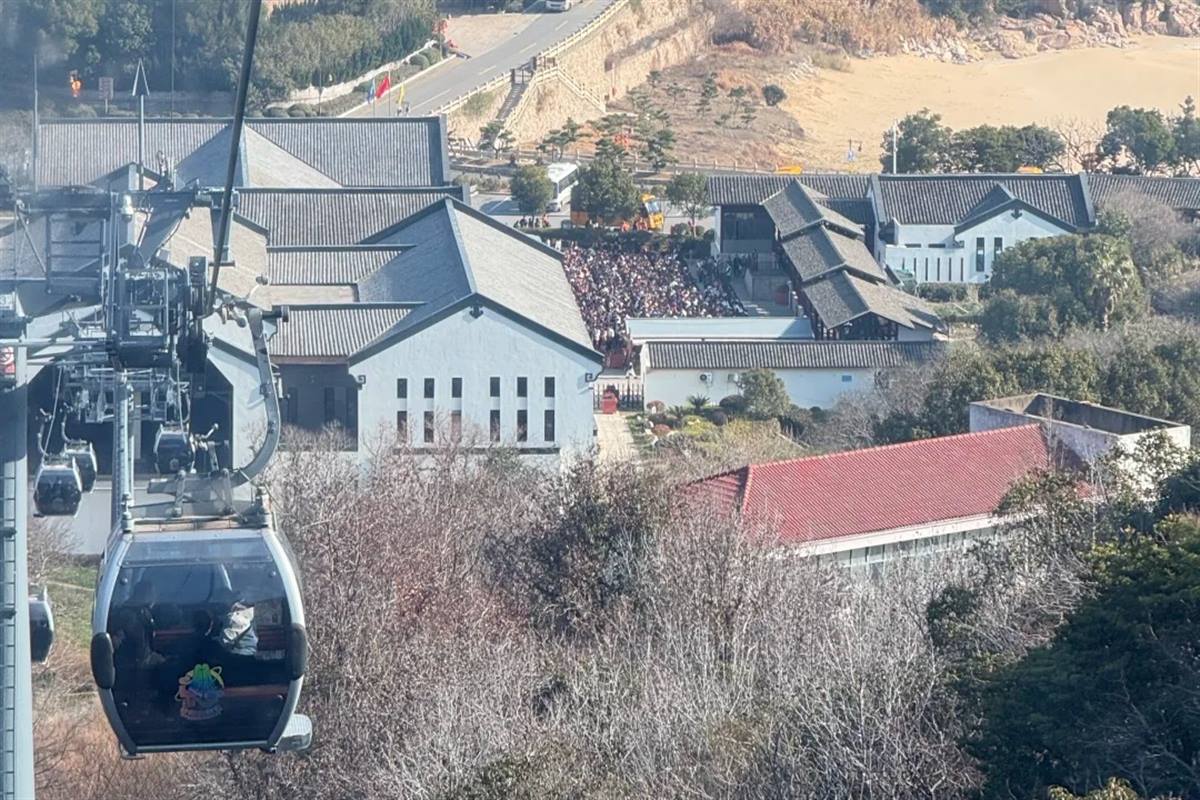
- ⚠️ The cable car does not start below Fayu Temple. Its lower station is at the island’s northern tip — further north than Huiji Temple itself, and roughly two kilometres from Fayu Temple, near the Baotuo Lecture Temple. The 1,088 steps climb the hill’s south flank from Fayu’s back gate; the cable car climbs the north flank from its own station. So they are not two options you weigh up standing at Fayu — choosing the lift means getting yourself to the north end first.
- The Foding Shan cable car is ¥40 one way, ¥70 return, and it is the way up to Huiji Temple. ⚠️⚠️ The number that matters is not the closing time. Operating notices put it at roughly 07:00–17:00 (some seasons and notices 07:30–16:30) — but the return ticket stops selling about an hour before the last car, so in practice you cannot buy a return after about 15:30. Be back at the ticket hall by then. At 16:00, still on the summit, you can in theory buy a single for the last car; one long queue or an early close and you are walking down instead. The fallback is 1,088 steps from Fayu Temple’s back gate, 40–50 minutes for most people. ⭐ During the lunar Guanyin festival periods the cable car reportedly runs through the night, with a last car after midnight — the one time this deadline does not apply.
- ⭐ Water and snacks are price-capped, and the cap is worth knowing because it is not always honoured. The island’s management committee caps a 550 ml bottle of water at ¥5, instant noodles and flatbread at ¥10, and ordinary soft drinks at ¥8. Separately the committee runs budget vending machines at ¥3 a bottle across 44 price-capped points — piers, Puji Temple, Foding Shan. ⚠️ Travellers in 2026 still report shops charging ¥8, and budget machines found switched off at the breaker. Look for the official budget machine first, then the capped shelf price; the posted cap is what makes it worth asking.
- Luggage. There is a forwarding service at the pier, around ¥10 a piece, that takes bags to your guesthouse. On an island of steps and bus stops this is money well spent.
⚠️ Three clocks, and they are not the same clock. The island runs until the last boat at about 21:30. The outlying buses stop at 17:00. And the cable car’s return-ticket window closes around 15:30 — earlier than the cable car itself. Every plan that goes wrong here goes wrong in the same way: someone works backwards from the ferry and forgets that the way up the hill stopped selling round trips six hours earlier.
Etiquette — worth ten minutes before you go
This is a working pilgrimage site, and it asks a little more of a visitor than a museum does. None of it is difficult and nobody will be unkind about a mistake, but knowing a few things removes the low-level anxiety that follows people around temples.
- ⭐ You do not need to buy incense. Many temples hand you three free sticks at the gate. The sellers outside offering large expensive bundles are selling you something you are about to be given — and large bundles are discouraged anyway. Three is the number: it stands for the Buddha, the teaching and the community.
- Step over a threshold, never on it. The raised beam across a temple doorway is spoken of as the Buddha’s shoulder. Men traditionally lead with the left foot, women the right.
- Do not blow a flame out with your mouth — wave it out. And do not photograph a figure head-on; photographing the halls and the grounds is fine.
- The offering box has no expected amount. The phrase for it translates roughly as “as your heart moves you”. A yuan or two is a perfectly ordinary offering, and nobody is counting.
- ⚠️ Ignore anyone who approaches you at the pier or on the road offering to “consecrate” something, read your fortune, or guide you. It ends at an expensive incense shop. Buy incense and religious objects at a temple’s own counter, inside.
One piece of local colour worth knowing rather than being puzzled by: three stones on the island get touched by nearly everyone who passes, and they carry a small joke about the ascent — roughly “good that you came” by Puji Temple, “good that you got up here” on the summit, and “better and better” on the square by the pier. And at Shancai Cave, which people petition about money, you will see visitors passing hundred-yuan notes over the censer and folding them into ingot shapes to carry home.
Where to sleep — the island or the mainland
This is the first thing domestic visitors argue about, and the honest answer is that it depends on whether you want the early morning or the evening.
| Where | What you get | The trade |
|---|---|---|
| On the island | The temples at 06:00, before the day boats land. No pier in your day at all. Much easier with older relatives or small children. | Dearer rooms, far fewer of them, and an island that is genuinely quiet once the day visitors leave. |
| ⭐ Zhujiajian, by the Wugongzhi pier | The domestic default: a real choice of rooms, ordinary prices, restaurants and a seafood street in the evening. | You do the pier twice, and it only works over two days if you use the free re-entry registration first. |
If you are going to do one night, the pattern that gets recommended most often is: arrive, walk the island, register at the re-entry desk, sleep at Zhujiajian where the food is, and come back on an early boat for the temples at opening. That gets you the best hour of the day without paying island-room prices for it.
Register first, then pick your baseNASDAQ: TCOM
Do the free re-entry registration before you leave the island and a second day costs the boat fare from either side. After that it is the trade in the table above: the island buys you the temples at six, Zhujiajian buys you a cheaper room, a seafood street, and the pier twice.
When to go — and the nine days to think hardest about
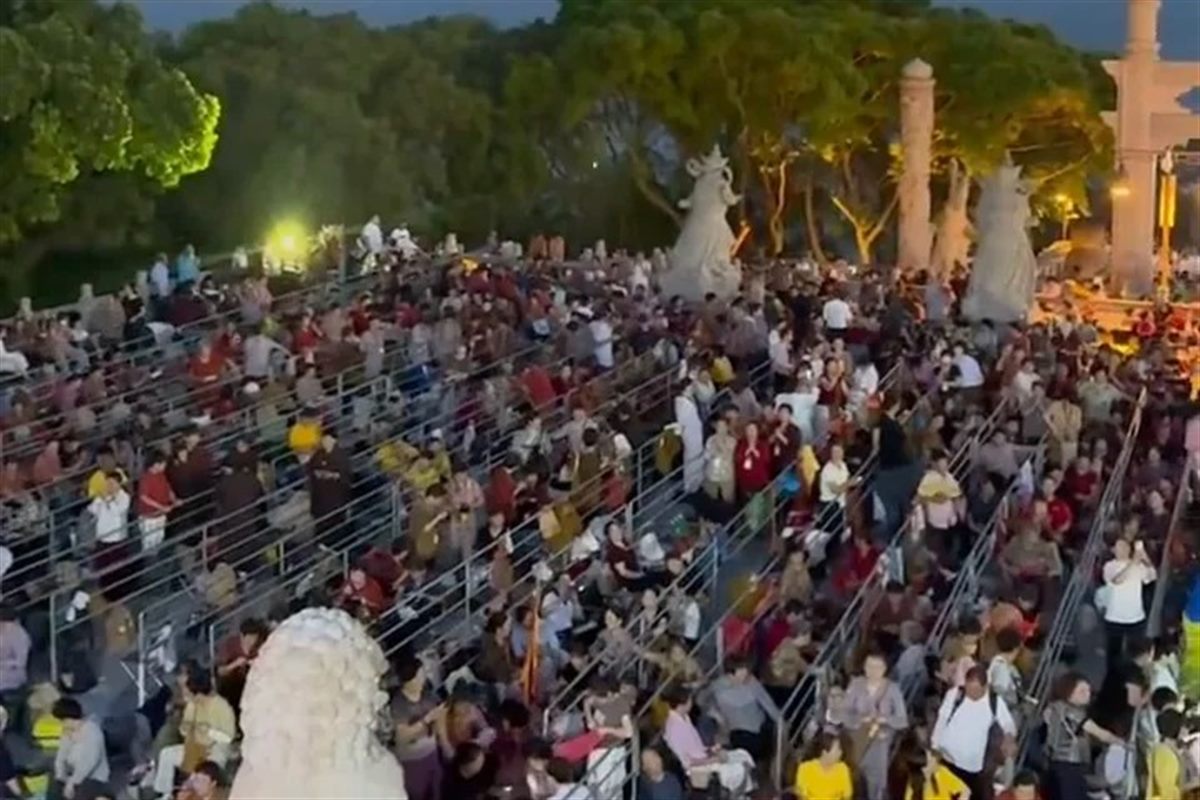
Putuoshan has three festival periods a year, and they transform the place. Guanyin’s birthday, enlightenment and renunciation fall on the nineteenth day of the second, sixth and ninth lunar months, and each runs three days from the seventeenth — nine days in total.
| Festival | Lunar date | 2026 |
|---|---|---|
| Guanyin’s birthday | 2nd month, 19th | 6 April 2026 |
| Enlightenment | 6th month, 19th | 3 August 2026 |
| Renunciation | 9th month, 19th | Second half of October |
Whether those dates are the best or the worst time to come depends entirely on what you want. If you have travelled to see a living pilgrimage, this is it at full strength and nothing else on the calendar compares. If you wanted a quiet temple above the sea, they are the nine days to avoid: rooms spike, ferries queue, and the island is full. The national holiday weeks in early May and early October are the other dates to avoid, and they carry the ¥200 entrance as well.
Planning the wider trip? See our Wuzhen and Nanxun water-town guides, the Hangzhou city guide, or Hengdian World Studios if you are working your way across Zhejiang.
Frequently asked questions
How much does Mount Putuo cost, and what does the ticket actually cover?
The island entrance is ¥160 from February to November, ¥140 in December and January, and ¥200 across three holiday blocks — lunar new year days one to five, 1–3 May and 1–5 October. That is only the entrance. The return ferry is ¥60 on the ordinary boat (¥30 each way, about fifteen minutes) or ¥100 one way on the business fast craft. A combined entrance-plus-return-ferry pass sells at about ¥220, which is exactly ¥160 plus ¥60 — the plain sum, not a discount, though it is still worth buying as one transaction because it is one queue rather than two. And there is a layer most English pages omit: several temples charge their own small entry ticket at the door, roughly ¥5 at Fayu and Huiji and ¥6 at the Guanyin statue. Island buses are ¥5–¥10 a ride and the cable car is ¥40 one way. So the honest budget is the entrance plus the boat plus a handful of small charges, not a single number.
Can I visit Mount Putuo over two days without paying the entrance twice?
Yes, and this is the most useful thing to know before you go — but only if you register before you leave. The island entrance is charged per entry, so a second day would normally cost another full ticket on top of another ferry. Before you get on the boat out, find the re-entry desk at the island's pier, just past the ticket hall; travellers place it on the right, near the little yellow bus stop. It is free. You show your passport, staff enter your details and photograph your face, and for the next twenty-four hours you come back through a dedicated re-entry lane on a face scan, paying only the ferry fare. It is confirmed to work with a foreign passport. This is what makes the cheaper mainland base actually viable — without it, sleeping on the mainland and returning for a second day costs you the entrance again.
Will the gates read my passport at Mount Putuo?
No, and planning around that is the difference between a smooth arrival and an hour of confusion. Neither the boarding gate at the ferry pier nor the island entrance gate reads passports — both are built around the mainland identity card, and the official booking mini-programme forces a mainland ID number and generally will not complete a passport booking at all. The path that works is straightforward once you know it: buy the combined entrance-and-ferry ticket at the pier's staffed window, where staff enter passport details by hand and issue it; then at both gates use the staffed lane rather than the turnstiles, showing the original passport. Allow roughly forty minutes more than you otherwise would, because the manual check takes time and the queue for it is not the queue everyone else is in. Carry the physical passport at every stage — ticket, boat, entrance and the re-entry desk. A photograph or photocopy is not accepted.
How do I get to Mount Putuo from Shanghai or Ningbo?
Putuoshan is an island in the Zhoushan archipelago, so every route ends in a boat. From Shanghai, direct coaches run from People's Square and Nanpu Bridge to the Zhujiajian Wugongzhi pier in about four to four and a half hours; by road it is 271 km, roughly three hours of driving, so the coach time includes its stops. The alternative is high-speed rail to Ningbo and a coach onward from the station beside it, about two hours. From Ningbo directly it is about an hour and a half to two hours — 112 km by road. And the leg worth checking before you commit to the road: Zhoushan Putuoshan International Airport is four kilometres from the ferry pier, about eight minutes and roughly ten yuan in a taxi, which makes flying in a genuinely reasonable option rather than an afterthought. From the pier, the ordinary boat takes about fifteen minutes and the business fast craft about seven.
Which pier should I use for Putuoshan?
Use Zhujiajian Wugongzhi. It is the main gate, it has by far the most sailings, and it runs from roughly half past six or seven in the morning until about half past nine at night, later in summer. The alternative you will see mentioned, Banshengdong, is closer to Ningbo city and looks convenient on a map — but it has few sailings and its last boat is around half past four to five in the afternoon. That is a genuine trap: it is early enough that a normal day on the island will strand you, and the temples themselves do not close until half past five or six. If someone suggests Banshengdong, check the return sailing before you agree to it.
Should I stay on the island or on the mainland?
This is the first thing domestic visitors argue about, and there is no universal answer. Staying on the island buys you the temples at six in the morning, before the day boats land, and it removes the pier from your day entirely — worth a lot if you are travelling with older relatives or small children. The costs are real: rooms are dearer, there are far fewer of them, and the island is quiet to the point of dead after the day visitors leave. Staying at Zhujiajian near the pier is the domestic default — much more choice, ordinary prices, restaurants and a seafood street in the evening. The catch is that it only works across two days if you use the free re-entry registration before you leave the island; otherwise your second day costs another entrance ticket. Decide which you are doing before you buy anything.
When is the worst time to go to Mount Putuo?
The three Guanyin festivals, unless they are precisely why you are going. Guanyin's birthday, enlightenment and renunciation fall on the nineteenth day of the second, sixth and ninth lunar months, and each one runs three days from the seventeenth — nine days a year in total. In 2026 the first two are 6 April and 3 August; the third falls in the second half of October. On those dates the island fills with pilgrims, rooms spike, and the ferry queues are a different order of magnitude. They are extraordinary if you want to see a working pilgrimage at full strength, and miserable if you wanted a quiet temple by the sea. The national holiday weeks in early May and early October are the other dates to avoid, and they carry the higher entrance price as well.
What should I know about temple etiquette before I go?
More than most Chinese sights ask of you, because this is a working pilgrimage island rather than a monument. A few things carry most of the weight. You "request" incense rather than buy it, and many temples hand you three free sticks at the gate — so the sellers outside pushing expensive bundles are selling you something you are about to be given. Three sticks is the norm; they stand for the Buddha, the teaching and the community. Never step on a temple threshold: it is spoken of as the Buddha's shoulder, so step over it. Do not blow a flame out with your mouth, and do not photograph the front of a figure. Money in the offering box has no minimum and no expectation — a yuan or two is an entirely ordinary offering, which is worth knowing because the anxiety about getting that wrong is what most visitors actually arrive with. And bring cash in small notes: some ticket desks, offering boxes and temple shops take nothing else, which catches people out in a country where they have been told they will never need it.
Sources
Checked July 2026 · Written from our own first-hand travel in China.