Key takeaways
- ⭐ The five parks’ opening hours do not overlap, and they sit in two clusters 7 km apart. That, not taste, is what decides your day.
- So the ¥299 one-day five-park pass — the biggest seller — cannot physically be used up. It is the rung to talk yourself out of.
- ⭐ There is a ¥199 evening ticket for entry after 17:00, ¥100 cheaper, covering the half of the day that is actually good. We could not find another English guide that mentions it.
- Each park admits you once per day. Step out for lunch and that park is finished for you — unless you hold the hotel-bundled multi-entry pass, which is the only widely-sold product that lifts the rule.
- ⚠️ The ¥1 bus between parks stops at about 17:30 — and the shows are at 19:30 and around 20:30. Budget a taxi after dark, or sleep inside.
What Hengdian is — and where it actually is
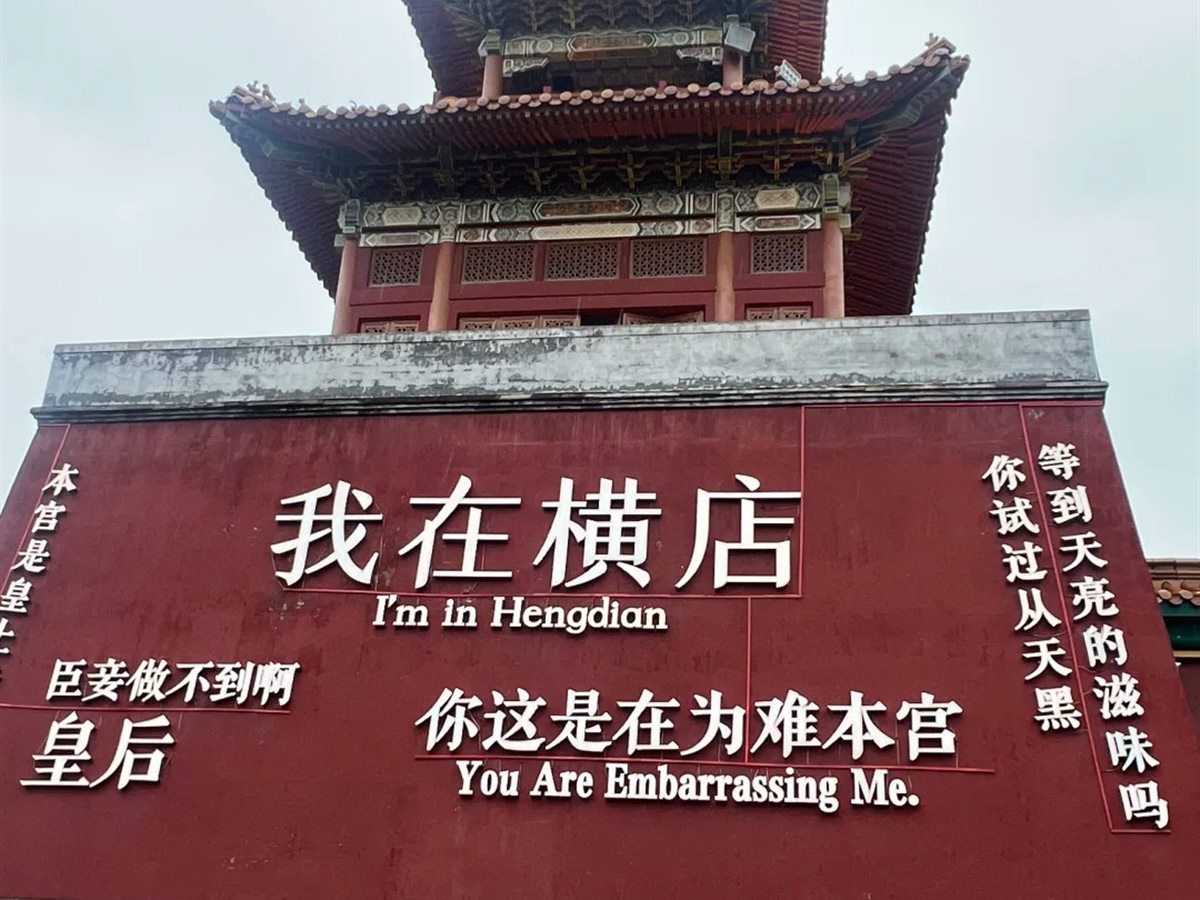
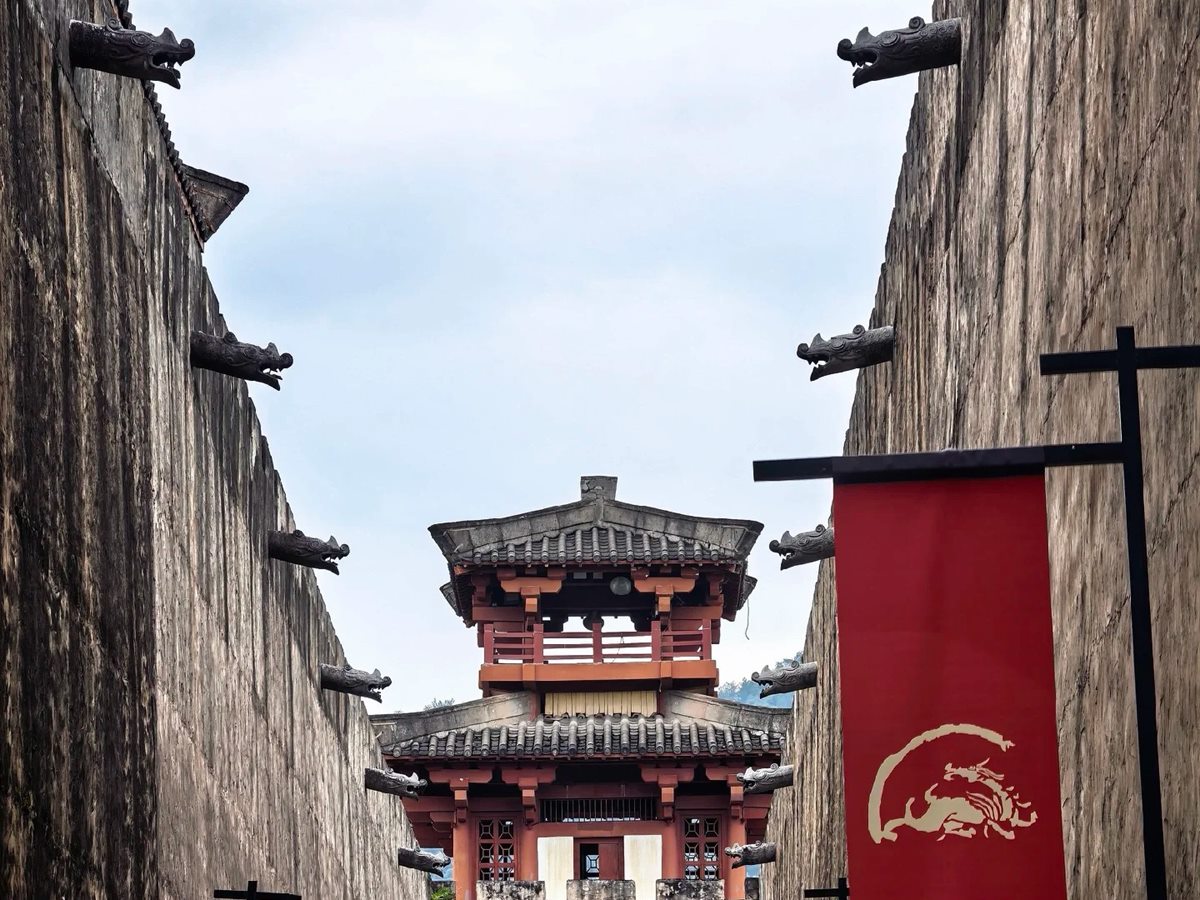
Hengdian is a town in Dongyang, in Jinhua prefecture, central Zhejiang. Its operator has been building film sets here since 1996 and now calls the result the world’s largest film and television shooting base, with ten studio stages alongside the outdoor sets. Most of those sets are open to visitors, ticketed as theme parks, and a handful of them are enormous — a full-scale Forbidden City, a Qin and Han palace complex of 27 halls, a Song-dynasty river town, a Republican-era Guangzhou street.
⚠️ It is not a Hangzhou day trip. English itineraries file Hengdian under Hangzhou, and it does belong to the same trip — but it is two to three hours away door to door, in a different prefecture. Not because the trains are awkward — there are 37 direct services a day and the fastest takes 44 minutes — but because they run from Hangzhou West, which is itself 26 km and about an hour and a bit from West Lake. Plan it as a night away, or as a stop between Shanghai and somewhere further south. Trying to bolt it onto a West Lake day is the first way this visit goes wrong.
The second way is the celebrity expectation. Hengdian is a working studio, and the crews are real — the operator publishes a weekly list of which productions are shooting. But they work in cordoned-off areas away from the visitor routes, and “spot a star” is the single biggest source of disappointed reviews. What you will actually see is lighting rigs, costumed extras on their way somewhere, and occasionally a fence across the best courtyard in the park. That is the price of a working set rather than a museum, and it is worth knowing before you buy.
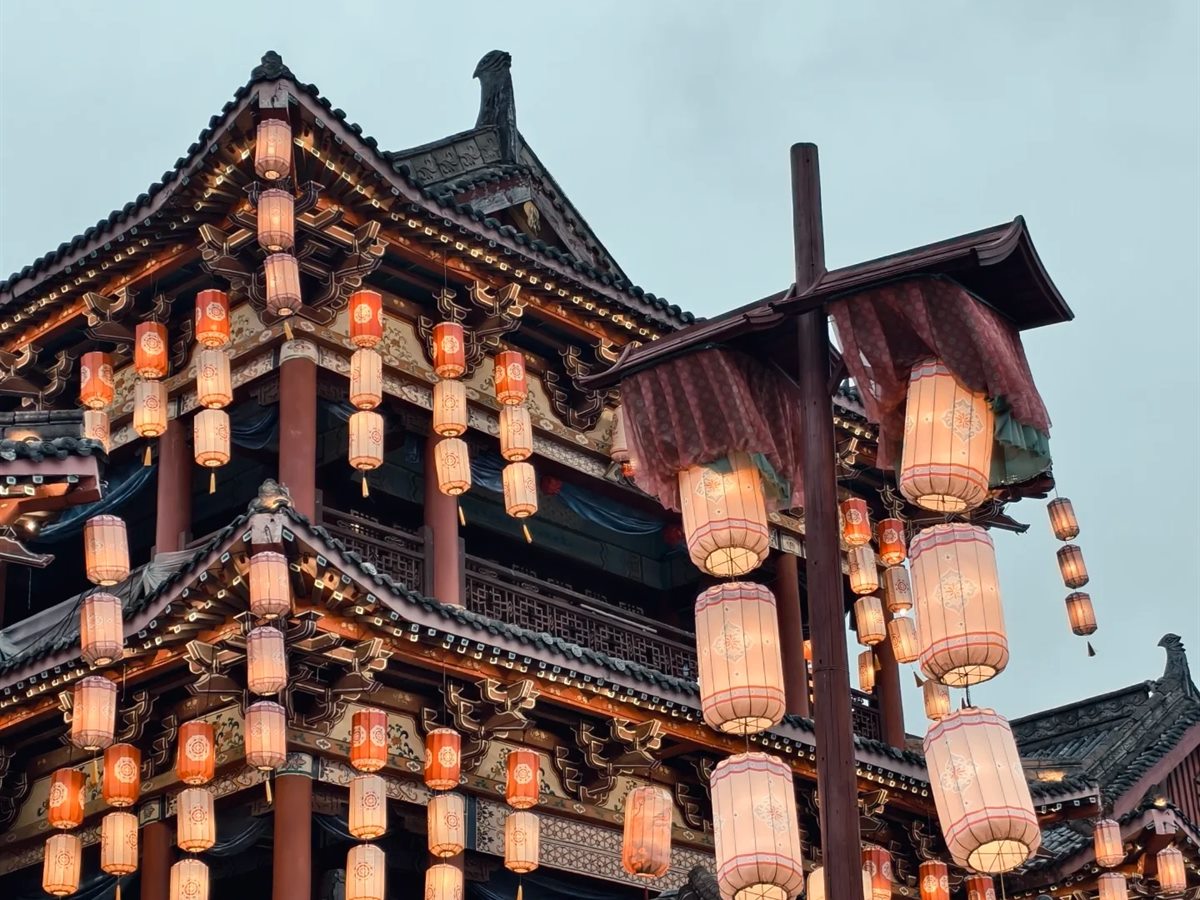
What Hengdian genuinely is, then: an evening. Domestic visitors have a shorthand for it — 白天看山寨,晚上看大片, “by day you are looking at a knock-off, at night you are looking at a movie”. In daylight the replicas read as replicas, concrete and new. After dark, lit and populated with costumed characters and staged with shows, they read as the thing they were built to be. Almost every disappointed English-language review of this place is a review of a daytime visit, and almost every enthusiastic one mentions the night.
Where Hengdian actually sits
Region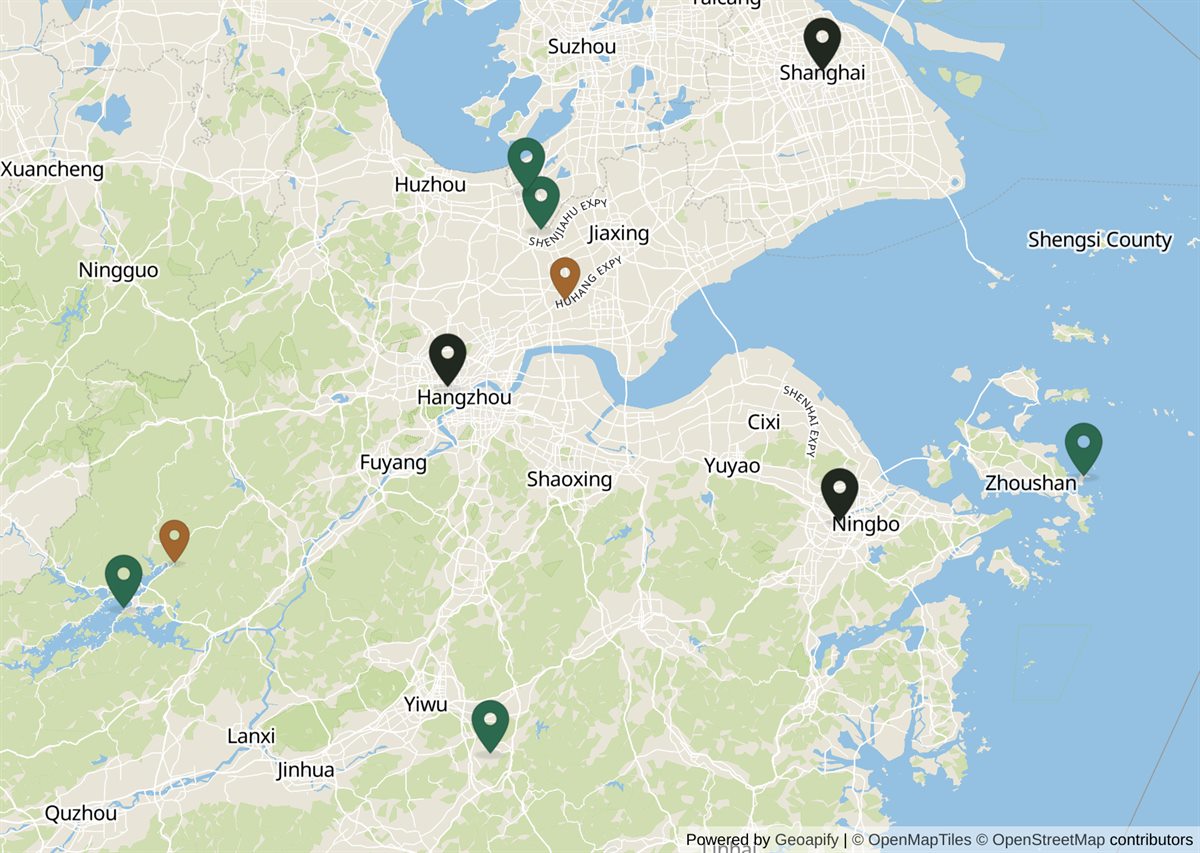 HangzhouHangzhouShanghaiShanghaiWuzhenWuzhenNanxunNanxunHengdianHengdianQiandao LakeQiandaoMount PutuoMt PutuoTongxiang stnTongxiangQiandaohu stnQiandaohuNingboNingbo
The clock problem — why five parks in one day is impossible
This is the fact the whole visit turns on, and no English write-up carries it: the five headline parks keep opening hours that do not overlap. They are not five interchangeable attractions you work through at your own pace. They are five different times of day.
| Park | Open | Last entry | Cluster |
|---|---|---|---|
| Ming and Qing Palatial Garden 明清宫苑 also signed & sold as Palace of Ming and Qing Dynasties | 08:30–17:00 | 16:30 | North |
| Qin Palace 秦王宫 | 09:00–22:00 | 21:00 | South |
| Qingming Shanghe Tu 清明上河图 | 10:00–22:00 | 21:00 | South |
| Guangzhou Street · Hong Kong Street 广州街·香港街 | 13:00–20:30 | 20:00 | North |
| Dream Valley 梦幻谷 | 13:00–21:00 summer; often 15:00 or 16:00 off-season | — | South |
Two clusters — and a clock that decides the order
7 km between themStation outside bothRead down that table and the day plans itself, whether you like the plan or not. Ming and Qing Palatial Garden has to be a morning — it stops admitting at 16:30 and closes at 17:00, which also means it is the one park a night ticket cannot reach. Guangzhou Street cannot be started before 13:00. Dream Valley is an evening proposition and, outside the summer water-park season, frequently does not open until the middle of the afternoon. There is no ordering of those five that fits into one day.
Two further rules turn a tight day into an impossible one:
- The parks are in two clusters, 7.0 km apart — about 23 minutes by road between Qin Palace and Ming and Qing Palatial Garden. Qin Palace, Qingming Shanghe Tu and Dream Valley are the southern group; Ming and Qing Palatial Garden, Guangzhou Street · Hong Kong Street and the International Circus City are the northern one. You cannot walk between them.
- ⭐ Each park admits you once per day. Leave Qin Palace for lunch and you cannot go back in that afternoon for its evening programme — you can only move on to a park you have not used yet. Passes are also for consecutive days and may not straddle a month boundary.
⚠️ Which is why the best-selling ticket is the wrong ticket. The ¥299 one-day pass covers all five of those parks and has been booked tens of thousands of times. It cannot be used up — not by walking faster, not by starting earlier. The hours simply do not permit it. Chinese reviewers say the same thing bluntly: two days is not enough for five parks, so buy three. That is the single most useful thing to know before you pay for anything here.
Which ticket to buy — an honest ladder
Hengdian sells a ladder of passes rather than a ticket, and the rung that gets sold hardest is at the wrong end of it. Gate prices below, with the sort of discount that is routine when you book ahead rather than at the window.
| Ticket | Gate | Booked ahead | Who it is for |
|---|---|---|---|
| Evening ticket, entry after 17:00 横店影视城夜游票 ⭐ Start here | ¥199 | — | A first visit that is not trying to see everything — and anyone arriving on an afternoon train, which this ticket is priced for. Everything after dark is inside it: the lit sets, the walking show, the molten iron. |
| Two-day pass, five parks 横店影视城二日票(五大园区) The honest five-park minimum | ¥429 | ~¥295 | You want the whole circuit. Two days is what the opening windows imply, not a luxury — and it is still one entry per park per day. |
| Two-day multi-entry pass + one night in an official hotel 横店影视城二日票(多次入园)+ 官方酒店一晚 The only one that lifts the re-entry rule | ¥528 | bundled | You mind being locked out of a park after lunch. This is the widely-sold product that allows re-entry, and it usually includes a transfer. |
| One-day pass, five parks 横店影视城一日票(五大园区) ⚠️ The rung to talk yourself out of | ¥299 | ~¥203 | Almost nobody, despite it being the biggest seller. It covers five parks that cannot be visited in one day. |
Start at the bottom of that table and work up. The ¥199 evening ticket admits you after 17:00 and costs ¥100 less than the day pass — about two-thirds the price, for the half of the day the place is genuinely good at. It is not a consolation product; it is arguably the correct first purchase, and it is missing from every English guide we can find. If you want the complete circuit, ¥429 for two days is the honest minimum. And if the once-per-park-per-day rule bothers you — it will, the first time you leave somewhere for lunch — the hotel bundle from ¥528 is the only widely-sold product that lifts it, which is why it is worth more than a ticket and a room bought separately.
Other rungs exist and mostly are not worth chasing. Single parks start from about ¥98, which is the sane choice for a half day. An annual pass is ¥459, or ¥799 for the unrestricted-area version — worth naming only because a widely-copied claim describes ¥459 as a three-day combined ticket. It is not; it is the annual pass. There is also a multi-day pass adding the International Circus City, New Yuanmingyuan and Dream Spring Valley, but it is quoted online with no published gate price beside it, so it cannot be compared like-for-like with the ladder above. Price it on the day if you are curious.
One trap when you compare prices online. A booking site’s “from” figure is the cheapest product in that listing, not the gate admission — which is how a park with an ordinary ticket price can appear to cost a few yuan. Compare the gate price to the gate price, and treat the online figure as a discount on it rather than as the price of the thing.
Concessions exist and are generous, but they are built around Chinese documents. Children born in 2020 or later, or under 1.2 m, go free — one per adult, Dream Spring Valley excluded; 1.2–1.5 m or born 2013–2019, half price; full-time students and visitors born in 1966 or earlier, 20% off; serving military and fire service, half price; disabled visitors, 20% off. Every one of them requires the ID plus the qualifying document, originals, at both purchase and the gate, or you pay the difference. A foreign student card is unlikely to clear that bar, so budget for full price and treat a discount as a bonus.
The night — which is the entire point
Everything Hengdian is good at happens after dark, and the headline shows are included with park admission rather than sold separately. That is the argument for the evening ticket in one line: you are not buying less, you are buying the part that works.
| Show | Where | When | Arrive |
|---|---|---|---|
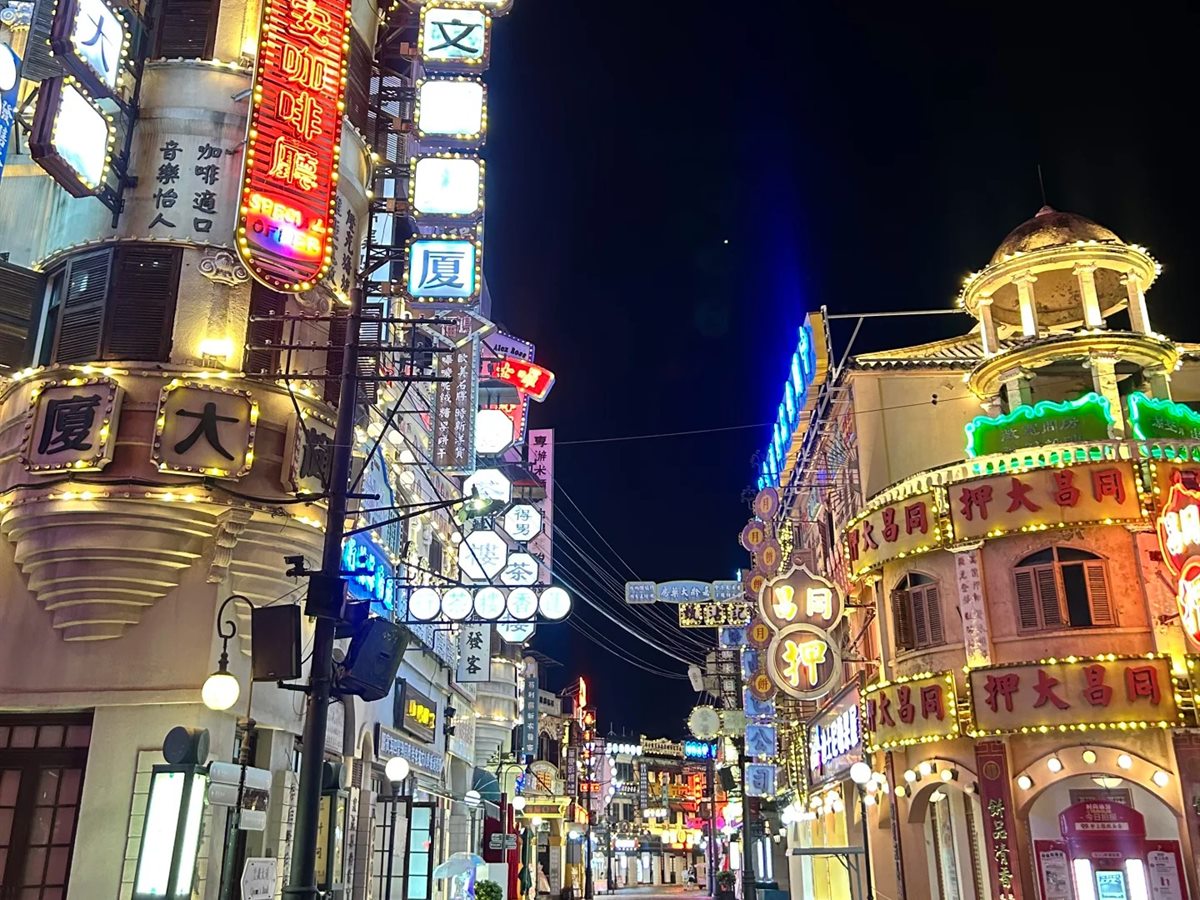
| ⭐ Immersive walking show 走进电影 | Guangzhou Street · Hong Kong Street | 19:30 | ~30 min early, by the clock tower |
| Molten-iron show 烟火人间 · 打铁花 | Qingming Shanghe Tu | ~20:30 | 40–50 min early |
| Song-dynasty stage piece 汴梁一梦 | Qingming Shanghe Tu | 14:00 · 19:00 | 30–50 min early |
| Costumed parade 全民巡游 | Qingming Shanghe Tu | Evening | Just join it |
| 4D pieces 龙帝惊临 · 帝国江山 | Qin Palace | Scheduled | Check the day’s board |
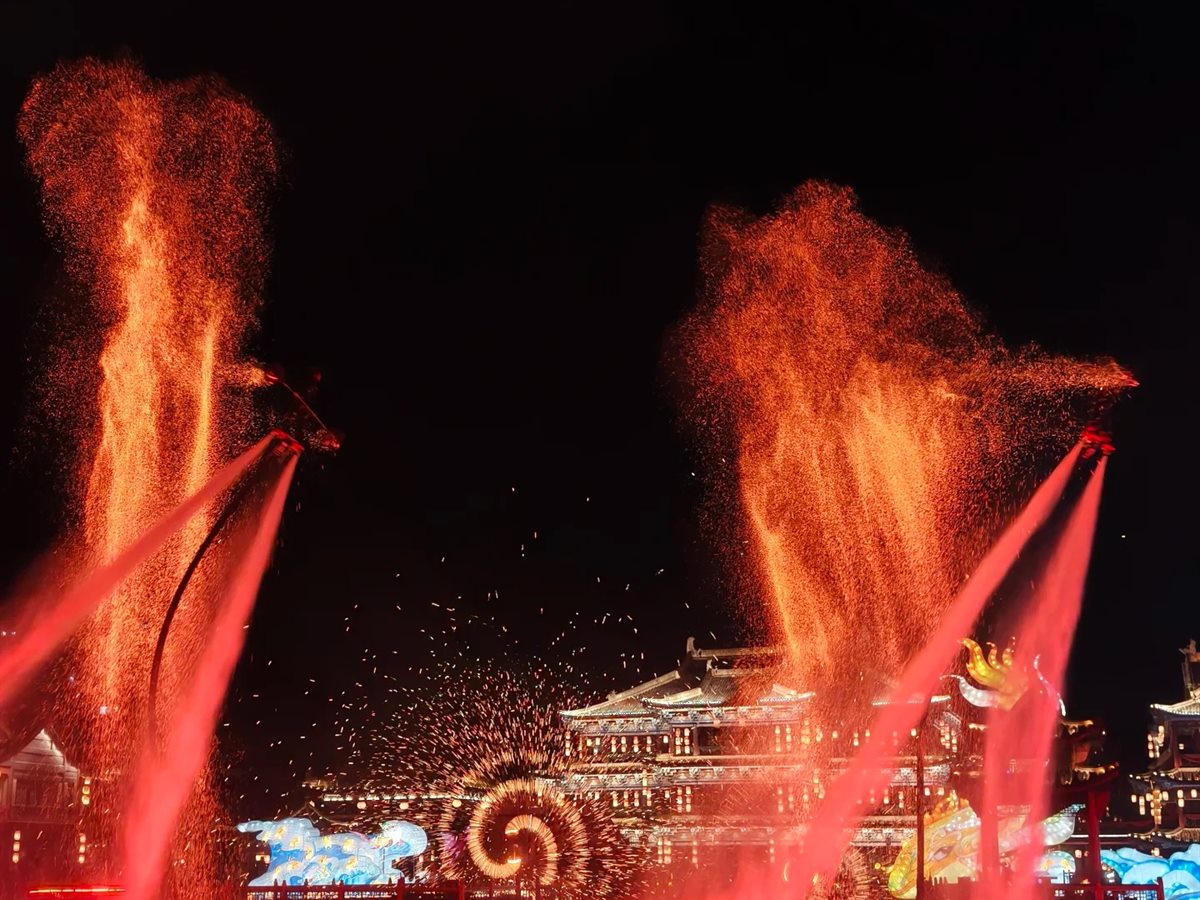
The walking show is the one travellers most often name as the best thing in Hengdian — you move through the sets rather than sit in front of them. The molten-iron show is an intangible-heritage craft in which smiths fling liquid iron at a hard surface so it bursts into a shower of sparks; it is spectacular and it is also the hardest place to get. There is no numbered seating anywhere, which is why people hold places well in advance — the times in that last column are not exaggerations. A paid fast-track exists for the busiest attractions if standing about for fifty minutes is not how you want to spend the evening.
⚠️ The contradiction nobody joins up, and the most useful line on this page. The ¥1 bus that loops all the parks — the cheap, obvious way to move around — runs only from about 07:00 to 17:30. The walking show is at 19:30. The molten iron is at around 20:30. The evening ticket does not even begin until 17:00. So the evening the scenic area sells you is the evening you cannot bus home from, and the two facts are never reported together because they come from different kinds of source. Budget a taxi after dark, or sleep inside the resort. Decide which before you buy the ticket, not at 21:00 at a bus stop.
One last piece of local colour worth knowing, because it is charming and entirely absent from English coverage: costumed characters run mini-games that pay winners in prop money called “appearance fees” (赚片酬), redeemable for small gifts at the visitor centre. Children go slightly mad for it.
The five parks, and what each is for
Take them as five different films rather than five zones of one theme park. If you are only choosing one, choose by the time of day you have available — the table in the clock section is doing more work than taste is.
| Park | What it is |
|---|---|
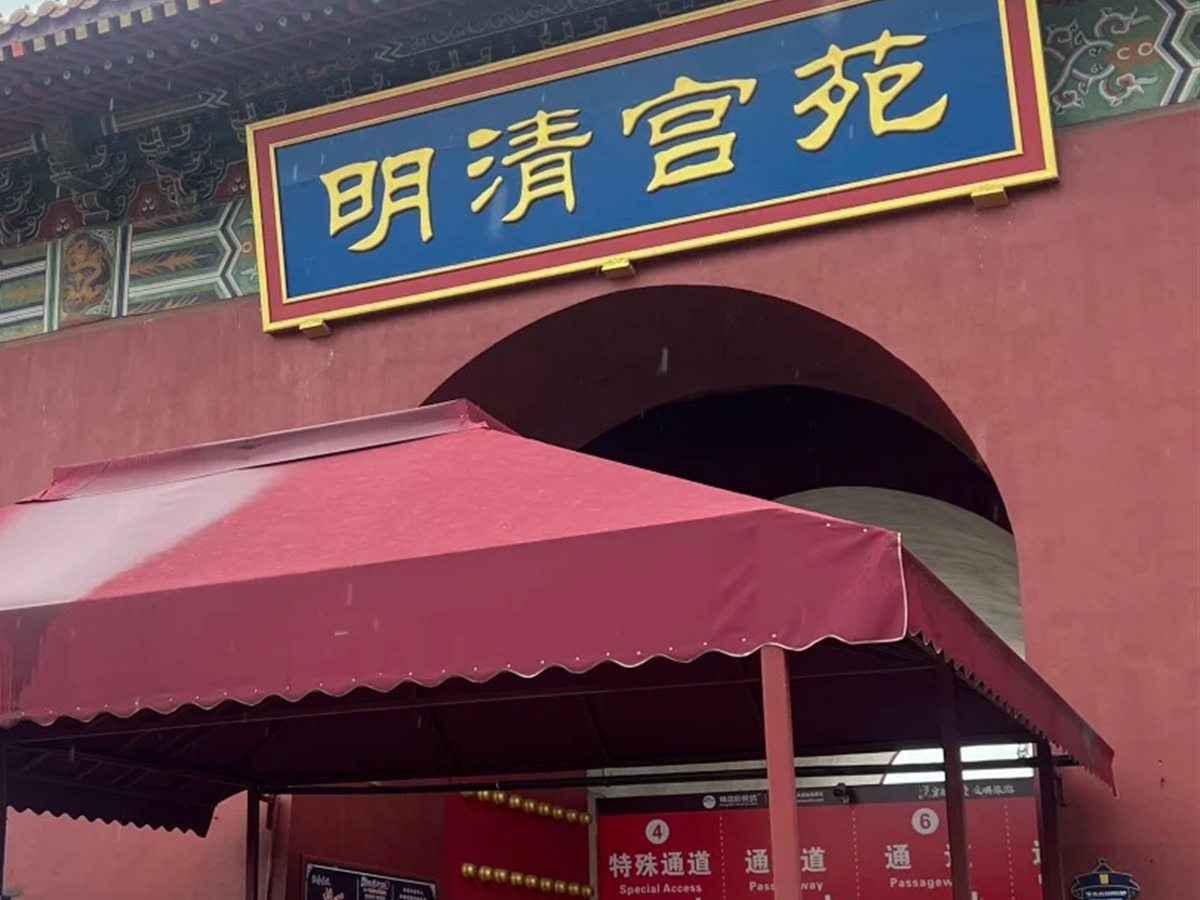
| Ming and Qing Palatial Garden 明清宫苑 08:30–17:00 · North cluster | A 1:1 Forbidden City replica, and big enough that hiring an electric cart is the one place it genuinely earns its money. ⚠️ Daytime only — this is the park that must be done in the morning or not at all. |
| Qin Palace 秦王宫 09:00–22:00 · South cluster | The monumental one: 27 reconstructed halls, towers and gates, the ninety-nine steps and the Sihai Guiyi hall, rated for 60,000 visitors a day. Sunset on the stairs is the moment people come for. |
| Qingming Shanghe Tu 清明上河图 10:00–22:00 · South cluster | Song-dynasty street life, costumed characters you can interact with, and the lit canal-side street after dark. The molten-iron show and the evening parade are both here. |
| Guangzhou Street · Hong Kong Street 广州街·香港街 13:00–20:30 · North cluster | Republican-era shopfronts and neon, and the immersive walking show at 19:30 that travellers most often name as the best thing in Hengdian. ⚠️ Does not open until the afternoon. |
| Dream Valley 梦幻谷 13:00–21:00 · South cluster | An evening-first park with a summer water park (mid-June to end August). ⚠️ Outside that season it often does not open until 15:00 or 16:00 and many rides run only after dark, so an off-season daytime visit here is largely wasted. |
Qin Palace is the one with the CV. The operator itself lists 《庆余年》 (Joy of Life), 《陈情令》 (The Untamed), 《芈月传》, 《楚乔传》 and 《秦时明月丽人心》 among the productions shot there — several of which have real audiences across Southeast Asia, so for a lot of visitors this is the park where the sets are recognisable rather than merely large. Its named features are the ninety-nine steps, the Sihai Guiyi hall and square, the covered double roadway and the watchtowers.
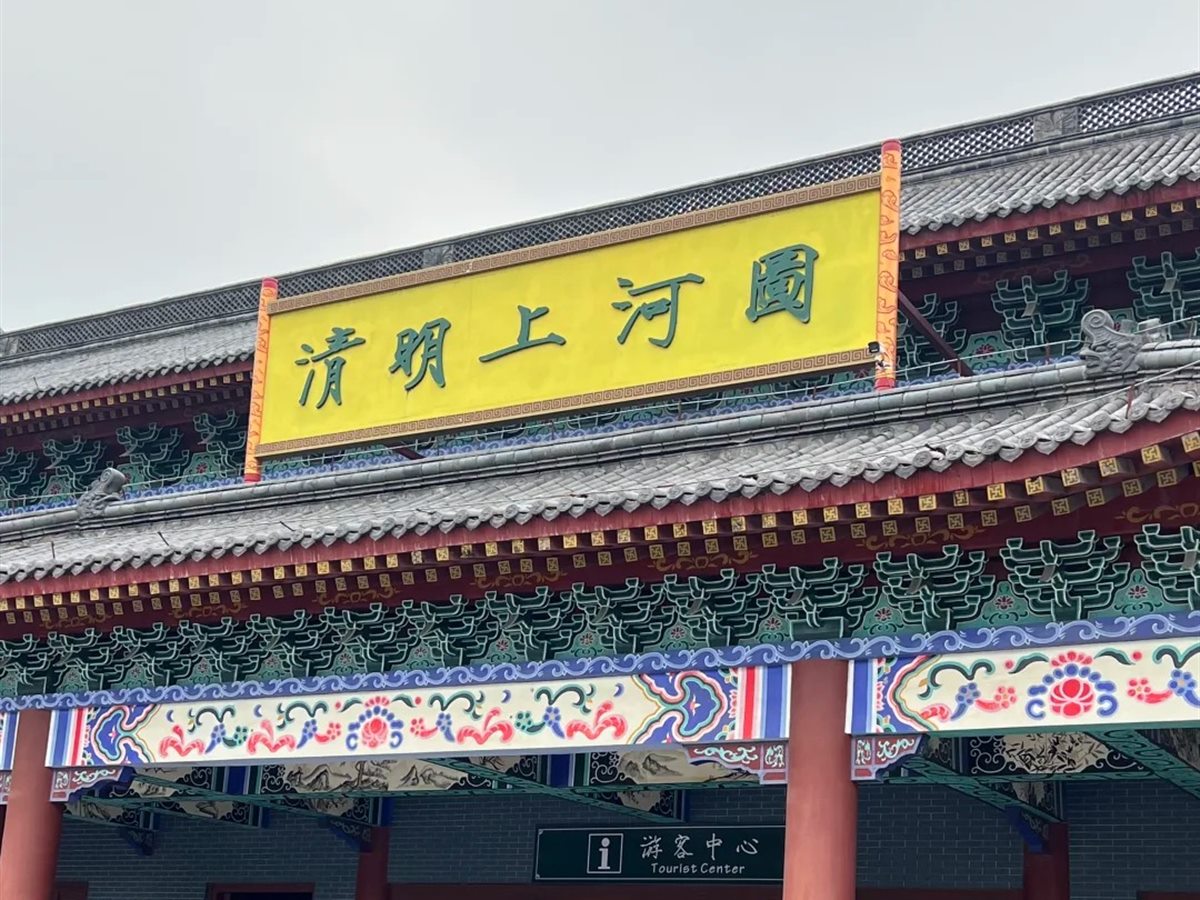
Beyond the five there are further parks on the wider passes — an International Circus City, a New Yuanmingyuan with a Royal Animal Kingdom, and Dream Spring Valley — but they sit further out again and are a second-visit proposition. ⚠️ Two naming notes for anyone searching maps: the International Circus City is the former “Dream Bund”, a rename the operator’s own English pages have not caught up with; and searching the New Yuanmingyuan by its bare Chinese name will land you at an entirely different park in Guangdong.
⚠️ And a third, which will cost you at a ticket window. The Forbidden City replica has two official English names, and they are far enough apart that neither search finds the other. The operator’s English site calls it Ming and Qing Palatial Garden, which is the name used on this page. The marker on the gate itself, and the booking platforms you will actually buy from, call it Palace of Ming and Qing Dynasties. In Chinese it is 明清宫苑 either way, so that is the string to show a driver or match on a sign. ⭐ Worth knowing that the car park beside it is now signed 横店影视城北区 — “Hengdian World Studios North Zone” — followed by a bracketed 原明清宫苑, meaning “formerly” the older name. So a third naming is arriving while the first two are both still in use.
Getting there, and getting around
Hengdian has its own high-speed station — 横店站, the name to buy and to show a driver — with roughly 92 trains a day, and it is well connected in both directions. The thing to get right is not whether there is a train but which station you leave from — Hangzhou has two in play and they are not interchangeable.
| From | How | Time |
|---|---|---|
| Shanghai Hongqiao | ⭐ Direct high-speed train to Hengdian station; direct services also run to Shanghai South | ~1 h 50 min |
| ⭐ Hangzhou West 杭州西 | Direct — 34 trains a day, first 06:35, last 22:46. Second class ¥79, first ¥125. | from 44 min |
| Hangzhou East 杭州东 | ⚠️ Direct but only three a day — 11:22, 15:39, 22:14. This is the station you probably arrived at. | from 52 min |
| Elsewhere | Through-trains call from Beijing South, Fuzhou, Xiamen North, Shenzhen North, Xi’an North and Wenzhou South | Varies |
| Hengdian station 横店站 → Ming and Qing Palatial Garden | Taxi or ride-hail, 10.2 km (north cluster) | ~21 min |
| Hengdian station → Qin Palace | Taxi or ride-hail, 13.9 km (south cluster) | ~27 min |
| Yiwu station 义乌站 → Qin Palace | The fallback railhead, 43.8 km. Usable, not a plan. | ~67 min |
- ⭐⭐ From Hangzhou, the catch is the station, not the timetable. Almost every English itinerary treats Hengdian as hard to reach from Hangzhou; it is not — 37 direct trains a day, the quickest in 44 minutes. But 34 of those 37 leave from Hangzhou West, which sits 26 km out towards Yuhang, roughly an hour and a bit from West Lake by road. Only three a day leave from Hangzhou East, the station you most likely arrived at. That gap between the two stations is the whole reason this is a night away rather than an afternoon.
- ⭐ The station is outside the complex, beyond the northern cluster — not between the two, which is how it is usually described. That matters because the two directions are not equivalent: it is 10.2 km and about 21 minutes to Ming and Qing Palatial Garden in the north, but 13.9 km and about 27 minutes to Qin Palace in the south. Decide which park you are starting at before you get into a taxi. Arriving and saying “Hengdian World Studios” is not an address.
- Between the parks, bus route 1 costs ¥1 and comes roughly every ten minutes, calling at Ming and Qing Palatial Garden, Rocky Grottos, Guangzhou Street · Hong Kong Street, Qin Palace, Qingming Shanghe Tu, Dream Valley and several hotels. ⚠️ It runs only about 07:00 to 17:30 — see the night section for why that matters more than it sounds.
- Driving: parking is free under 30 minutes and then ¥10 on weekdays and ¥19 on public holidays, across around 5,000 spaces.
Tickets & day trips with transportNASDAQ: TCOM
The whole pass ladder sells in English, including the evening ticket and the hotel-plus-multi-entry bundle. Private cars from Hangzhou with tickets included solve the part this page keeps warning about — the 7 km between clusters, and the ride home after the ¥1 bus has stopped.
What can be shut on the day you go
Two different things can be closed when you arrive, they are unrelated, and both are announced only in Chinese. Neither is a reason not to go; both are reasons not to build a day around one specific thing.
1. Sets get cordoned off for filming, at a day or two’s notice. This is the genuine cost of visiting a working studio. A notice on the operator’s own board dated 9 July 2026 closed Qin Palace’s central gate, the Sihai Guiyi square and hall, the ninety-nine steps and the east gallery over two days — that is, the most famous building in the complex and the staircase everybody photographs. The notice itself says the real times and areas are whatever the on-site signage says. Nothing about that is unusual here; it is how the place works.
2. ⚠️ The show every guide leads with may not be running — and we could not settle it either way. A large outdoor rainstorm-and-flood spectacle at Dream Valley is the show Chinese guides open with, and every English guide that copied them repeats it. Travellers through 2026 report it suspended for an upgrade and name two other pieces as the current headliners — a volcano show at Dream Valley, and the molten-iron show at Qingming Shanghe Tu. We re-checked this against the operator’s own channels on 29 July 2026 and it resolved neither way: the Chinese notice board carries nothing about it, while the official English performing-arts page still lists the show — and that page is stale enough to also still use the old name for the International Circus City. So we will not tell you it is cancelled, and we will not tell you to go and see it. The advice that survives either answer is the same: do not plan an evening around one named show. Read the day’s printed programme at the gate, and treat any show you read about online — here or anywhere else — as a possibility rather than a fixture.
One seasonal closure is predictable enough to plan around: the Royal Animal Kingdom at New Yuanmingyuan shuts for annual maintenance over the winter — in the most recent cycle from early December to the eve of the lunar new year, reopening on new year’s day. It sits inside the wider multi-day pass, so if that is what you were buying it for, check the dates first.
Staying over — and the ticket that changes if you do
Hengdian is a place where the accommodation decision and the ticket decision are the same decision, for two concrete reasons rather than for atmosphere.
The first is the once-per-park-per-day rule. It is the most irritating thing about the standard passes: step out of a park for lunch or a rest and you have finished with it for the day. The two-day multi-entry pass sold with a night in an official hotel, from ¥528, is the only widely-sold product that removes it — so you can do Qin Palace in the afternoon, go and eat properly, and come back for its evening programme. That is worth real money if you were going to sleep nearby anyway.
The second is the ride home. The ¥1 park bus stops at about 17:30 and the shows run to well past 21:00. Staying inside the resort turns that from a problem into a walk; staying in Dongyang town or by the station turns it into a taxi you should budget for. Hotel bundles frequently include a scenic-area transfer, which is part of the same calculation.
| Where | What it is | The trade |
|---|---|---|
| Official resort hotels, inside the complex | Sold heavily as ticket-plus-room bundles, usually with the multi-entry right and often a transfer. | The evening becomes easy and the re-entry rule goes away. Prices are resort prices, and you are committing to the operator’s ecosystem. |
| Hengdian town and near the station | Ordinary independent hotels and mid-range chains on normal streets, with restaurants and shops that are not park catering. | Cheaper and more normal, but you are paying for taxis after dark and buying tickets separately. |
The room here changes which ticket is rightNASDAQ: TCOM
Official resort hotels against ordinary rooms in town. The standard passes admit you to each park once a day; the hotel bundle is the only product that lifts that rule, and it exists only if you are staying. It also solves the taxi the evening ticket forces on you.
Practical for foreign visitors
- ⭐ The face-recognition gates and your passport. Face recognition has been the official entry method since April 2025, and a passport carries no Chinese ID chip, so the automatic gates generally reject it. Choose passport as the document type when booking and enter the number exactly; then at the park skip the ordinary turnstiles and use the staffed or special-document lane, where staff enter the passport and capture your face. After that first enrolment the other parks on the same pass usually admit you by face scan or a personal code. Carry the physical passport — a separate rule requires the original document at the gate, and the electronic fallback it offers only works with Chinese ID.
- The operator does run an English website and an English booking line, so this is not a Chinese-only operation. What it is not is an English-first one: the notice board, the show programme and the closure announcements are all Chinese, and the English pages lag behind them.
- ⚠️ The park WiFi needs a Chinese mobile number — it authenticates by SMS code. If you were counting on it to look things up between parks, you will be on roaming data instead. Set up mobile payment before you arrive too: link an international card to Alipay or WeChat Pay, because the carts, the snack stalls and the costume studios are effectively cashless. See our Alipay guide.
- Left luggage is free at the visitor centres (nothing valuable), and pushchairs, umbrellas and wheelchairs are lent free against a deposit — genuinely useful given how far apart the parks are.
- Costume and makeup: studios outside the gates charge roughly ¥150–¥200 all in per person, and in-park pricing is widely described as a rip-off for the same thing. If dressing up is part of why you came — and here, reasonably, it might be — do it before you go through the gate.
- Electric carts inside the parks are posted at ¥200 and upwards, and travellers routinely report negotiating them down to around ¥80. Ming and Qing Palatial Garden is the one park where a cart genuinely earns its money, on size alone.
- Best months are March–May and September–November. Mid-June to the end of August is when Dream Valley runs its water park and keeps afternoon hours; outside that window an off-season daytime visit there is largely wasted.
Planning the wider trip? See our Hangzhou city guide, things to do in Hangzhou and, for the water towns that pair with this part of Zhejiang, Wuzhen and Nanxun.
Frequently asked questions
How much are Hengdian World Studios tickets, and which one should I buy?
The gate ladder runs: ¥299 for a one-day pass covering the five headline parks, ¥429 for the same five over two consecutive days, ¥199 for an evening ticket admitting you after 17:00, and from ¥528 for a two-day multi-entry pass bundled with a night in an official hotel. An annual pass is ¥459, or ¥799 for the unrestricted-area version, and single parks start from about ¥98. Discounts of roughly 30% off the gate price are routine when you book ahead rather than at the window. The recommendation most guides get backwards: the ¥299 one-day pass is the biggest seller and usually the wrong purchase, because the five parks it covers keep opening hours that do not overlap and sit in two clusters 7 km apart — it cannot physically be used up. If you are visiting once, the ¥199 evening ticket is ¥100 cheaper and covers the part of the day the place is actually good at. If you want the full circuit, buy two days.
Can you see Hengdian World Studios in one day?
Not the five parks a one-day pass sells you, no — and this is a scheduling fact rather than an opinion. Ming and Qing Palatial Garden closes at 17:00 and stops admitting at 16:30, so it has to be a morning. Guangzhou Street does not open until 13:00. Dream Valley is an evening park and outside the summer season often does not open until 15:00 or 16:00. The two clusters are 7 km apart by road, about 23 minutes, and each park admits you only once per day, so stepping out for lunch costs you that park for the rest of the day. One park done properly is a comfortable half day; two is a full one. The honest plan for the whole complex is two days, and the plan for a single visit is one daytime park followed by the evening.
Is Hengdian World Studios worth visiting — will I see filming or a celebrity?
Worth visiting, yes, provided you come for the sets and the shows. The expectation that ruins visits is the celebrity one: real productions shoot in cordoned-off areas away from tourists, and "spot a star" is the single biggest source of disappointed reviews. What you will genuinely see is equipment, costumed extras and closed-off corners of parks, because this is a working studio rather than a museum — sets are fenced off at a day or two's notice while a crew works, sometimes including the most famous building in the complex. The second thing to know is that a daytime visit undersells the place badly. The local shorthand for it translates as "by day you are looking at a knock-off, at night you are looking at a movie", and the lighting, the shows and the atmosphere all belong to the evening.
How do I get to Hengdian from Hangzhou or Shanghai?
Hengdian is in Dongyang, in Jinhua prefecture, and it has its own high-speed station with roughly 92 trains a day. From Shanghai there are direct services to Hongqiao in around an hour and fifty minutes and to Shanghai South, plus through-trains from Beijing South, Fuzhou, Xiamen North, Shenzhen North, Xi'an North and Wenzhou South. From Hangzhou the train is easier than almost every English itinerary suggests — 37 direct services a day, the fastest 44 minutes, second class ¥79 — but which station you use decides the day: 34 of those 37 leave from Hangzhou West, and only three from Hangzhou East, which is the station most visitors arrive at. Hangzhou West is about 26 km and an hour or so from West Lake by road, so the door-to-door total is still two to three hours and this is a trip in its own right rather than a West Lake side trip. Yiwu station is the fallback railhead, but it is 43.8 km and about an hour of road from Qin Palace. Hengdian station itself sits outside the complex, north of the whole site rather than between its two halves as it is usually described — so the ride in is not the same length whichever way you go: reckon on about 10.2 km and 21 minutes for the northern parks, and about 13.9 km and 27 minutes for the southern ones. Decide which park you are starting with before you get in a taxi. Within each cluster the parks are only a few hundred metres apart, so the walking is short — it is the 7.0 km between the clusters that needs a vehicle.
Can a foreign passport get through the face-recognition gates?
Yes, but not at the automatic turnstiles, and the order of operations matters. Face-recognition entry has been the official method since April 2025, and a passport carries no Chinese ID chip, so the automatic gates generally reject it. What works: choose passport as the document type when you book and enter the number exactly as printed; then at the park do not join the ordinary turnstile queue — go to the staffed or special-document lane, show the passport, and let staff enter it into the system and capture your face. After that first enrolment the other parks on the same pass usually admit you by face scan or a personal QR code, and if a gate still refuses you use the staffed lane again. Note also that a separate rule requires the original document at the gate, and the electronic fallback it offers is a Chinese-ID route that does nothing for a foreign passport — so carry the physical passport, not a photograph of it.
How do you get between the parks at Hengdian?
A bus route loops every park for ¥1, roughly every ten minutes, calling at Ming and Qing Palatial Garden, Rocky Grottos, Guangzhou Street · Hong Kong Street, Qin Palace, Qingming Shanghe Tu, Dream Valley and several of the hotels. It is the cheapest and simplest answer, and it has one flaw that decides your evening: it runs only from about 07:00 to 17:30. The walking show is at 19:30, the molten-iron show around 20:30, and the dedicated evening ticket does not even start until 17:00 — so the evening the scenic area sells you is the evening you cannot bus home from. Budget for a taxi after dark, or sleep inside the resort. The clusters are not walkable between: Qin Palace to Ming and Qing Palatial Garden is 7.0 km by road, about 23 minutes.
Which single park should I pick if I only have half a day?
It depends on whether your half day is a morning or an evening, which is unusual for a theme park and is the whole planning problem here. For a morning, Ming and Qing Palatial Garden — sold and signed by the booking platforms and by its own gate as "Palace of Ming and Qing Dynasties", and 明清宫苑 in Chinese, which is the string that matches everywhere — it is the 1:1 Forbidden City replica, it is enormous, and it closes at 17:00 so it is a morning park by construction. For an afternoon running into the evening, Qingming Shanghe Tu: Song-dynasty street life by day, costumed characters, and after dark the molten-iron show and the parade. For scale and a sunset, Qin Palace, with its 27 halls and the ninety-nine steps. Guangzhou Street · Hong Kong Street has the best-reviewed show of the lot at 19:30, but it does not open until 13:00, so it can only ever be the second half of a day.
What is on at Hengdian in the evening, and are the shows included?
The headline pieces are included with park admission, which is why the evening ticket is such good value. An immersive walking show at Guangzhou Street runs at 19:30 and is the one travellers most often call the best thing here; a molten-iron show — an intangible-heritage craft where smiths throw liquid iron at a surface to burst it into sparks — runs at Qingming Shanghe Tu at around 20:30; a stage piece at Qingming Shanghe Tu runs at 14:00 and 19:00; and an evening parade of costumed characters is something you simply walk into. The thing to plan around is seating: there is none, in the numbered sense, so people hold places — about 30 minutes ahead for the walking show and 40 to 50 for the molten iron. A paid fast-track exists for the busiest attractions. One caution: the programme changes and is announced only in Chinese, so read the day's printed schedule at the gate rather than planning an evening around one named show you read about online.
Sources
Checked July 2026 · Written from our own first-hand travel in China.