Key takeaways
- Hangzhou is the southern terminus of the Grand Canal (京杭大运河) — the world’s longest ancient canal, ~1,800 km to Beijing and a UNESCO World Heritage site since 2014.
- It is free — the district and the four Qiaoxi museums (Knife-Scissors-Sword, Umbrella, Fan, Arts & Crafts), which you enter with ID / passport. You pay only for the boats.
- ⭐⭐ There are five free museums by the bridge and they close on two different days: the four Qiaoxi craft museums shut Tuesdays (not Mondays, as most listings assume) and the Beijing-Hangzhou Grand Canal Museum shuts Mondays. All five stop admitting at 16:00. Museums are a morning; the canal is an evening.
- Two boats: the ¥3 public water-bus (Line 1) for local flavour, or the ~¥110–140 evening 漕舫 cruise for a no-queue sit-down ride. Wulinmen is a mid-route stop on Line 1, not its start.
- Come at dusk: the bridge and lanterns light up around 18:00 and the blue hour (~18:30–19:30) is the best light.
- ⭐ The three stretches are strung out, not side by side: Xiaohe Street is 1.5 km / 20 min south of the bridge and Dadou Road 2.3 km / 30 min — on Line 3, while the bridge is on Line 5. Pick one for the evening.
What the Grand Canal in Hangzhou is
The Grand Canal (京杭大运河) ends here. It is the world’s longest ancient canal, running roughly 1,800 km north to Beijing, and it was inscribed as a UNESCO World Heritage site in 2014. The canal still works as a living waterway, threaded through the northern city with barges and water-buses, and the city has restored its most historic reach into a walkable heritage district rather than a fenced attraction.
Where the Grand Canal runs
the canala city on itthe two endsA “Grand Canal trip”, then, is not a thing you can buy. What exists are separate city stretches, each a different proposition — Suzhou, Wuxi and Yangzhou are all on this line and all do something different with it, and our Grand Canal overview compares the five worth a detour. This page is the Hangzhou one, and it is the stretch where the boat is ordinary public transport rather than a tour product.
The atmospheric core centres on Gongchen Bridge (拱宸桥), a high, triple-arched Ming-era stone bridge — often called the “first bridge of the southern canal” — that arcs over the water. On the west bank sits the restored Qiaoxi Historic District (桥西历史街区): rows of old canal-side warehouses now turned into four free museums — the China Knife-Scissors-Sword Museum (刀剪剑), the China Umbrella Museum (伞), the China Fan Museum (扇) and the Hangzhou Arts & Crafts Museum — alongside teahouses, craft shops and quiet lanes. Further south along the canal, two more district stretches, Xiaohe Street (小河直街) and Dadou Road (大兜路), come into their own after dark. It is a calmer, more industrial-era counterpoint to the city’s lake and temples.
⭐ Read the distances before you plan one evening around all three. “The canal district” is a convenient phrase for three places strung along two and a half kilometres of waterway, not a quarter you can wander between. From Gongchen Bridge it is 1.5 km / about 20 minutes on foot south to Xiaohe Street, and 2.3 km / about 30 minutes to Dadou Road — which is not even on the same metro line (Line 3 to 香积寺, then 496 m; the bridge is Line 5). Walking the whole string end to end is about fifty minutes of walking before you have stopped anywhere. Pick one for the evening.
The three stretches, and how far apart they really are
come by daycome after darkopen any hourmetrocanal-boat pier⭐ Unless you go by water, in which case they are not far apart at all. The ¥20 canal day pass (运河畅游一日通) is a wristband good for unlimited rides on the sightseeing loop that calls at Wulinmen, Dadou Road, Xiaohe Park and Gongchen Bridge — the same four places that cost you half an hour of walking between them. It is not really a discount (a single water-bus ride is only ¥3); what it buys is the right to get off and back on. ⚠️ The catch is the clock: the pass runs 09:30–18:00, so it has stopped by the time the lanterns come on. It buys you a long afternoon, not a night.
Night view & the best photo spots
This is a dusk-and-evening sight. Traveller reports say the bridge and the Qiaoxi lanterns come on around 18:00 — sometimes 17:30 on summer weekends and holidays, and closer to 17:00 in winter, when it gets dark early. The best light is the “blue hour” about 30–40 minutes after the lights come on (roughly 18:30–19:30), when the deep-blue sky sets off the warm-lit stone. On festival nights, strings of intangible-heritage fish lanterns (非遗鱼灯) line Qiaoxi Straight Street. Exact times drift with the season, so treat them as a guide.
| Photo spot | What you get |
|---|---|
| Gongchen Bridge, top centre | Shoot down the canal from the bridge’s highest point — the whole waterway and both lit banks, with barges gliding through |
| West-bank arch | Frame the far lights through the stone arch; after rain the wet towpath doubles as a mirror for symmetrical reflections |
| Canal Culture Plaza (运河文化广场) | A telephoto lens here compresses a passing boat and the old bridge into one frame |
| Opposite bank, wide | Stand across the water for the full bridge plus lantern-lit banks in a single wide shot |
| Qiaoxi Straight Street | Festival-night fish lanterns overhead — the warm-lit lane is the classic spot for hanfu / new-Chinese-style outfits |
Boats & museums — what costs what
The district is free, and so are the four Qiaoxi museums — you show ID or a passport at the door (one reservation covers all four; weekends can require booking). The only things you pay for are the boats.
| Item | What it is | Cost |
|---|---|---|
| Walking the district | Gongchen Bridge, the towpaths, Qiaoxi, Xiaohe Street and Dadou Road — no ticket, no gate. | Free |
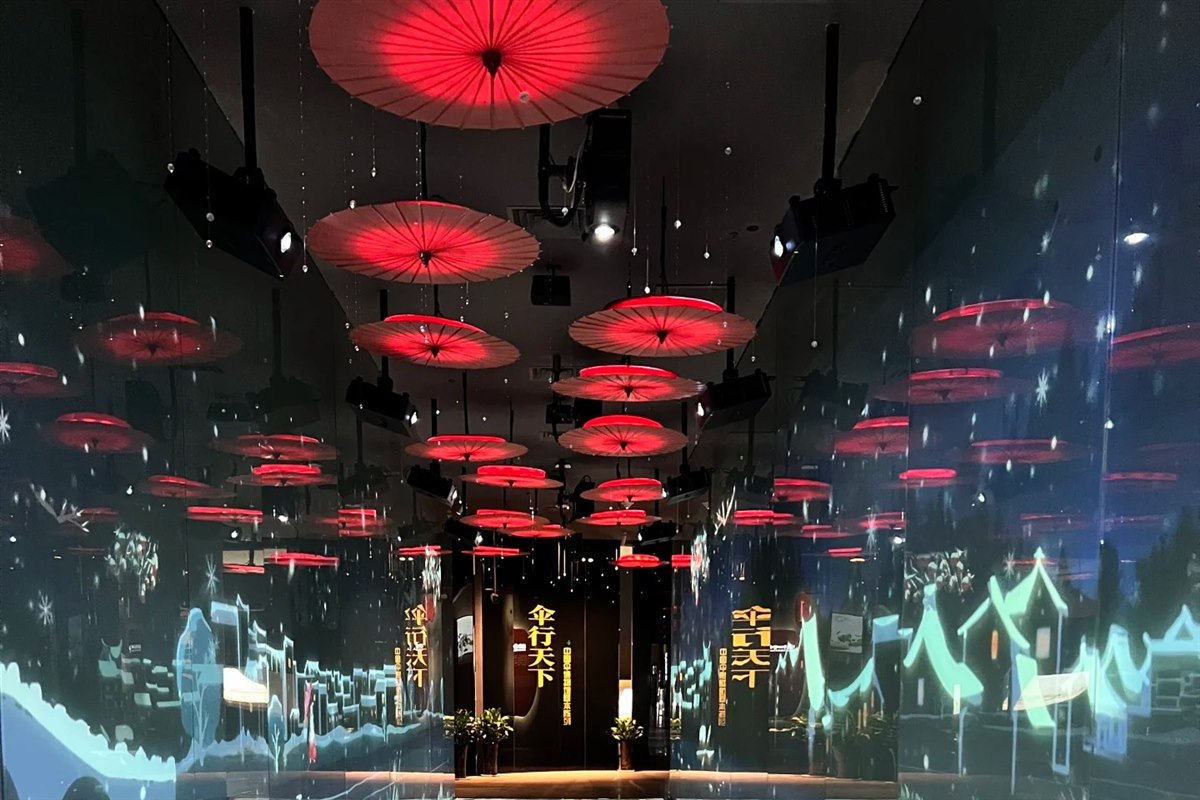
| Four Qiaoxi museums | Knife-Scissors-Sword, Umbrella, Fan and the Hangzhou Arts & Crafts Museum, in the restored warehouses. 09:00–16:30, closed Tuesdays, last admission 16:00. | Free (ID / passport) |
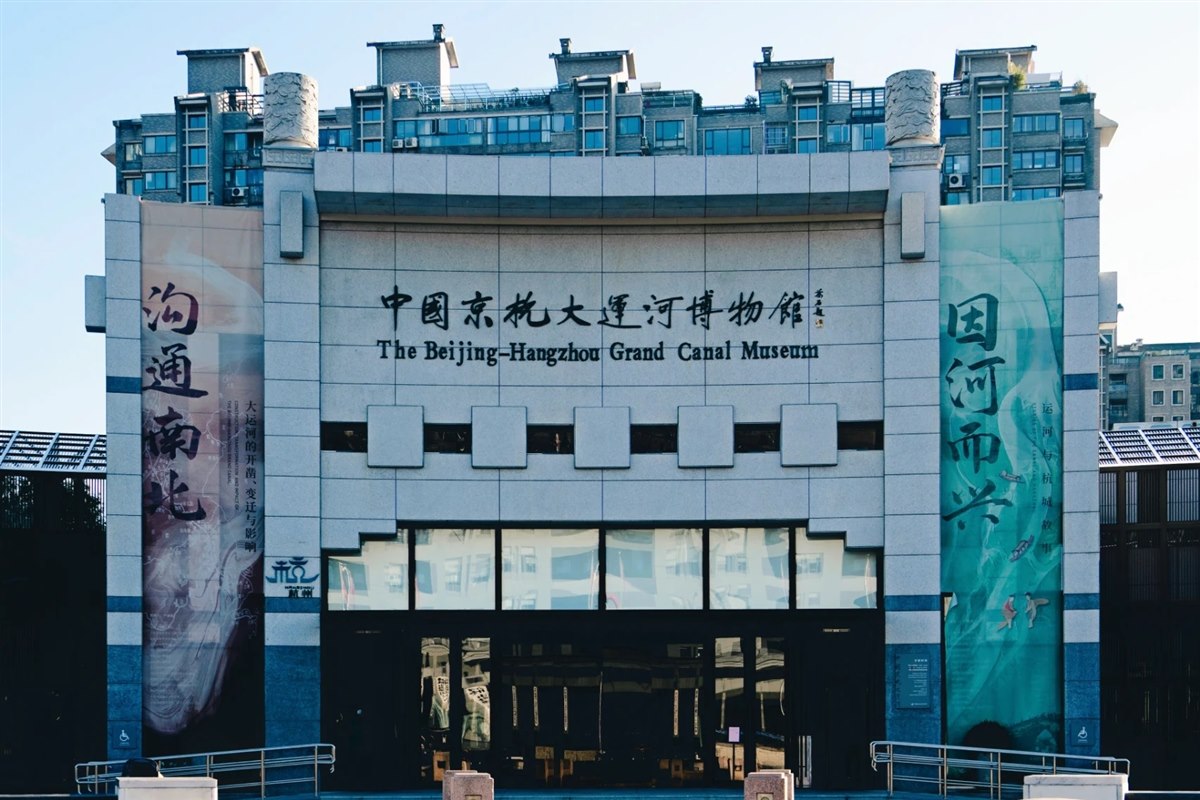
| Beijing-Hangzhou Grand Canal Museum | The eponymous one, in Canal Culture Plaza on the east bank about 150 m from the bridge, and absent from most write-ups of this district. 09:00–16:30, last admission 16:00 — ⚠️ closed Mondays. | Free |
| Canal water-bus (水上巴士 Line 1) | A real public commuter boat running the length of the canal, ~50 min from Wulinmen up to the Gongchen Bridge end — the cheap, local way to see it from the water. | ¥3 flat (Alipay / WeChat) |
| Canal day pass (运河畅游一日通) | ⭐ A wristband, good that day only, for unlimited rides on the sightseeing loop calling at Wulinmen, Dadou Road, Xiaohe Park and Gongchen Bridge — which is to say, at the very stretches that are a long walk apart on land. 09:30–18:00. | ¥20 |
| Evening 漕舫 cruise | A sit-down pleasure boat from Wulinmen pier, ~1 hr round-trip with commentary. Two evening sailings, but sources disagree on the times — reckon on somewhere between 19:00 and 20:50 and confirm at the pier. | ~¥110–140 adult (kids less) |
⚠️⚠️ Five free museums, two different closing days. The four Qiaoxi craft museums close on Tuesday, not Monday — they are a single municipal group (Knife-Scissors-Sword and Umbrella at Xiaohe Road 336, Arts & Crafts at 334, Fan at 450) and all four records say the same thing independently, open as normal on statutory public holidays. But the Beijing-Hangzhou Grand Canal Museum across the water closes on Monday. So there is no dead day here: come on a Monday and the canal museum is the only one open; come on a Tuesday and it is the only one shut. The detail nobody writes down applies to all five — last admission 16:00, half an hour before closing. Arrive at 16:15 on a fine afternoon and the lanes are yours but none of the warehouses are. The full city-wide matrix is in our Hangzhou museums guide.
Water-bus routes and cruise departures shift through the year, so treat the above as a guide; you buy at the pier, which is also where you find out what is actually running. Pay with Alipay or WeChat Pay — the water-bus, museums and shops are cashless-first. Foreign visitors ride the water-bus by tapping an Alipay transit code, and can book the evening cruise in English on Trip.com rather than the Chinese-only official mini-program.
Getting there
The Gongchen Bridge stretch is in the northern city, in Gongshu District, on Metro Line 5. Note that neither station is right at the door. 大运河 (Grand Canal) station is the closer one for the west-bank Qiaoxi warehouse district — 836 m, about 11 minutes on foot; 拱宸桥东 (Gongchen Bridge East) lands you on the east bank 914 m from the bridge itself, and about 17 minutes from Qiaoxi once you have crossed. The nicest arrival is by water, on the ¥3 boat itself.
| From | How | Time |
|---|---|---|
| Metro (for Qiaoxi / west bank) | Metro Line 5 to 大运河 (Grand Canal) + walk | 836 m · ~11 min |
| Metro (for the bridge / east bank) | Metro Line 5 to 拱宸桥东 (Gongchen Bridge East) + walk | 914 m · ~12 min |
| ⚠️ Metro (for Dadou Road) | Metro Line 3 to 香积寺 (Xiangjisi) + walk — a different line from the bridge | 496 m · ~7 min |
| Along the canal | The ¥3 canal water-bus (水上巴士 Line 1) up to the Gongchen Bridge end | ~50 min from Wulinmen, scenic |
| Hangzhou East Railway Station | Taxi / DiDi, or Metro (~30–40 min) | ~25–35 min by taxi |
Most visitors start at the bridge, cross it, and loop the Qiaoxi lanes and museums on the west bank. Do not assume Dadou Road follows on from that — it is a separate trip on a separate line, which matters most to anyone who has read elsewhere that Dadou Road is the best of the three. Our things-to-do guide sets out how the canal fits with the rest of a Hangzhou trip.
Best time & which stretch to walk
Timing here is about atmosphere, not opening hours — the district is open and free at all hours. Late afternoon into the evening is the loveliest slot, arriving before the lights come on (~18:00) to catch the blue hour. For the evening walk itself, traveller reports rank the three canal stretches like this:
| Stretch | From Gongchen Bridge | What it is after dark |
|---|---|---|
| Dadou Road 大兜路历史文化街区 | 2.3 km · ~30 min Line 3 香积寺, 496 m | The top evening pick — cobblestones and warm lanterns, a weekend night market, and the floodlit bronze halls of Xiangji Temple (香积寺) behind their plaza. ⚠️ The temple itself keeps 08:00–16:30, so after dark you are seeing the outside of it from a public square, which is free and rather good, but it is not a visit. |
| Xiaohe Street 小河直街 | 1.5 km · ~20 min | The artsy, photogenic lane — late-Qing riverside houses turned into cafés, small bars and craft shops; busy on weekend nights, quiet on a weekday. |
| Qiaoxi 拱宸桥西历史文化街区 | At the bridge | Better by day, when its four museums are open; at night you mainly see the bridge lights and, on festival nights, the fish lanterns. |
⚠️ Xiangji Temple is not an evening visit. It is widely written up as somewhere you can walk into free after 18:00, and that is the reason many people put Dadou Road at the top of this list. Its posted hours are 08:00–16:30. The plaza in front of it stays open and the halls are floodlit, so the evening version is real — it is just an exterior. If you want the inside, that is a daytime errand on Line 3, not the end of a canal walk.
A comfortable plan: do the Qiaoxi museums in the morning (they stop admitting at 16:00), then walk the canal at dusk and finish on one of Xiaohe Street or Dadou Road — not both. Build in a water-bus ride; it is the nicest way to take in the world’s longest ancient canal, and it is the cheapest thing you will do in Hangzhou.
Traps & how it fits a Hangzhou trip
- Eat before you wander — the canal districts are free, but the boutique cafés and “internet-famous” food stalls inside are priced up; travellers suggest eating first and grazing lightly.
- Book the evening cruise ahead, and watch the weather — the 漕舫 cruise sells limited evening slots and is cancelled in heavy rain, high wind or abnormal water levels; there is no water sold on board, so bring a bottle.
- Ride the ¥3 water-bus like a local — and know that Wulinmen is a mid-route stop, not the start of the line. Line 1 runs the canal from Pujia (濮家) in the south-east up past Wulinmen to the Gongchen Bridge end, so a boat reaching the downtown pier may already be full. Board earlier along the line if you can, and go on a weekday; weekend queues are reported at an hour or two.
- Take mosquito repellent for the evening — the towpaths get buggy after dark in the warm months.
- It’s a quieter add-on, not a headline — on a tight first trip, do West Lake and Lingyin first; fold the canal in as a relaxed half-day, ideally an evening.
The honest call: the Grand Canal ranks below the city’s must-sees, but it is a lovely, quieter half-day for canal and industrial-heritage lovers — and its five museums are free. Do West Lake and Lingyin Temple first, then ride the water-bus to Gongchen Bridge for a relaxed evening.
Book a Grand Canal night cruise or Hangzhou canal tourNASDAQ: TCOM
The district is free to walk — but the evening 漕舫 cruise is booked through a Chinese-only mini-program. Trip.com lists the same night cruise from Wulinmen wharf, plus guided canal tours, in English on a foreign card. Listing checked 2026-08-04.
Frequently asked questions
Is the Grand Canal in Hangzhou free to visit?
Yes — the canal district is free, with no ticket and no reservation. Hangzhou is the southern end of the Grand Canal, and walking the towpaths around Gongchen Bridge, the restored Qiaoxi historic district and Xiaohe Street costs nothing. Even the four museums in the Qiaoxi warehouses (Knife-Scissors-Sword, Umbrella, Fan and the Hangzhou Arts & Crafts Museum) are free — you show ID or a passport at the door. You pay only for the boats: the ¥3 public canal water-bus, or a ~¥110–140 evening cruise.
What time do the Grand Canal and Gongchen Bridge light up at night?
Traveller reports say the bridge and Qiaoxi lanterns come on around 18:00 — sometimes 17:30 on summer weekends and holidays, and closer to 17:00 in winter when it gets dark early. The magic window is the 'blue hour' about 30–40 minutes after the lights come on (roughly 18:30–19:30), when the deep-blue sky sets off the warm-lit bridge; the fish-lantern displays on Qiaoxi Straight Street appear mainly during festivals. Exact times shift with the season, so treat these as a guide.
What day do the canal museums close?
It depends which one, and that is the trap. There are five free museums within a few hundred metres of Gongchen Bridge, and they close on two different days. The four in the Qiaoxi warehouses — Knife-Scissors-Sword and Umbrella at Xiaohe Road 336, Arts & Crafts at 334, Fan at 450 — are one municipal group and all close on TUESDAY, not Monday, which is the assumption most listings make because most Chinese museums do close on a Monday. The Beijing-Hangzhou Grand Canal Museum, in Canal Culture Plaza on the east bank, closes on MONDAY. All of them run 09:00–16:30 and open as normal on statutory public holidays. So no day here is a write-off: on a Monday you get the canal museum, on a Tuesday you get the other four. The part almost nobody writes down is that admission stops at 16:00, half an hour before closing — a late lunch costs you the museums, not just the queue. Entry to the Qiaoxi four is free with ID or a passport.
Grand Canal night cruise or the ¥3 water-bus — which is better?
It depends on your budget and time. The ¥3 public water-bus (Line 1, 水上巴士) is a real local commuter boat running the length of the canal — unbeatable value and full of everyday street life, but seats are limited and weekend queues can top an hour or two. Note that Wulinmen, where most visitors board, is a mid-route stop rather than the start of the line, which is why travellers advise boarding earlier along it and going on a weekday: a boat that is already full may not let you on. The evening 漕舫 cruise (about ~¥110–140 per adult, ~1 hour from Wulinmen) is the no-queue, sit-down option with commentary — nicer with kids or older travellers, but some of the banks it passes are newly built.
How do you get to the Grand Canal and Gongchen Bridge?
Take Metro Line 5. Neither station is right at the door: 大运河 (Grand Canal) station is the closer one for the west-bank Qiaoxi warehouse district — 836 m, about 11 minutes on foot — while 拱宸桥东 (Gongchen Bridge East) lands you on the east bank 914 m from the bridge itself, and about 17 minutes' walk from Qiaoxi once you have crossed. The nicest arrival is by water: the ¥3 canal water-bus (Line 1) along the waterway. ⚠️ If Dadou Road is your target rather than the bridge, do not use Line 5 at all — it sits 2.3 km further south on Line 3, seven minutes from 香积寺 station.
Which stretch of the canal is best at night — Qiaoxi, Xiaohe Street or Dadou Road?
For an evening walk, travellers rate Dadou Road (大兜路) first — cobblestones and warm lanterns, a weekend night market, and the floodlit bronze halls of Xiangji Temple seen from the plaza in front of it (the temple itself closes at 16:30, so an evening visit is an exterior one). Xiaohe Street (小河直街) is the artsy, photogenic riverside lane of cafés and bars. The Qiaoxi historic district by the bridge is better by day, when its four museums are open — at night you mainly see the bridge lights. But read the distances before you plan a single evening walk: they are strung along the canal rather than side by side. Xiaohe Street is 1.5 km and about 20 minutes on foot south of Gongchen Bridge, and Dadou Road another 1.6 km beyond that — 2.3 km and about half an hour from the bridge, on a different metro line. Do the museums by day, then pick one stretch for the night.
Is the Grand Canal worth visiting in Hangzhou?
On a tight first trip it ranks below West Lake and Lingyin Temple, the city's must-sees. But it is a lovely, quieter half-day — especially in the evening — for anyone who likes canals and industrial-era heritage. Gongchen Bridge and the restored Qiaoxi warehouses are genuinely atmospheric, five free museums line the canal here, and a ¥3 water-bus ride is the nicest way to see the world's longest ancient waterway from the water. Treat it as a relaxed add-on, not a headline sight.
Sources
Checked August 2026 · Written from our own first-hand travel in China.
Corrected since publication: The four Qiaoxi museums close on Tuesdays, and Xiangji Temple shuts well before evening — so the widely repeated “free to enter after dark” claim does not hold.