Key takeaways
- A UNESCO 2007 karst forest of limestone pillars 5–30 m tall, ~270 million years in the making, ~1,770 m elevation southeast of Kunming.
- Admission ¥130 (real-name, book ahead) covers the Greater + Lesser Stone Forests + Bushao Hill on a 3-day ticket; the ¥25 cart is effectively required (a 2 km exposed walk otherwise).
- Naigu Stone Forest (乃古石林) is a separate ¥25 ticket — NOT in the ¥130 — but it’s darker, wilder and near-empty, an underrated escape from the crowds.
- Fastest in: HSR to Shilin West (~20 min) + bus 99 (¥10) or a ¥20–30 taxi. Walk it 大石林 → 小石林 in ~3–4 hours; best at 8:00 or after 14:30.
- Refuse the low-price-tour touts, the Sani-costume photo fees and the exit fruit stalls; the Ashima Stone anchors the Sani Yi legend and July’s Torch Festival.
What the Stone Forest is
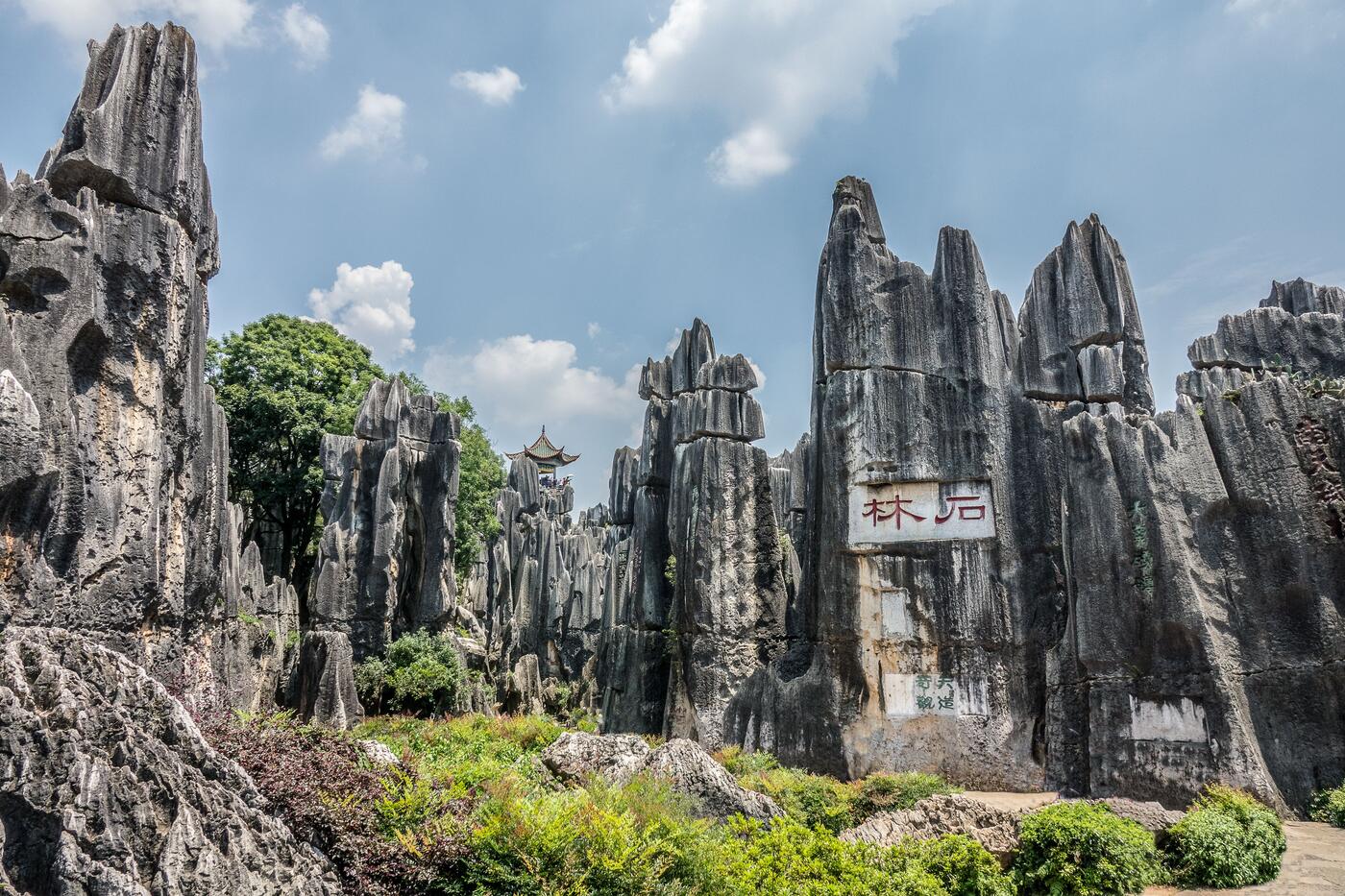
Stone Forest (石林, Shílín — literally “stone forest”) is a field of near-vertical limestone pillars rising 5 to 30 metres from a high-plateau grassland. The limestone began as a Permian seabed some 270 million years ago; tectonic uplift lifted it above sea level, and tens of millions of years of rainwater dissolution along the rock's joints and fractures carved the columns that stand today. Walking the formations feels like moving through a petrified stand of trees — hence the name.
The wider karst landscape spans about 350 km²; the main visitor zone covers roughly 12 km² of the densest pillars — the densest concentration of vertical stone columns in the world. It was inscribed as a UNESCO World Heritage Site in 2007 as the flagship cluster of the South China Karst serial site (eight clusters across Yunnan, Guizhou and Guangxi). The site sits at ~1,770 m in Shilin Yi Autonomous County, so temperatures stay mild year-round.
Tickets, the cart & Naigu
Admission is ¥130 (half ¥65), and it’s now real-name ticketing — book ahead on the official WeChat account, the 游云南 app or a travel platform, and scan your ID (passport / face scan) at the gate. The “1 ticket, 3 days” policy is in effect, so you can re-enter over three days. Two things trip people up:
Two things the ¥130 does NOT cover:
- The ¥25 in-park cart is effectively required — the ticket office to the formation entrance is a ~2 km sun-baked flat road (30+ min on foot). The cart covers that approach and the Greater ↔ Lesser internal shuttle. Buy it.
- Naigu Stone Forest (乃古石林) is a separate ¥25 ticket, 8 km north — NOT in the ¥130. It’s worth the extra: darker, wilder, near-empty (see below).
| Item | Cost | Note |
|---|---|---|
| Main admission | ¥130 · half ¥65 | Greater + Lesser Stone Forests + Bushao Hill; real-name, 3-day validity. Free: 70+, disabled, children under 1.2 m. |
| In-park cart 电瓶车 | ¥25 / person | Effectively required — the 2 km gate-to-entrance walk + the Greater↔Lesser shuttle. |
| Naigu Stone Forest 乃古石林 | ¥25 (separate) | 8 km north; darker, wild, near-empty. ~1–2 hours. Reached by a short taxi/DiDi from the main car park. |
| Opening hours | — | ~08:00–17:30 weekdays; 08:00–18:30 on holidays. |
Naigu is the underrated escape. Travellers call it a “treasure” — the rock is darker and more desolate, with a wild, brooding feel, and it draws so few visitors you can often have it to yourself. If the main Stone Forest feels packed, the ¥25 and the short hop north are well spent.
The zones & the route
The standard route is visitor centre → cart → Greater Stone Forest → Lesser Stone Forest → exit, about 3–4 hours; add Bushao Hill or Lizi Yuanjing for a 5–6 hour day.
| Stop | Time · feel | Don’t miss |
|---|---|---|
| Greater Stone Forest 大石林 | 1.5–2 h · busiest | The densest, maze-like core: Shilin Shengjing (石林胜景, the classic photo with the carved “石林” characters), Wangfeng Pavilion (望峰亭, the best 360° panorama over the stone sea), and Sword Peak Pond (剑峰池). |
| Lesser Stone Forest 小石林 | 45–60 min · quieter | Open grassland and a pond, more pastoral; home to the Ashima Stone (阿诗玛). The soft 3–5 pm light here is best for portraits. |
| Bushao Hill / Lizi Yuanjing 步哨山 / 李子园箐 | +1–2 h · optional | Included in the ¥130; add them if your legs are good for the wider, quieter margins and the high viewpoint. |
| Naigu Stone Forest 乃古石林 (separate ¥25) | 1–2 h · 8 km north | Darker, lichen-crusted, more primordial pillars with far fewer visitors — the crowd-free alternative. |
How to get there from Kunming
Stone Forest is ~120 km southeast of Kunming. The high-speed train is fastest; the direct tourist coach is simplest for independent travellers; a day tour removes all the logistics.
| Mode | Time | Cost · notes |
|---|---|---|
| HSR + bus/taxi Kunming South → Shilin West (石林西) | ~20 min train + ~50 min bus | ~¥25 train, then from Shilin West bus 99 (¥10, ~50 min) direct to the scenic-area car park, or a taxi/DiDi (~¥20–30, 20–30 min — better for 3–4 people). Last bus back ~17:00–18:00. |
| Direct tourist coach Kunming East Bus Station (东部客运站) | ~1.5 h each way | ~¥30 each way, every ~30 min from ~08:00. Reach the bus station on Metro Line 3 (昆明东站). |
| Organised day tour from central Kunming hotels | ~10 h round trip | ~¥150–300 pp, typically transport + admission + guide + lunch. Convenient but you arrive with every other morning tour. |
| DiDi / hired car any point in Kunming | ~1.5–2 h one way | ~¥200–280 one way via the G8512 expressway — practical for groups of 3+. |
However you arrive, you’re dropped at the car park, not inside the formations — take the ¥25 cart in (don’t walk the 2 km exposed approach). For timetables and onward Yunnan legs, see getting to Yunnan.
Best time & how long to spend
The plateau elevation (~1,770 m) keeps Stone Forest mild all year. Spring and autumn are the sweet spots for light and temperature; for crowds, the timing matters more than the season.
| When | What it’s like |
|---|---|
| 8:00 opening / after 14:30 | The calm windows — tour groups pour in 9:30–10:00; after 2:30 pm the crowd thins by half, the afternoon light gives the stone peaks more definition, and it’s cooler. |
| Mar–May (spring) | Comfortable temperatures, clear plateau light — the best all-round window. |
| Jun–Aug (summer) | Rainy season; afternoon thunderstorms, but rain-washed limestone is atmospheric. Late July brings the Yi Torch Festival. |
| Sep–Nov (autumn) | Mild, dry and clear — the other prime window alongside spring. |
| Dec–Feb (winter) | Dry, clear and much quieter, with good light for photography but cold mornings. |
How long: a half-day (3–4 hours) covers the Greater and Lesser zones — the choice of most independent visitors, back in Kunming by afternoon. A full day adds Naigu and the nearby Jiuxiang Caves (~30 km). Avoid the May and October Golden Weeks. See our best time to visit Yunnan guide for the wider picture.
Book a Stone Forest day tour from KunmingNASDAQ: TCOM
Trip.com lists Stone Forest admission and guided day tours from Kunming — transport, ticket and an English-speaking guide bundled, booked in English on a foreign card, so you skip the gate touts.
Scams & pushy fees to refuse
A commercialised site with heavy day-trip traffic attracts a few set-ups — none hard to avoid:
- Low-price tours & black cabs. Near the gate and the HSR station, “friendly aunties” and unlicensed drivers push a “cheap day tour” or an “inside track that skips the queue” — they steer you to shopping stops or a detour. Use the official gate; for a guide, hire the official one at the visitor centre (~¥160/trip, shareable).
- Costume-photo fees. People in Sani Yi dress will pull you in for a photo or a “headshot” — ask upfront whether it’s paid; some are a “free experience” but at the exit they print it and charge ~¥10 a copy, awkward to refuse. Want ethnic-dress portraits? Rent an outfit (¥20–80) and shoot on your phone, or use an official photo shop.
- Mobility-cart trap. Rentable personal carts inside (¥48 for the first half hour, then per-minute) only run the flat outer paths — the core stairs and maze are still on foot, so they’re poor value. Skip them; the ¥25 shuttle is what you want.
- Exit fruit stalls. The cart drops you on a road lined with fruit stalls on the way out, not straight to the exit — ask the unit price and bargain hard, or buy at a supermarket outside. On-site prices run high generally (bottled water ¥5); souvenirs are for haggling.
The Sani Yi people & the Ashima legend
Stone Forest is the ancestral homeland of the Sani Yi people (撒尼彝族), a sub-group of the Yi ethnic minority who have lived in the Shilin area for at least 1,500 years. The stone landscape gave rise to a body of oral literature whose central text is the Ashima legend (阿诗玛): a strong-willed Sani Yi maiden, Ashima, is abducted for a forced marriage; her love Ahei rescues her, but on the journey home a flood — conjured by the landlord's sorcery — sweeps her away, and rather than dying she is transformed into stone, the Ashima Stone in the Lesser Stone Forest.
Carried for centuries in Sani Yi song and epic verse, the story reached a national audience in 1964 with the Changchun Film Studio musical Ashima, shot partly on location. The Yi Torch Festival (火把节), held in late July by the Yi calendar, is the largest cultural event of the Sani Yi year — torch-lighting, wrestling, singing and dancing — and one of the better chances in Yunnan to see Yi cultural practice in a community rather than a purely staged setting.
How Stone Forest fits a Yunnan trip
Stone Forest is a Kunming day trip, not a base. Almost everyone stays in Kunming city — Yunnan's best hotels, the KMG Changshui airport, onward HSR to Dali and Lijiang, and the region's best food are all there. The Green Lake area (翠湖) is the most pleasant first-time base. A typical Yunnan route runs Kunming (with Stone Forest) → Dali → Lijiang → Shangri-La, all linked by HSR or short flights.
- Day 1–2 — Kunming + Stone Forest: the karst day trip plus Green Lake and the old town.
- Then Dali & Lijiang: old towns, Erhai Lake and the Jade Dragon Snow Mountain, by HSR north.
Plan the wider trip: the Yunnan regional guide compares the Kunming / Dali / Lijiang / Shangri-La bases and the loop between them.
Frequently asked questions
How much is the Stone Forest ticket, and do I need to book ahead?
Admission is ¥130 (half ¥65), and it's now real-name ticketing — you must book ahead on the official WeChat account, the 游云南 app or a travel platform, and scan your ID (passport / face scan) at the gate, so bring your passport. The ¥130 covers the core areas — the Greater Stone Forest, the Lesser Stone Forest and Bushao Hill (步哨山) — and the '1 ticket, 3 days' policy is in effect, letting you re-enter over three days. Note that the ¥25 in-park sightseeing cart is separate but effectively required, and Naigu Stone Forest (乃古石林) is a separate ticket (see below).
Is Naigu Stone Forest included in the ¥130 ticket?
No — and this is the most common mistake. Naigu Stone Forest (乃古石林) is NOT covered by the ¥130 main ticket; it's a separate ¥25 ticket, 8 km north of the main gate. It is genuinely worth the extra: travellers call it an 'underrated treasure' — the rock here is darker and more desolate, with a wild, brooding feel, and it gets so few visitors you can often have it almost to yourself, which many rate a better experience than the crowded main zone. Allow 1–2 hours. If the main Stone Forest feels too busy, Naigu is the escape valve.
Do I need the ¥25 in-park cart, or can I walk?
Buy the cart — it's effectively required, not optional. From the ticket office / visitor centre to the actual formation entrance is about 2 km of exposed, sun-baked flat road, at least 30 minutes on foot, and you'll have burned your energy before you even reach the rocks. The ¥25 sightseeing cart covers that 2 km approach and the internal shuttle between the Greater and Lesser Stone Forests. Save your legs for the maze itself, which has plenty of steps and long stretches. (There are also rentable personal mobility carts inside, ¥48 for the first half hour — but they only run the flat outer paths, not the core stairs and maze, so they're poor value; skip them.)
How do I get to Stone Forest from Kunming, including from the HSR station?
The fast way is the high-speed train: Kunming South (昆明南) to Shilin West (石林西) takes about 20 minutes. From Shilin West station, the exit is the bus stop — take bus 99 (¥10, ~50 minutes) direct to the Stone Forest scenic-area car park, or a taxi/DiDi (~¥20–30, 20–30 minutes), which is better value for 3–4 people. Buses run about every 20 minutes; the last one is around 17:00–18:00, so time your return train. The alternatives from central Kunming are a direct tourist coach from the East Bus Station (~¥30, ~1.5 hours), a day tour, or a hired car (~1.5–2 hours via the G8512 expressway).
How do I walk the Greater and Lesser Stone Forests, and how long does it take?
The standard route is: visitor centre → cart → Greater Stone Forest → Lesser Stone Forest → exit, about 3–4 hours in total. In the Greater Stone Forest (大石林), the densest, maze-like core, don't miss Shilin Shengjing (石林胜景, the classic photo with the carved '石林' characters), Wangfeng Pavilion (望峰亭, the best 360° panorama over the stone sea) and Sword Peak Pond (剑峰池). The Lesser Stone Forest (小石林) is more open, with grassland and a pond and the emblematic Ashima Stone; the soft 3–5 pm light there is best for portraits. If your legs are good, add Bushao Hill (步哨山) or Lizi Yuanjing (李子园箐) for a 5–6 hour day.
When is the best time to go, and how do I avoid the crowds?
The plateau elevation (~1,770 m) keeps Stone Forest mild all year; spring (March–May) and autumn (September–November) are the sweet spots for temperature and light. For crowds, the tour groups pour in between 9:30 and 10:00, so arrive right at 8:00 opening or after 14:30 — after 2:30 pm the groups start leaving, the crowd thins by half, the afternoon light gives the stone peaks more definition, and it's cooler. Avoid the May and October Golden Weeks and the late-July Yi Torch Festival if you want space, though the festival is a genuine cultural highlight in its own right.
What scams and pushy fees should I watch for at Stone Forest?
A few, all avoidable. Near the gate and the HSR station, 'friendly aunties' or black-cab drivers push 'cheap day tours' or an 'inside track that skips the queue' — don't; they steer you to shopping stops or a detour. Use the official gate, and if you want a guide, hire the official one at the visitor centre (~¥160 per trip, shareable). People in Sani Yi costume will pull you in for a photo or a 'headshot' — ask upfront whether it's paid; some are a free experience but at the exit they print it and charge ~¥10 a copy, awkward to refuse. If you want ethnic-dress portraits, rent an outfit (¥20–80) and shoot on your phone, or use an official photo shop. And the cart drops you on a road lined with fruit stalls on the way out — ask the unit price and bargain hard, or buy at a supermarket outside. Inside prices run high generally (bottled water ¥5), and souvenirs are for bargaining.
Is Stone Forest worth visiting, or is it too tourist-heavy?
It's genuinely impressive — a UNESCO World Heritage karst landscape, and the density of the limestone pillars is unlike anything else in China. It is heavily visited and clearly commercialised (souvenir stalls, high on-site prices, real tour-group traffic on busy days), so first-time Yunnan visitors will find it well worth the trip, while anyone who has seen similar karst or caves may feel a touch of 'it's all just rocks'. The fix is the same either way: arrive early or after 2:30 pm, skip the food courts, and if the main zone feels packed, cross to the near-empty Naigu Stone Forest.
Sources
Checked August 2026 · Written from our own first-hand travel in China.